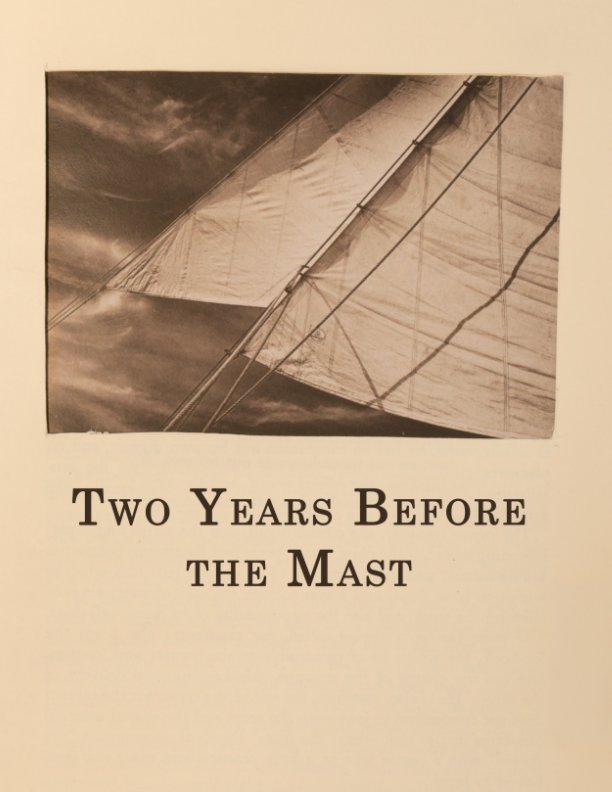
The concept of sailing and the experiences of those who venture out into the open sea have captivated human imagination for centuries. Among the vast array of literary works that delve into the realm of maritime adventure, “Two Years Before the Mast” stands out as a classic tale of personal struggle, growth, and the unyielding spirit of exploration. Written by Richard Henry Dana Jr., this autobiographical novel recounts the author’s journey as a common sailor on a merchant ship in the mid-19th century, offering a unique perspective on life at sea and the transformative power of such experiences.
Dana’s decision to leave behind the comforts of his life as a Harvard student and embark on a sailing voyage was not taken lightly. Driven by a desire to regain his health, which had been compromised by an eye condition, and to experience the world beyond the confines of his academic environment, he signed up for a two-year journey aboard the brig Pilgrim. This voyage, which would take him along the coast of California and introduce him to the harsh realities of life as a sailor, was a pivotal moment in Dana’s life, marking a transition from the sheltered existence of a young man of privilege to the rugged, unpredictable world of a sailor.
The narrative of “Two Years Before the Mast” is characterized by its vivid descriptions of life on board, detailing the daily routines, the relationships between crew members, and the struggles against the relentless forces of nature. Dana’s account is marked by its candor, as he reflects on the physical hardships, the psychological challenges, and the moments of beauty and awe that punctuated his journey. From the grueling tasks of sailing and maintaining the ship to the interactions with other sailors and the occasional encounters with people from distant lands, Dana’s experiences are recounted with a level of detail that transports the reader to the deck of the Pilgrim, immersing them in the sights, sounds, and emotions of life at sea.
One of the most compelling aspects of “Two Years Before the Mast” is its exploration of the social dynamics within the crew. Dana’s observations of the sailors, their backgrounds, their motivations, and their interactions provide a rich tapestry of characters, each with their own story to tell. The captain, the officers, and the common sailors are all portrayed with a depth that humanizes them, making the reader acutely aware of the complexities and nuances of life in such a confined and challenging environment. The relationships that form, the conflicts that arise, and the bonds that are forged under the pressures of their common endeavor offer a fascinating insight into the human condition, revealing both the best and worst aspects of human nature.
The journey itself is a metaphor for personal growth and self-discovery. As Dana navigates the physical challenges of his voyage, he also grapples with internal conflicts and undergoes a significant transformation. His experiences as a sailor, far from the comforts and securities of his previous life, force him to confront his own limitations, to question his assumptions, and to develop a newfound appreciation for the simple things in life. The voyage becomes a rite of passage, a test of endurance that ultimately equips him with a broader perspective on the world and a deeper understanding of himself.
In addition to its personal and social themes, “Two Years Before the Mast” is also a valuable historical document, offering insights into the maritime trade of the 19th century, the conditions of sailors, and the early days of California before it became part of the United States. Dana’s observations of the places he visited, the people he met, and the economic and social conditions of the regions provide a unique window into a bygone era, making the book a significant resource for historians and scholars of maritime history.
The legacy of “Two Years Before the Mast” extends beyond its historical significance and literary merit. The book has inspired generations of readers with its tales of adventure, perseverance, and the allure of the unknown. It has also played a role in shaping the public’s perception of sailing and the life of sailors, humanizing them and highlighting the challenges and hardships they face. Furthermore, Dana’s advocacy for the rights and better treatment of sailors, influenced by his own experiences, contributed to reforms in the maritime industry, highlighting the impact that personal narratives can have on broader social issues.
In conclusion, “Two Years Before the Mast” is a masterpiece of maritime literature that continues to captivate readers with its blend of adventure, self-discovery, and historical insight. Richard Henry Dana Jr.’s account of his time at sea is a testament to the human spirit’s capacity for resilience, adaptation, and growth. As a work of autobiography, a historical document, and a piece of adventure literature, it stands as a powerful reminder of the transformative power of experience and the enduring appeal of the sea.
As one delves into the world of “Two Years Before the Mast,” it becomes clear that the book is more than a simple account of a sailing voyage; it is a journey into the heart of humanity, with all its complexities, frailties, and strengths. Through Dana’s story, readers are invited to reflect on their own lives, their relationships, and their place within the larger narrative of human experience, making the book a timeless classic that continues to inspire and educate readers to this day.
What inspired Richard Henry Dana Jr. to write "Two Years Before the Mast"?
+Dana was inspired to write "Two Years Before the Mast" primarily as a result of his personal experiences as a common sailor on a merchant ship. His journey, which took him to California and back, exposed him to the harsh realities of life at sea and deeply influenced his perspective on the world and himself. The book is an autobiographical account of his adventures, challenges, and reflections during his two-year voyage.
What are some of the key themes explored in "Two Years Before the Mast"?
+The book explores several key themes, including personal growth and self-discovery, the challenges and hardships of life at sea, social dynamics among the crew members, and the historical context of the maritime trade in the 19th century. It also touches on the human condition, highlighting both the positive and negative aspects of human nature under pressure.
What impact did "Two Years Before the Mast" have on maritime history and literature?
+"Two Years Before the Mast" had a significant impact on both maritime history and literature. As an autobiographical account, it provided a unique and detailed insight into the life of a sailor in the 19th century, contributing to the historical understanding of maritime trade and the conditions of sailors during that era. In terms of literature, it is considered a classic of American literature, influencing generations of writers and readers with its tale of adventure, perseverance, and personal transformation.
For those interested in diving deeper into the themes, historical context, and personal narratives that make “Two Years Before the Mast” such a compelling read, there are numerous resources available. From historical analyses of the maritime trade during the 19th century to personal accounts of sailors and travelers from the same era, these resources offer a broader understanding of the world in which Dana lived and sailed. Additionally, literary critiques and scholarly articles provide insights into the book’s literary merit, its place within American literature, and its enduring popularity among readers.
As we reflect on the journey of Richard Henry Dana Jr. and the narrative he has left us, we are reminded of the power of stories to inspire, to educate, and to connect us across time and space. “Two Years Before the Mast” is more than a historical document or a piece of adventure literature; it is a testament to the human spirit’s ability to navigate the unknown, to find meaning in adversity, and to emerge transformed by the experiences we undertake.