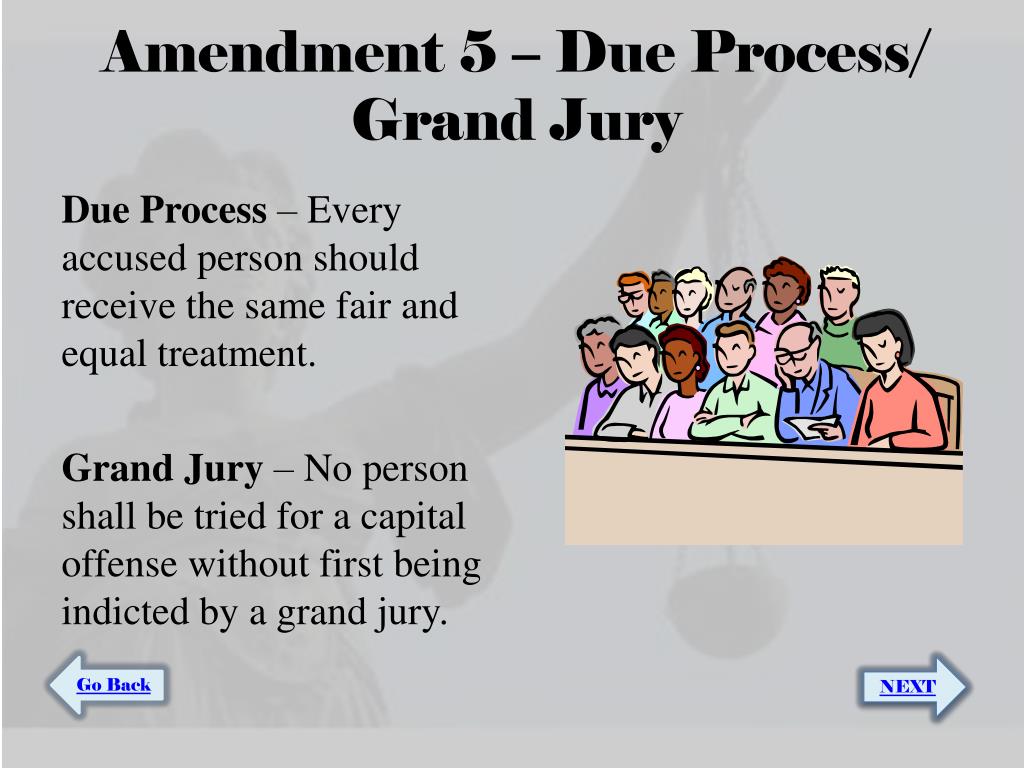
The 5th Amendment to the United States Constitution is a cornerstone of American jurisprudence, enshrining fundamental principles of due process that protect individuals from government overreach. This amendment, part of the Bill of Rights, guarantees that no person shall be “deprived of life, liberty, or property, without due process of law.” The concept of due process is twofold, encompassing both procedural due process, which ensures fair procedures before a person is deprived of their rights, and substantive due process, which protects individuals from arbitrary governmental actions regardless of the procedures in place.
Historical Evolution of Due Process
The idea of due process has its roots in medieval England, where the phrase “due process of law” first appeared in the 1354 statute of Edward III. This concept was later incorporated into the U.S. Constitution through the 5th Amendment, specifically designed to check the power of the federal government. The amendment’s due process clause has been pivotal in numerous Supreme Court decisions, gradually expanding the protections afforded to individuals.
One of the landmark cases in the evolution of due process was the 1923 decision in Meyer v. Nebraska, where the Supreme Court first applied the 14th Amendment’s due process clause to protect substantive rights, including the right to educate one’s children in a language other than English. This ruling laid the groundwork for future substantive due process doctrines, particularly in areas of personal autonomy and privacy.
Procedural Due Process
Procedural due process focuses on the fairness of the procedures used to deprive an individual of life, liberty, or property. It mandates that before a government can take away these fundamental rights, it must provide adequate notice, a hearing, and a fair and impartial decision-maker. The core aim is to prevent arbitrary governmental actions by ensuring that individuals are treated fairly during the process.
For instance, in Mathews v. Eldridge (1976), the Supreme Court set forth a three-part test to determine what process is due. The test considers the private interest affected, the risk of an erroneous deprivation of that interest, and the government’s interest in efficient administration. This balancing approach allows courts to tailor procedural protections based on the specific context, ensuring that the procedures are fair and reasonable given the circumstances.
Substantive Due Process
Substantive due process, on the other hand, examines the content of the law or government action itself to determine if it is arbitrary or unreasonable. It ensures that the laws and actions of the government are substantively fair and do not violate fundamental rights, even if the procedures followed were correct. Over the years, the Supreme Court has used substantive due process to recognize and protect various fundamental rights not explicitly mentioned in the Constitution, such as the right to privacy, including the right to marry, procreate, and make decisions about one’s own body.
The Roe v. Wade (1973) decision, which recognized a woman’s constitutional right to an abortion, is a prime example of substantive due process in action. The court held that the right to privacy, encompassing a woman’s decision to have an abortion, is a fundamental right protected by the due process clause of the 14th Amendment. This ruling, while controversial, demonstrates how substantive due process can be used to safeguard personal liberties against government intrusion.
Due Process in Modern Contexts
In contemporary society, the concept of due process continues to evolve and faces new challenges. The rise of administrative law, where government agencies make rules and adjudicate cases, has prompted questions about due process in these contexts. Additionally, technological advancements have raised concerns about surveillance, data privacy, and how due process applies in the digital age.
The use of drones, facial recognition technology, and big data analyses by law enforcement agencies has ignited debates about the balance between public safety and individual privacy rights. Courts are increasingly called upon to decide what constitutes “due process” in these emerging areas, often requiring a nuanced understanding of both traditional legal principles and cutting-edge technology.
Comparative Analysis: Due Process Across Jurisdictions
Comparing the due process protections in the United States to those in other countries reveals both similarities and differences. Many nations, including those in Europe, Canada, and Australia, have constitutional or statutory provisions that protect individuals from arbitrary government actions, mirroring the due process clause in spirit if not in exact language.
However, the scope and application of these protections can vary significantly. For instance, the European Union’s Charter of Fundamental Rights explicitly recognizes a right to good administration, which includes the right to be heard and to have one’s affairs handled impartially and within a reasonable time. This provision reflects a broader commitment to transparency and accountability in government actions.
Future Trends Projection
As legal landscapes and societal values continue to evolve, the concept of due process will likely face new challenges and opportunities. The intersection of technology and law, particularly in areas like artificial intelligence, biometrics, and cybersecurity, will necessitate a reexamination of what due process means in the digital age. There will be a growing need for frameworks that balance individual rights with the demands of public safety and national security, all while ensuring that the essence of due process—fairness, transparency, and accountability—is preserved.
Expert Interview Style: Insights on Due Process
In an interview with a leading constitutional law scholar, the importance of due process in preventing the concentration of power was highlighted. “Due process acts as a bulwark against tyranny, ensuring that government actions are not only lawful but also just. It’s a reminder that the rule of law is not just about following procedures but about upholding the principles of fairness and equality that underpin our democracy.”
When asked about the challenges facing due process in the modern era, the scholar noted, “The biggest challenge is adapting due process protections to new technologies and societal changes without undermining their core principles. It requires a delicate balance between protecting individual rights and allowing governments to address pressing issues like public safety and national security.”
Decision Framework: Evaluating Due Process Claims
When evaluating due process claims, several key factors come into play:
- Nature of the Right at Issue: Is the right in question a fundamental one, such as the right to life, liberty, or property?
- Risk of Erroneous Deprivation: How likely is it that the government’s action could result in an erroneous deprivation of the individual’s rights?
- Government Interest: What is the government’s interest in taking the action, and how does it weigh against the individual’s rights?
- Alternative Procedures: Are there alternative procedures or mechanisms that could mitigate the risk of error or deprivation?
By considering these factors, courts and legal scholars can develop a nuanced approach to due process, one that balances the need for government efficiency and effectiveness with the imperative to protect individual rights and prevent arbitrary government actions.
Conclusion
The due process clause of the 5th Amendment stands as a cornerstone of American constitutional law, safeguarding individuals against the whims of government overreach. Through its procedural and substantive dimensions, due process ensures that government actions are fair, reasonable, and respectful of fundamental rights. As society evolves and new challenges emerge, the concept of due process will continue to adapt, upholding the principles of justice, equality, and liberty that form the bedrock of democratic governance.
FAQ Section
What is the primary purpose of the due process clause in the 5th Amendment?
+The primary purpose of the due process clause is to protect individuals from arbitrary government actions by guaranteeing fair procedures and safeguarding fundamental rights.
How does substantive due process differ from procedural due process?
+Substantive due process examines the content of the law itself to ensure it does not violate fundamental rights, whereas procedural due process focuses on the fairness of the procedures used to enforce the law.
What are some examples of fundamental rights protected by substantive due process?
+Examples include the right to marry, procreate, and make decisions about one’s own body, such as the right to an abortion recognized in Roe v. Wade.
How does the concept of due process apply in the context of emerging technologies?
+The concept of due process must be adapted to address the challenges posed by new technologies, ensuring that the use of technologies like drones, facial recognition, and big data analyses by law enforcement does not infringe on individual rights without adequate protections.
What are some key factors in evaluating due process claims?
+Key factors include the nature of the right at issue, the risk of erroneous deprivation, the government’s interest, and the availability of alternative procedures that could mitigate these risks.