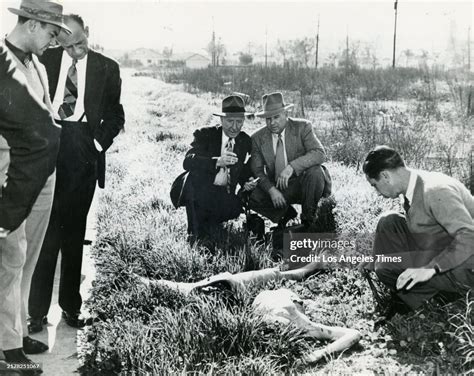
The Black Dahlia murder is one of the most infamous unsolved crimes in American history, with the brutal and gruesome nature of the crime shocking the nation and captivating the imagination of the public. The case, which involves the mutilation and murder of 22-year-old Elizabeth Short, has been the subject of intense scrutiny and speculation over the years, with numerous theories and suspects emerging, but none of them have been proven conclusively. One of the most crucial aspects of the case is the crime scene, where Short’s body was found on January 15, 1947, in a vacant lot on Norton Avenue in Leimert Park, Los Angeles.
At the crime scene, investigators found Short’s body posed in a deliberately provocative and gruesome manner, with evidence of severe torture and mutilation. The body had been cut in half at the waist, and the two halves were arranged in a deliberate and ritualistic pattern, with the arms and legs posed in a way that suggested a deliberate attempt to shock and offend. The crime scene was described as “a scene from a horror movie” by one of the investigators, and it was clear that the killer had spent a significant amount of time and effort in preparing and posing the body.
The investigation into the Black Dahlia murder was one of the largest and most extensive in Los Angeles history at the time, with hundreds of leads and tips pursued by the police. However, despite the efforts of the investigators, the case remained unsolved, and the identity of the killer was never established. Over the years, numerous theories and suspects have emerged, including claims of involvement by famous figures such as Bugsy Siegel and Orson Welles, but none of these have been proven conclusively.
One of the most intriguing aspects of the Black Dahlia case is the series of cryptic messages and letters that were sent to the police and newspapers during the investigation. These messages, which were signed with a variety of pseudonyms, including “The Black Dahlia Avenger,” claimed to be from the killer and contained a range of bizarre and disturbing statements, including claims of responsibility for the murder and threats to commit further crimes. While the authenticity of these messages has never been established, they have been the subject of intense speculation and analysis, with many experts believing that they may hold important clues to the identity of the killer.
In recent years, advances in forensic technology have led to a re-examination of the evidence in the Black Dahlia case, including the analysis of DNA samples and other physical evidence. While these efforts have not yet led to the identification of a suspect, they have provided new insights into the nature of the crime and the possible identity of the killer. For example, analysis of the DNA evidence has suggested that the killer may have been a woman, rather than a man, which has challenged many of the assumptions that have been made about the case over the years.
Despite the many advances that have been made in the investigation into the Black Dahlia murder, the case remains one of the most infamous unsolved crimes in American history. The brutal and gruesome nature of the crime, combined with the lack of progress in identifying the killer, has led to a lasting fascination with the case, with numerous books, films, and documentaries exploring the mystery and speculation surrounding the crime. While it is unlikely that the case will ever be fully solved, the ongoing investigation and analysis of the evidence continue to provide new insights and perspectives on one of the most shocking and disturbing crimes of the 20th century.
The Black Dahlia murder has also had a significant impact on the development of forensic science and crime investigation techniques. The case was one of the first to use forensic techniques such as fingerprint analysis and blood typing, and it highlighted the importance of careful and meticulous crime scene investigation. The case also led to the development of new techniques and technologies, such as the use of psychological profiling and geographic information systems (GIS) to analyze and investigate crimes.
In terms of the psychological profile of the killer, experts have suggested that the Black Dahlia murder was a highly ritualistic and symbolic crime, with the killer using the victim’s body to convey a range of messages and themes. The posing of the body, with the arms and legs arranged in a deliberate and ritualistic pattern, suggests a high degree of planning and premeditation, and the use of mutilation and torture suggests a desire to inflict maximum pain and suffering on the victim. The killer’s use of cryptic messages and letters to claim responsibility for the crime and to taunt the police also suggests a high degree of intelligence and cunning, as well as a desire for attention and notoriety.
What was the significance of the Black Dahlia murder in terms of its impact on forensic science and crime investigation techniques?
+The Black Dahlia murder was a landmark case in the development of forensic science and crime investigation techniques, with the use of fingerprint analysis, blood typing, and other forensic techniques helping to pave the way for modern crime investigation practices. The case also highlighted the importance of careful and meticulous crime scene investigation, and it led to the development of new techniques and technologies, such as psychological profiling and geographic information systems (GIS) to analyze and investigate crimes.
What are some of the most popular theories about the identity of the Black Dahlia killer?
+There are many theories about the identity of the Black Dahlia killer, with some of the most popular including claims of involvement by famous figures such as Bugsy Siegel and Orson Welles. Other theories have suggested that the killer may have been a woman, rather than a man, while some experts have suggested that the killer may have been a serial killer who was active in the Los Angeles area during the 1940s.
What is the current status of the investigation into the Black Dahlia murder?
+The investigation into the Black Dahlia murder is ongoing, with new evidence and leads being pursued by investigators. In recent years, advances in forensic technology have led to a re-examination of the evidence in the case, including the analysis of DNA samples and other physical evidence. While these efforts have not yet led to the identification of a suspect, they have provided new insights into the nature of the crime and the possible identity of the killer.
In conclusion, the Black Dahlia murder is a complex and intriguing case that continues to fascinate and horrify people to this day. The brutal and gruesome nature of the crime, combined with the lack of progress in identifying the killer, has led to a lasting fascination with the case, with numerous books, films, and documentaries exploring the mystery and speculation surrounding the crime. While it is unlikely that the case will ever be fully solved, the ongoing investigation and analysis of the evidence continue to provide new insights and perspectives on one of the most shocking and disturbing crimes of the 20th century.