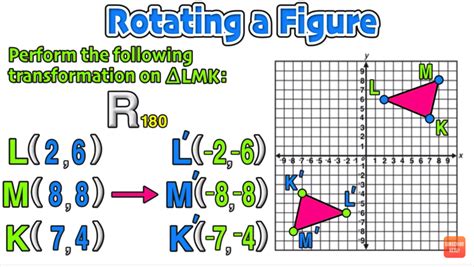
The concept of rotation is fundamental in various fields, including mathematics, physics, and engineering. Understanding the direction of rotation, particularly counterclockwise, is crucial for solving problems and visualizing movements. In this article, we will delve into the world of rotation, exploring what counterclockwise means, its applications, and how it differs from clockwise rotation.
Introduction to Rotation
Rotation refers to the movement of an object around a fixed point or axis. The direction of rotation can be either clockwise or counterclockwise. Clockwise rotation is often represented by a right-handed screw or a clock’s hands moving in the traditional time-telling direction. On the other hand, counterclockwise rotation is akin to a left-handed screw or the opposite direction of a clock’s hands.
Understanding Counterclockwise Rotation
Counterclockwise rotation, also known as anticlockwise rotation, involves moving in a direction that is opposite to that of a clock’s hands. Imagine standing at the center of a clock face; moving your finger in the direction from 12 to 11 to 10, and so on, would be a counterclockwise rotation. This concept is essential in mathematics, where it is used to describe the rotation of shapes and objects in a plane.
Applications of Counterclockwise Rotation
- Mathematics and Geometry: Understanding counterclockwise rotation is vital in geometry for defining the orientation of shapes, calculating angles, and performing rotational transformations. It helps in solving problems related to circles, polygons, and their properties.
- Physics and Engineering: In physics, the direction of rotation is crucial when dealing with rotational motion, torque, and angular momentum. Engineers consider the direction of rotation when designing mechanical systems, such as gears and motors, to ensure efficient and safe operation.
- Computer Graphics: Counterclockwise rotation is a basic concept in computer graphics, used for creating animations, rotations, and transformations of objects in 2D and 3D spaces. It’s essential for game development, simulations, and visual effects.
- Navigation and Aviation: Pilots and navigators must understand the concept of counterclockwise rotation when plotting courses, especially when dealing with circular patterns or navigating through turns.
Historical Perspective on Rotation
The concept of rotation has been understood and utilized by humans for thousands of years, from the construction of ancient astronomical devices like the Antikythera mechanism to the development of modern mechanical and digital systems. The distinction between clockwise and counterclockwise rotation has been particularly important in the design and operation of machines, where the direction of rotation can significantly affect performance and efficiency.
Comparative Analysis: Clockwise vs. Counterclockwise
- Direction: The most obvious difference is the direction of rotation. Clockwise rotation proceeds in the same direction as a clock’s hands, while counterclockwise rotation moves in the opposite direction.
- Application: Both types of rotation have their specific applications. For instance, screws typically turn clockwise to tighten and counterclockwise to loosen, illustrating how the choice between clockwise and counterclockwise can depend on the intended function and design of a mechanism.
- Convention: In many cultures, clockwise is considered the standard or default direction of rotation, possibly due to the widespread use of clocks. However, counterclockwise rotation is equally important and is used in numerous applications where its properties are beneficial.
Expert Insights
According to experts in the field of mechanics, “The direction of rotation, whether clockwise or counterclockwise, is not just a matter of convention but can have significant implications for the design, efficiency, and safety of mechanical systems.” Understanding and applying the principles of rotation, including counterclockwise rotation, is critical for advancing technological capabilities and solving complex problems.
Future Trends and Developments
As technology continues to evolve, the importance of understanding rotation, including counterclockwise movement, will only increase. In fields like robotics, drone technology, and advanced manufacturing, precise control over rotation is essential for achieving desired outcomes. Future developments are likely to involve more sophisticated applications of rotational principles, potentially leading to breakthroughs in efficiency, precision, and innovation.
Practical Applications and Examples
For those interested in applying the concept of counterclockwise rotation, here are a few practical steps and examples:
- Mathematical Problems: Practice solving geometry problems that involve rotational transformations. This can help deepen your understanding of how counterclockwise rotation affects shapes and their properties.
- Mechanical Projects: Engage in DIY projects or mechanics where you can apply the concept of counterclockwise rotation. For instance, understanding how to properly tighten or loosen screws and bolts can prevent damage to equipment.
- Navigation Exercises: Participate in navigation activities, such as orienteering or aviation training, where understanding counterclockwise rotation can be crucial for plotting accurate courses and executing precise turns.
Conclusion
In conclusion, counterclockwise rotation is a fundamental concept that underlies many aspects of our technological, mathematical, and physical world. Understanding its principles and applications can enhance one’s ability to solve problems, design efficient systems, and appreciate the intricate mechanisms that govern our universe. Whether in the realm of mathematics, physics, or engineering, recognizing the importance of counterclockwise rotation can lead to new insights and innovations that shape our future.
What is the difference between clockwise and counterclockwise rotation?
+Clockwise and counterclockwise rotations differ in their direction. Clockwise rotation moves in the same direction as a clock's hands, while counterclockwise rotation moves in the opposite direction.
Why is understanding counterclockwise rotation important?
+Understanding counterclockwise rotation is crucial for solving problems and visualizing movements in mathematics, physics, engineering, and other fields. It has practical applications in design, mechanics, navigation, and more.
How can I apply the concept of counterclockwise rotation in practical projects?
+You can apply the concept of counterclockwise rotation in mechanical projects, such as DIY repairs or engineering designs, by considering the direction of screws, gears, and other rotational components. Additionally, practicing mathematical problems involving rotational transformations can help deepen your understanding.
In the realm of rotation, understanding and distinguishing between clockwise and counterclockwise movements is not just about direction; it’s about grasping the underlying principles that govern the behavior of objects, mechanisms, and systems. As we continue to explore and innovate, the significance of counterclockwise rotation, among other rotational concepts, will remain pivotal in shaping our technological advancements and problem-solving capabilities.