The inimitable Daniel Day-Lewis, a thespian of unparalleled talent and dedication, has left an indelible mark on the world of cinema. With a career spanning over four decades, he has mesmerized audiences with his chameleon-like ability to immerse himself in a wide range of characters, from the iconic to the obscure. In this comprehensive exploration, we will delve into the greatest roles and performances of Daniel Day-Lewis, examining the nuances of his craft and the impact of his work on the film industry.
Early Beginnings: A Foundation for Greatness Day-Lewis’s journey to stardom began with his debut in the 1971 film “Sunday Bloody Sunday,” where he played a minor role as a teenager. However, it was his portrayal of Johnny in the 1980 film “Gandhi” that brought him to the attention of critics and audiences alike. This early success laid the groundwork for a career marked by intense preparation, meticulous research, and a willingness to push the boundaries of his craft.
My Left Foot (1989) - A Breakthrough Performance Day-Lewis’s breakout role came with the 1989 film “My Left Foot,” where he played Christy Brown, an Irishman born with cerebral palsy who learned to paint and write with his foot. This tour-de-force performance earned him his first Academy Award for Best Actor, cementing his reputation as a master of his craft. To prepare for the role, Day-Lewis spent months researching and immersing himself in the life of Christy Brown, even going so far as to learn how to paint with his foot.
In the Name of the Father (1993) - A Powerful Portrayal In 1993, Day-Lewis starred in Jim Sheridan’s “In the Name of the Father,” playing the role of Gerry Conlon, a wrongfully accused man who spent 15 years in prison for a crime he did not commit. This powerful performance showcased Day-Lewis’s ability to convey the depth of human emotion, from the anguish of injustice to the resilience of the human spirit.
The Age of Innocence (1993) - A Study in Restraint The same year, Day-Lewis appeared in Martin Scorsese’s “The Age of Innocence,” playing the role of Newland Archer, a man torn between his duty and his desire. This performance demonstrated Day-Lewis’s capacity for subtlety and restraint, as he brought to life the complexities of a character trapped in a societal web of expectations.
Gangs of New York (2002) - A Return to Form After a five-year hiatus, Day-Lewis returned to the screen in 2002 with Martin Scorsese’s “Gangs of New York,” playing the role of William “Bill the Butcher” Cutting, a ruthless gang leader in 19th-century New York. This performance marked a triumphal return to form, as Day-Lewis brought his trademark intensity to the role, imbuing the character with a depth and complexity that rivaled his earlier work.
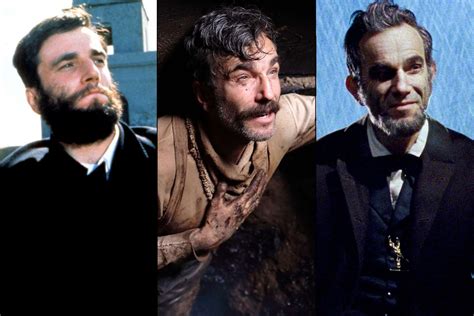
There Will Be Blood (2007) - A Monstrous Masterpiece In 2007, Day-Lewis starred in Paul Thomas Anderson’s “There Will Be Blood,” playing the role of Daniel Plainview, a ruthless oil tycoon driven by his insatiable ambition. This performance is widely regarded as one of the greatest in cinematic history, with Day-Lewis bringing to life a character of unbridled passion and unrelenting drive.
Lincoln (2012) - A Presidential Portrait Day-Lewis’s portrayal of Abraham Lincoln in Steven Spielberg’s 2012 film “Lincoln” was a masterclass in understated power. With his signature intensity, he brought to life the 16th President of the United States, conveying the weight of responsibility and the depth of compassion that defined Lincoln’s leadership.
Phantom Thread (2017) - A Swan Song In 2017, Day-Lewis announced his retirement from acting, leaving behind a legacy of unforgettable performances. His final role was as Reynolds Woodcock, a renowned fashion designer, in Paul Thomas Anderson’s “Phantom Thread.” This performance was a fitting swan song, as Day-Lewis brought his unique blend of nuance and intensity to the role, creating a character that was both fascinating and flawed.
Day-Lewis's approach to acting is a testament to his dedication and craftsmanship. He has consistently pushed the boundaries of his craft, immersing himself in his characters and bringing to life complex, multifaceted individuals that continue to captivate audiences.
FAQ Section
What is Daniel Day-Lewis's most iconic role?
+While opinions may vary, Daniel Day-Lewis's portrayal of Daniel Plainview in "There Will Be Blood" is widely regarded as one of his most iconic roles, earning him widespread critical acclaim and numerous awards.
How does Daniel Day-Lewis prepare for his roles?
+Day-Lewis is known for his intensive research and preparation, often spending months or even years immersing himself in the life and experiences of his characters. He has been known to learn new skills, adopt different accents, and even change his physical appearance to fully inhabit his roles.
What is Daniel Day-Lewis's approach to acting?
+Day-Lewis's approach to acting is characterized by his intense preparation, meticulous research, and willingness to take risks. He is known for his ability to fully immerse himself in his characters, creating complex, nuanced performances that continue to captivate audiences.
What is Daniel Day-Lewis's legacy in the film industry?
+Day-Lewis's legacy in the film industry is one of unparalleled excellence, with a career marked by iconic performances, critical acclaim, and numerous awards. He has inspired a generation of actors and continues to be regarded as one of the greatest actors of all time.
As we reflect on the remarkable career of Daniel Day-Lewis, it becomes clear that his impact on the film industry will be felt for generations to come. Through his dedication to his craft, his willingness to take risks, and his unwavering commitment to excellence, he has left an indelible mark on the world of cinema, inspiring audiences and actors alike with his unforgettable performances.