Dog Size Chart Letter Size Overview
A window size chart is a handy tool for anyone looking to understand window measurements quickly and easily. This guide will take you through the basics, covering what you need to know to read and use these charts effectively.
It's a simple reference, but one that can vary depending on your location and the type of window you're dealing with. Whether you're after standard window dimensions or more specific measurements, a good chart will provide a clear overview, helping you choose the right size for your needs.
Understanding Window Size Charts
A window size chart is a valuable tool for anyone planning a construction or renovation project. It provides a quick reference guide to standard window dimensions, helping you choose the right size and type for your space. These charts are a handy way to visualize and compare options, ensuring your windows fit the intended space and serve their purpose.
Key Details and Categories
Before diving into a window size chart, it's essential to understand the basic units and categories. Most charts use inches for width and height, with standard sizes ranging from 18" x 18" to 36" x 72". These dimensions cover a wide range of common window types, including single-hung, double-hung, casement, and fixed windows. The charts often include a breakdown of these categories, making it easy to identify the right type for your needs.
Reading the Chart: A Step-by-Step Guide
- Identify the window type you require. This could be a double-hung window for ease of use or a casement window for ventilation.
- Locate the relevant section on the chart. Each type will have its own set of standard sizes.
- Choose the size that best fits your space. Consider the width and height of the opening and ensure the window provides adequate coverage.
- Note the dimensions and any additional details, such as the number of panes or the window's energy efficiency rating.
- Cross-reference with other charts or guidelines to ensure accuracy, especially if you're working with non-standard sizes or unique architectural features.
Variations and Differences
Window size charts can vary depending on the standard being used. While most follow a similar format, there may be slight differences in dimensions or the inclusion of specific window types. For instance, some charts might cater to a wider range of window styles, including awning or bay windows. It's crucial to refer to the right chart for your region or project requirements. Additionally, manufacturers may have their own charts with slight variations to accommodate their product range.
Common Mistakes and How to Avoid Them
One of the most common mistakes is assuming that all windows are created equal. Different window types have unique purposes and may not fit the same space. Always refer to the correct chart for the window style you need. Another pitfall is neglecting to consider the frame size. The window size chart typically refers to the glass dimensions, so ensure you account for the frame when measuring your space. Finally, don't forget to check for any local building regulations or guidelines that might impact your window choices.
Well, there you have it! A window size chart is a handy tool to keep in your back pocket. It's a simple reference guide, but one that can save you time and ensure accuracy when planning your next project.
Remember, while this chart provides a great starting point, it's always wise to double-check the specific requirements for your unique situation. Exact values can vary, so it's best to be prepared and avoid any potential pitfalls. So, bookmark this page, and you'll have a quick and easy solution whenever you need it.
Related: Read the 1 to 100 Chart: A Quick Guide
Many people overlook the simplicity of a 1 to a 100 chart, assuming it's just a basic number sequence. However, it's so much more than that! This chart is a powerful tool, offering a clear visual representation of numbers and their relationships. It's an essential resource for anyone wanting to grasp number patterns and sequences quickly. The beauty of this chart lies in its ability to provide an at-a-glance overview, making it easy to identify patterns and understand number lines and counting charts.
The 1 to a 100 Chart: A Quick Overview
The 1 to a 100 chart is a simple yet powerful tool for understanding and working with numbers. It's a visual representation of the numbers from 1 to 100, often arranged in a grid-like format, making it easy to read and reference. This chart is a great resource for anyone learning or teaching basic arithmetic and number sense.
Comparing Chart Formats and Standards
While the basic concept remains the same, there can be slight variations in how the 1 to a 100 chart is presented. Some charts might use a simple grid layout, while others may incorporate color-coding or additional symbols to highlight patterns or place values. The choice of format often depends on the intended audience and purpose. For instance, charts for younger learners might use brighter colors and larger fonts to make it more engaging.
Reading and Using the 1 to a 100 Chart: A Step-by-Step Guide
Start by familiarizing yourself with the chart's layout. Typically, numbers increase from left to right and top to bottom. Each number is placed in its own square or cell, making it easy to locate and read.
Understand place value. The chart can help visualize the concept of place value, as numbers increase by ones, tens, and hundreds as you move across and down the grid. This pattern is a great visual aid for understanding the base-ten number system.
Practice counting and number sequences. Use the chart to practice counting forward and backward, or to identify number patterns. For example, you can easily spot odd and even numbers, or identify number sequences like multiples of 5 or 10.
Apply it to basic arithmetic. The chart is a handy reference for addition, subtraction, and even multiplication. You can quickly find the sum of two numbers by adding them together, or identify patterns in multiplication tables.
Common Misreadings and How to Avoid Them
While the 1 to a 100 chart is straightforward, there are a few potential pitfalls to watch out for:
Misreading place value: Always double-check the position of a number to ensure you're reading the correct digit. For instance, 13 is different from 31, even though both numbers are on the chart.
Confusing number patterns: While the chart highlights patterns, it's important to understand the underlying rules. For example, recognizing that even numbers end with 0, 2, 4, 6, or 8 doesn't mean that all numbers ending with these digits are even.
Assuming universality: While the 1 to a 100 chart is a great tool, it's not a replacement for understanding specific number systems or standards. Always verify exact specifications and tolerances for your specific use case.
A 1 to 100 chart is a simple yet powerful tool, offering a quick reference guide for various tasks and calculations. We've explored the different types available and how to use them effectively, step by step.
Remember, these charts are versatile, but it's essential to ensure you're using the right one for your specific needs. Double-check the values and formats to avoid any potential pitfalls. With a bit of practice, you'll be a pro at utilizing these charts efficiently!
Consider bookmarking this page for future reference. It's a handy resource to have at your fingertips, and you never know when you might need a quick reminder on how to navigate these charts with ease.
Related: How to use the Vans size chart?
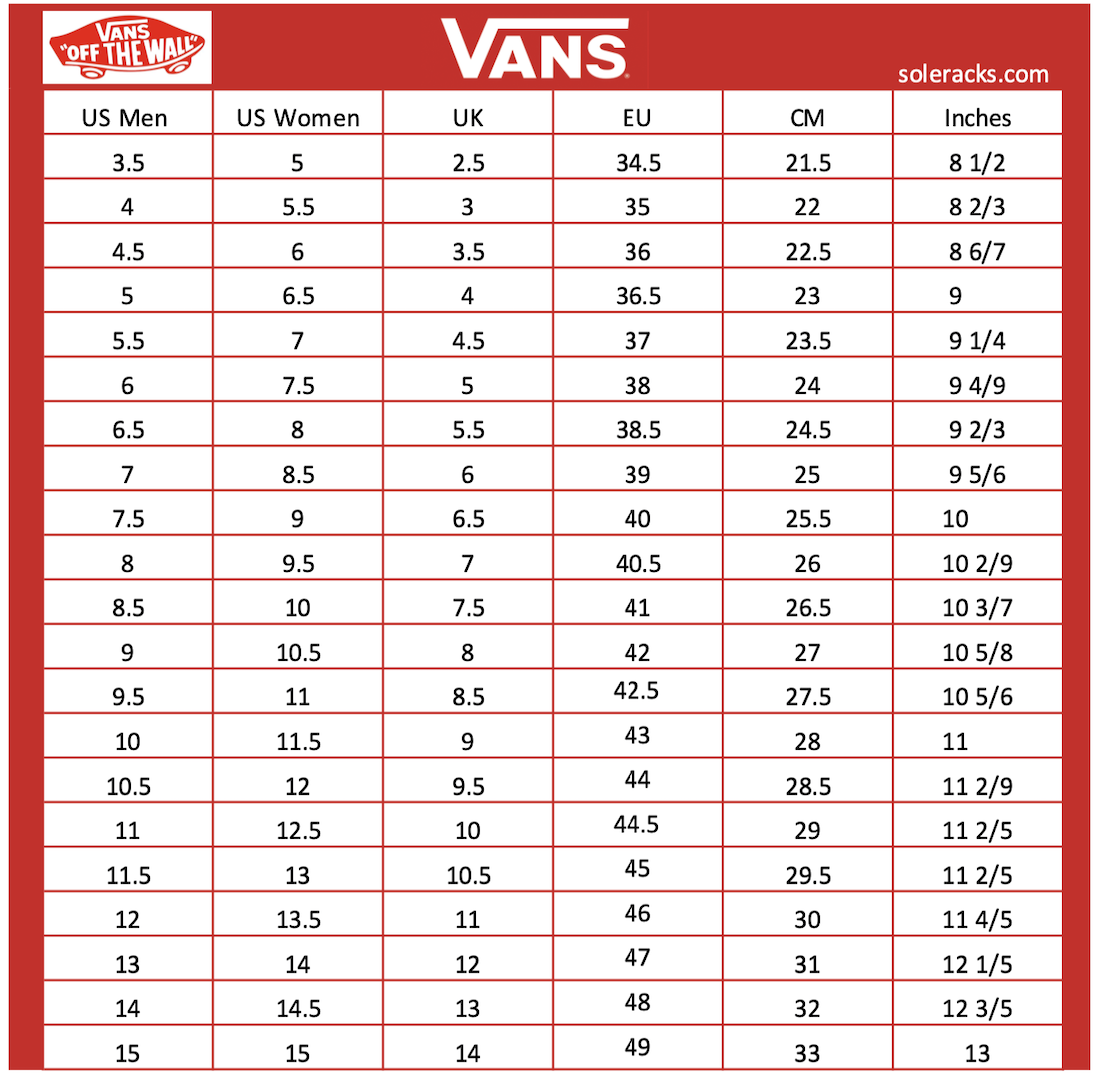
You're on a mission to find the perfect fit for your new Vans, and the Vans size chart is your trusty guide. It's a simple yet effective tool, offering a quick and reliable way to ensure you get the right size. This chart, a handy reference, provides an easy-to-read overview of men's and women's sizes, with length and width measurements to help you match your feet to the ideal pair. While the values may vary slightly depending on the style and region, the Vans size chart is a great starting point for an accurate fit.
Understanding Vans Size Chart
The Vans size chart is your go-to guide for finding the perfect fit for your favorite Vans sneakers. It's a handy tool that simplifies the sizing process, ensuring you get the right size for a comfortable and stylish stride.
Key Details and Categories
This chart provides a comprehensive breakdown of Vans shoe sizes, covering both men's and women's styles. The sizes are typically presented in US standard measurements, with length and width dimensions for each size. You'll find a clear table or diagram, making it easy to locate your ideal size.
Step-by-Step Guide to Reading the Chart
Here's a simple guide on how to navigate the Vans size chart:
- Identify your gender: The chart often separates men's and women's sizes, so start by locating the relevant section.
- Find your US size: Look for the column or row labeled with your US shoe size.
- Check the length and width: The chart will provide measurements for both length and width, ensuring a precise fit.
- Convert if needed: If you're more familiar with international sizes, use the conversion chart provided to find your equivalent US size.
- Choose your style: Different Vans styles might have slight variations, so ensure you're referring to the correct style guide.
Variations and Differences
It's important to note that shoe sizing can vary slightly between brands and even within the same brand for different styles. Vans, like many other shoe manufacturers, may have slight variations in their sizing charts to accommodate different foot shapes and preferences. These variations ensure a comfortable fit for a wide range of wearers.
Common Mistakes and How to Avoid Them
One common mistake is assuming that your Vans size will be the same as your regular shoe size. Always refer to the Vans shoe size chart specifically, as it may differ from other brands you wear. Another pitfall is neglecting to measure your foot properly. Ensure you follow the provided guidelines for accurate measurements.
Tips for Accurate Sizing
To ensure an accurate fit, consider these practical tips:
- Measure your foot regularly, especially if you're between sizes or notice any changes.
- Try on multiple sizes if possible, especially if you're new to Vans or have unique foot characteristics.
- Pay attention to the width measurements; a wide foot might require a different size than what you usually wear.
- Consider the style of Vans you prefer; some styles might fit slightly differently due to their design.
Double-Checking and Handling Exceptions
While the Vans size chart is a reliable guide, it's always a good idea to double-check the specific style and model you're interested in. Some Vans styles might have unique features or fit preferences, so referring to the detailed sizing guide for that particular style is recommended. Additionally, if you have unique foot characteristics, such as a wide or narrow foot, you may need to adjust your size accordingly. Always trust your comfort and fit preferences.
Well, there you have it! A comprehensive guide to understanding the Vans size chart. It's always best to be prepared and know your size, especially when it comes to finding the perfect fit.
Remember, while this guide provides a solid foundation, it's always wise to check the specific size chart for the style you're interested in. Vans, like many brands, may have slight variations, so double-checking ensures you get the right size for your feet. Happy shopping, and don't forget to explore our other helpful guides to enhance your shoe-buying experience!