The scenic city of Santa Barbara, nestled between the Santa Ynez Mountains and the Pacific Ocean, is a beautiful place to live and visit. However, its location on the West Coast of the United States puts it at risk for earthquakes. The San Andreas Fault, a major transform fault, runs for over 800 miles through California, and several smaller faults crisscross the Santa Barbara area. While earthquakes can be unpredictable, having a plan and being prepared can help minimize damage and ensure safety.
Understanding Earthquake Risks in Santa Barbara
Santa Barbara is situated in a seismically active region. The city has experienced several significant earthquakes throughout its history, including the 1925 Santa Barbara earthquake, which had a magnitude of 6.8 and caused widespread destruction. Understanding the risks and being aware of the potential for earthquakes can help residents and visitors take necessary precautions.
Creating an Emergency Plan
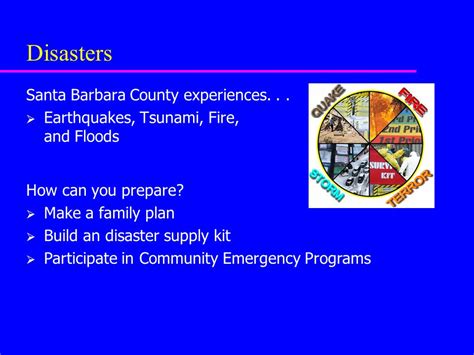
Having a comprehensive emergency plan is essential for earthquake preparedness. This plan should include:
- Emergency Contact Information: Make sure all household members have a list of emergency contact numbers, including phone numbers and email addresses.
- Meeting Points: Designate two meeting points, one near the home and one outside the neighborhood, where family members can gather in case of an emergency.
- Communication Plan: Establish a communication plan, including a designated contact person outside the area, in case family members are separated.
- Evacuation Route: Identify safe evacuation routes from the home, neighborhood, and city.
- Emergency Supplies: Stock an emergency kit with essential items, such as water, non-perishable food, first aid supplies, and a battery-powered radio.
Building a Disaster Supply Kit
A disaster supply kit should include essential items to sustain individuals for at least 72 hours. Some key components of the kit are:
- Water: Store at least one gallon per person per day for drinking, cooking, and hygiene.
- Non-Perishable Food: Include energy-rich foods, such as canned goods, dried fruits, and nuts.
- First Aid Supplies: A basic first aid kit should include bandages, antiseptic wipes, pain relievers, and any prescription medications.
- Flashlights and Batteries: In case of a power outage, have reliable light sources and extra batteries.
- Personal Hygiene Items: Include toilet paper, hand sanitizer, and moist towelettes.
Staying Informed
Staying informed about earthquake risks and emergency preparedness is crucial. Some ways to stay informed include:
- Registering for Emergency Alerts: Sign up for emergency alerts from the City of Santa Barbara or Santa Barbara County to receive critical information during an emergency.
- Following Local News: Stay up-to-date with local news and weather reports to be aware of any potential earthquake risks.
- Visiting the USGS Website: The USGS website provides valuable information on earthquake risks, preparedness, and safety tips.
Mitigation and Preparation
Mitigation and preparation are key to reducing the impact of earthquakes. Some steps to take include:
Benefits of Earthquake-Resistant Construction
Earthquake-resistant construction can help reduce damage to buildings and homes, minimizing the risk of injury and loss of life.
Costs Associated with Earthquake-Resistant Construction
While earthquake-resistant construction can be costly, the benefits of reduced damage and increased safety far outweigh the costs.
Scenario-Based Examples
Consider the following scenario: a magnitude 7.0 earthquake strikes Santa Barbara during rush hour. The roads are congested, and emergency services are overwhelmed. Having a plan and being prepared can help individuals navigate this situation safely.
Thought Experiment Framework
Imagine a world where earthquake prediction is possible. How would this impact emergency preparedness and response? While earthquake prediction is currently not possible, this thought experiment framework can help individuals think critically about emergency preparedness and response.
Historical Context Segments
The 1906 San Francisco earthquake and the 1933 Long Beach earthquake are two significant examples of devastating earthquakes in California’s history. These earthquakes led to major changes in building codes and emergency preparedness, highlighting the importance of learning from past disasters.
Data Visualization Descriptions
The following graph illustrates the frequency and magnitude of earthquakes in the Santa Barbara area over the past century. This data visualization can help individuals understand the risks and patterns of earthquakes in the region.
Practical Application Guides
To convert theory into action, follow these practical steps:
- Create a Personalized Emergency Plan: Tailor your emergency plan to your specific needs and circumstances.
- Conduct Regular Drills: Practice your emergency plan with family members to ensure everyone knows what to do in case of an earthquake.
- Stay Informed: Continuously update your knowledge of earthquake risks and emergency preparedness.
Addressing Potential Objections
Some individuals may object to the idea of earthquake preparedness, citing the low probability of a major earthquake occurring. However, the consequences of a major earthquake can be devastating, making preparation and planning essential.
What is the best way to prepare for an earthquake?
+Creating a comprehensive emergency plan, building a disaster supply kit, and staying informed about earthquake risks are essential steps in preparing for an earthquake.
How often should I practice my emergency plan?
+Practice your emergency plan at least twice a year to ensure everyone knows what to do in case of an earthquake.
What are the most critical items to include in my disaster supply kit?
+Water, non-perishable food, first aid supplies, and a battery-powered radio are essential items to include in your disaster supply kit.
In conclusion, earthquake preparedness is a critical aspect of living in Santa Barbara. By understanding the risks, creating a comprehensive emergency plan, building a disaster supply kit, and staying informed, individuals can minimize the impact of earthquakes and ensure safety. Remember, preparation and planning are key to navigating the unpredictable nature of earthquakes.