




Esl Worksheets For Kindergarten Overview
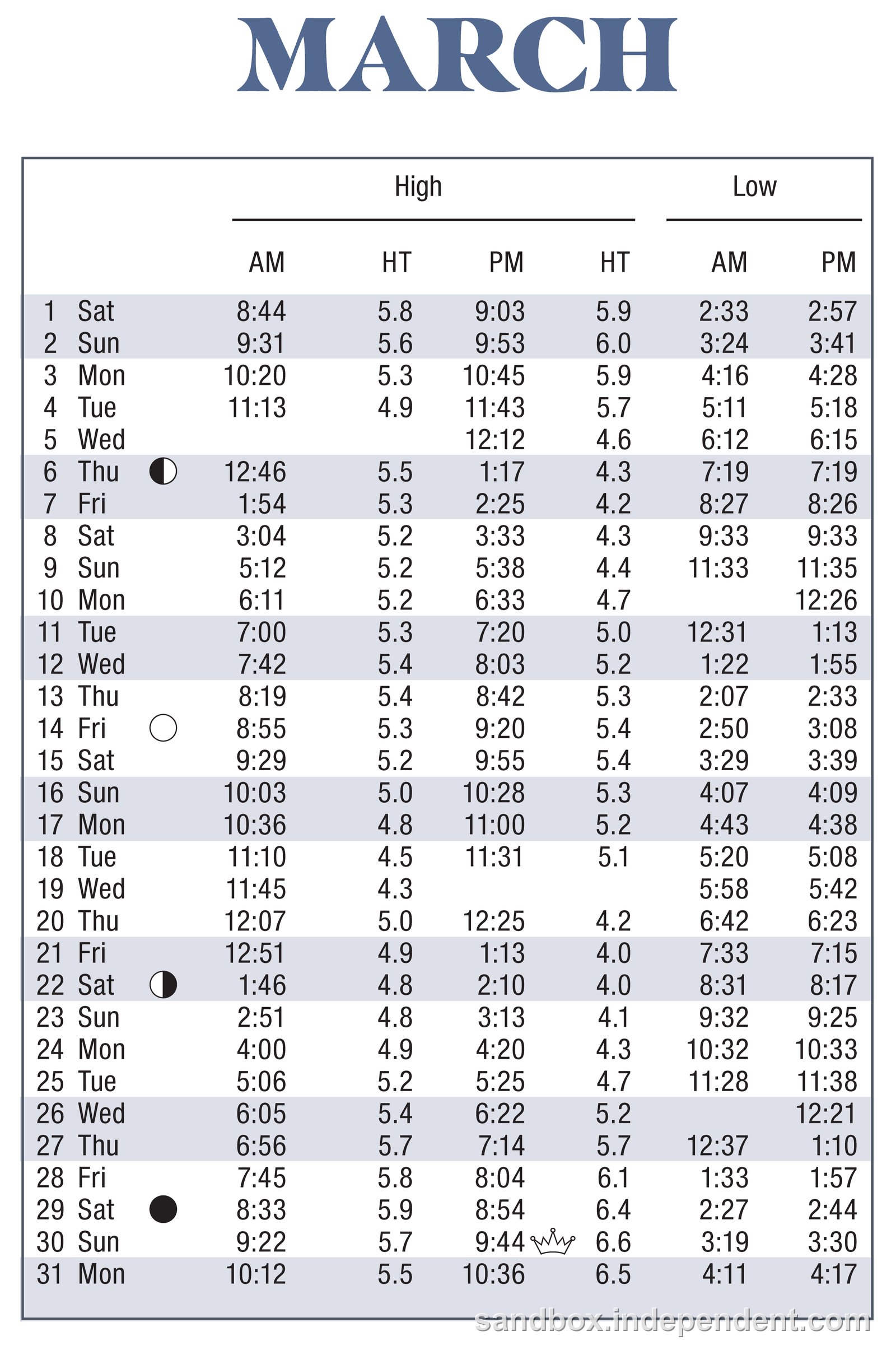
A tide chart Seattle is a handy tool for anyone wanting to explore the city's waterways or plan marine activities. This guide will cover the basics, helping you understand and utilize these charts effectively.
Tide chart Seattle and similar resources provide essential information on tide times, water levels, and sea conditions. They offer a quick reference, ensuring you're prepared for your next adventure on the water. While formats may vary, the core data remains a valuable asset for sailors, anglers, and beachgoers alike.
Understanding the Data: A Quick Overview
The tide chart for Seattle provides a handy reference for predicting water levels and tidal movements in the area. It's an essential tool for anyone interested in marine activities or wanting to understand the city's tide heights. This chart offers a visual representation of how the tide times and water levels will change over a given period, typically a day or a few days.
Comparing Formats: Standard vs. Customized Charts
There are two main types of tide charts: standard and customized. Standard charts are widely available and provide a general overview of tidal patterns. These are great for getting a quick sense of the tide times and water levels in an area. Customized charts, on the other hand, offer a more detailed and specific view. These are tailored to a particular location and can account for local factors that may influence tidal behavior.
Step-by-Step: Reading Your Tide Chart Seattle
To read your tide chart Seattle, follow these simple steps:
Identify the Date and Time: The chart will have a date and time scale. Ensure you're referring to the correct day and time for your planned activity.
Locate the Tide Height Indicator: This is usually a line or curve on the chart. It will show you the predicted tide height at different times throughout the day.
Understand the Scale: The vertical axis represents tide height, often measured in feet or meters. Ensure you're using the correct unit of measurement for your chart.
Read the Tide Times: The horizontal axis shows the time of day. Markings indicate when the tide will be at its highest or lowest points, known as high and low tides.
Plan Your Activities: With the tide times and water levels in mind, you can now plan your marine activities accordingly.
Common Misreadings and How to Avoid Them
It's easy to misinterpret a tide chart if you're not familiar with its format. Here are some common mistakes and how to avoid them:
Confusing High and Low Tides: Ensure you understand which direction the tide is moving. A rising tide means the water level is increasing, while a falling tide indicates a decrease.
Misinterpreting the Scale: Always double-check the units of measurement. A mistake here can lead to significant errors in your planning.
Assuming Accuracy: Tide charts are predictions based on historical data and models. Actual tidal behavior can vary due to weather conditions and other factors. Always check the latest marine forecasts for up-to-date information.
Factors Affecting Accuracy: Weather and More
The accuracy of your tide chart Seattle can be influenced by several factors:
Weather Conditions: Strong winds, storms, and other weather events can cause significant variations in tidal behavior. Always check the latest weather forecasts.
Local Geography: The shape of the coastline and nearby landmasses can affect tidal patterns. This is why customized charts can be more accurate for specific locations.
Moon Phases: The gravitational pull of the moon influences tides. Full and new moon phases often bring higher tide heights and stronger currents.
Choosing the Right Format: Standard or Customized?
When selecting a tide chart Seattle, consider your specific needs:
If you're a casual user or just need a general overview, a standard chart will suffice. These are widely available and easy to interpret.
For more detailed planning, especially if you're engaging in marine activities like boating or fishing, a customized chart is ideal. These account for local factors and can provide more accurate predictions.
Keeping Your Setup Reliable for Next Time
To ensure you have reliable tidal data for future reference:
Save Your Chart: Keep a copy of your tide chart Seattle for future use. This way, you can quickly refer to it without having to search for a new one.
Check for Updates: Tide charts are based on historical data and predictions. For the most accurate information, ensure you're using the latest available data. Check for updates regularly, especially if there have been significant weather events or changes in the local environment.
Learn from Experience: If you notice any significant discrepancies between your chart's predictions and actual tidal behavior, take note. This can help you better understand local factors and improve your future planning.
Well, there you have it! We've covered a lot of ground, from understanding the basics to ensuring accuracy and adapting to your needs. Remember, the key is to find a format that works best for your specific situation, and don't be afraid to make adjustments as you go.
The world of tide charts is an ever-evolving one, so feel free to explore and discover what works best for you. If you're keen to learn more about other practical topics, we've got a whole range of guides waiting for you to dive into. Happy exploring!
Related: match formula excel easy guide for data lookups
Match formula Excel can save you hours when you need to find something in a long list. Say you’ve got a sheet with hundreds of product IDs, and you need to know the position of a specific one. Instead of scrolling forever, you type in =MATCH(lookup_value, lookup_array, [match_type]), and Excel does the heavy lifting. It’s not just for numbers—it works with text, dates, and even wildcards if you set it up right.
It’s one of those formulas that feels like a secret weapon once you get the hang of it. Sure, XLOOKUP is flashier, but match formula Excel is faster for grabbing a position, not a value. Plus, it plays well with INDEX for more advanced lookups. If you’re still manually searching for data, this is your cue to stop.
Find positions, not just values
The match formula in Excel is all about locating where something sits in a list. It’s perfect for anyone who needs to map data between sheets or check if an item exists. Marketers use it to match campaign IDs to results, inventory managers track stock locations, and HR teams map employee IDs to departments.
Set up your sheet with two columns: one for your lookup list (e.g., product IDs) and one for the data you’re matching against (e.g., sales numbers). Keep the lookup list sorted if you’re using match_type 1 (exact or next smallest). Add a third column for the formula itself, and a fourth for any error handling with IFERROR.
| Product ID | Sales | Position | Formula |
|---|---|---|---|
| 101 | 250 | =MATCH(101, A2:A100, 0) |
|
| 102 | 300 | =MATCH(103, A2:A100, 1) |
|
| 103 | 150 | =MATCH("104", A2:A100, 0) |
The first formula returns 1 because 101 is the first item in the list. The second returns 5 since 103 isn’t there, but 105 is the next smallest. The third returns #N/A because "104" (as text) doesn’t match 104 (as a number).
Common mistake: Using match_type 1 on unsorted data. Excel won’t throw an error, but it’ll give you wrong results. Fix it by sorting the lookup array or switching to match_type 0 for exact matches.
Pair it with INDEX for dynamic lookups
The real power of match formula Excel comes when you combine it with INDEX. Together, they let you pull values from a table based on a lookup, without hard-coding cell references. This is how you build dynamic dashboards or reports that update automatically.
Create a table with Ctrl+T, then add a separate cell for your lookup value (e.g., "Q1 Sales"). Below it, set up a formula like =INDEX(table_array, MATCH(lookup_value, lookup_column, 0), return_column). Use IFERROR around it to catch missing data.
| Quarter | Region | Sales | Formula |
|---|---|---|---|
| Q1 | East | 500 | |
| Q1 | West | 700 | |
| Q2 | East | 600 |
Formula in D2: =IFERROR(INDEX(B2:B4, MATCH("Q1", A2:A4, 0), 2), "Not Found"). Returns 500 for Q1 East sales.
Common mistake: Forgetting to lock cell references with $. If you drag the formula down, A2:A4 should be $A$2:$A$4 to keep it anchored.
Handle errors and wildcards
Match formula in Excel breaks if it can’t find what you’re looking for. Wrap it in IFERROR to show a custom message instead of #N/A. If you’re working with partial matches, use wildcards by switching to match_type 0.
Add a data validation dropdown in your lookup cell to avoid typos. Go to Data > Data Validation > List, and point it to your lookup array. This keeps inputs consistent.
| Item | Price | Lookup | Result |
|---|---|---|---|
| Apple | 1.50 | p | 1 |
| Banana | 0.75 | n | 2 |
| Cherry | 2.00 | Peach | Not Found |
Formula in D2: =IFERROR(MATCH(C2 & "", A2:A4, 0), "Not Found"). For p, it returns 1 because "Apple" contains “p”.
Common mistake: Storing numbers as text. If your lookup value is 101 (number) but your array has "101" (text), the formula fails. Fix it with Data > Text to Columns > Finish to convert.
Build a lookup tracker
Turn match formula Excel into a reusable tracker by adding conditional formatting and filters. This works great for inventory logs, expense trackers, or project checklists. Highlight matches with Home > Conditional Formatting > New Rule > Use a formula.
Set up a filter on your lookup column (Ctrl+Shift+L) so you can narrow down results. Freeze the top row (View > Freeze Panes) if your sheet is long.
| Task ID | Status | Due Date | Priority |
|---|---|---|---|
| 001 | Done | 2023-10-15 | High |
| 002 | Pending | 2023-10-20 | Medium |
| 003 | Done | 2023-10-25 | Low |
Formula in E2: =IF(ISNUMBER(MATCH(A2, $A$2:$A$4, 0)), "Found", ""). Add conditional formatting to highlight “Found” cells.
Common mistake: Merging cells in your lookup array. Merged cells break formulas. Unmerge them with Home > Merge & Center > Unmerge Cells.
Try building a simple inventory tracker next. Use match formula Excel to flag low-stock items, and pair it with COUNTIFS to tally quantities.
Related: Contractor for House Repair Essential Guide
"I've been putting off those house repairs for too long, but I really need to get them done. Time to find a contractor for house repair!"
All About Hiring a Contractor
So, you've got some home repairs or renovations on your to-do list, and you're thinking about hiring a contractor to get the job done. It's a big step, and there's a lot to consider. A contractor for house repair can handle all sorts of jobs, from small fixes to major overhauls. They're the experts in construction and remodeling, and they'll have the skills and tools to get your project completed.
When it comes to costs, it's tricky to give an exact figure as it depends on so many factors. The size of the job, the materials needed, and the labor involved will all impact the price. It's a good idea to get quotes from a few different contractors to compare. Look for detailed quotes that break down the costs, so you can see what you're paying for. Don't just go for the cheapest option; consider the quality of the work and the contractor's reputation too.
Finding and Choosing the Right Contractor
There are lots of contractors and building companies out there, so how do you find the right one? Word of mouth is a great way to start - ask friends or family for recommendations. You can also search online for local contractors and read reviews to get an idea of their work. When you've found a few potential contractors, give them a call or send an email to ask some initial questions.
Find out about their experience and the types of projects they typically work on. Ask about their availability and how long they estimate the job will take. It's also worth asking about any potential extra costs or unexpected issues that might arise during the work. A good contractor will be transparent and give you an honest assessment.
Naming Your Construction Business
If you're thinking of starting your own construction business, you'll need a great name. The name should be memorable and reflect the nature of your work. It might include words like 'build', 'repair', 'remodel', or 'renovate'. It could also be a play on your own name or a unique combination of words. Here are a few ideas:
- Build-It-Better
- Renovate Right
- Fix-It-Fast
- Home Remedy
- Construction Solutions
- The Repair Crew
Remember to check the availability of the name you choose. You'll need to register it locally and secure the domain name for your website.
The Construction Industry and You
The construction industry offers a range of jobs, from general contractors and estimators to specialized roles like plumbers, electricians, and carpenters. If you're looking for work, these roles are often advertised online or through local recruitment agencies. The industry is always in need of skilled workers, so it's a great field to get into.
Estimators, for example, play a crucial role in construction. They use tools like RSMeans to calculate the costs of materials and labor for a project. It's a detailed and important job, and estimators are in high demand.
Big Companies and the Industry Outlook
The construction industry is made up of a mix of small, medium, and large companies. The bigger firms often have more resources and can take on larger, more complex projects. They might have a wider range of specialized staff and more advanced tools and equipment.
However, smaller companies can offer a more personalized service and often have a strong local reputation. It's a competitive industry, and companies of all sizes are always looking for ways to stand out and offer the best service.
So, there you have it! A contractor for house repair is a great option for getting those home improvements done. It's an exciting step, and with the right contractor, you'll be enjoying your renovated space in no time.