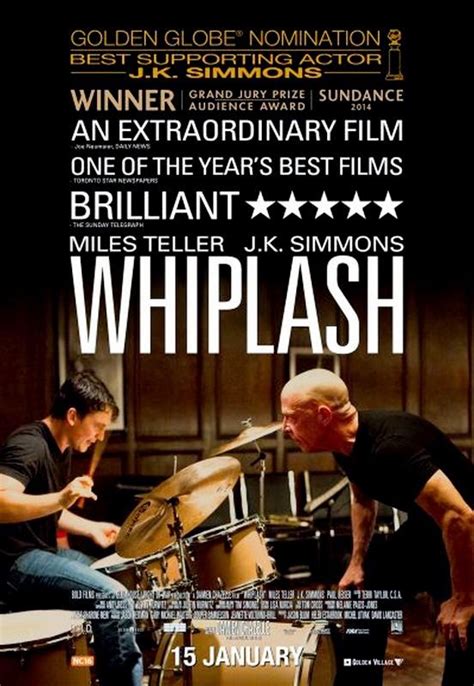
The cinematic world is replete with tales of ambition, perseverance, and the unrelenting pursuit of excellence. However, few films capture the essence of these themes as intensely as Damien Chazelle’s 2014 masterpiece, Whiplash. This gripping drama delves into the intricate dynamics between a young jazz drummer, Andrew Neyman, and his ruthless instructor, Terence Fletcher, at the prestigious Shaffer Conservatory. As we embark on this cinematic journey, it becomes glaringly apparent that Whiplash is more than a film about music; it’s an exploration of the human spirit, a nuanced examination of the price of greatness, and the darker underbelly of ambition.
At the heart of Whiplash lies a complex, often turbulent relationship between Andrew (Miles Teller) and Fletcher (J.K. Simmons). Their interaction is a compelling study in contrasts, with Andrew’s eagerness to prove himself pitted against Fletcher’s brutal, demanding teaching methods. Fletcher’s character, in particular, is a fascinating exploration of the fine line between mentorship and psychological manipulation. His behavior is both captivating and repulsive, embodying the epitome of a perfectionist who will stop at nothing to extract the best from his students, even if it means pushing them to the brink of physical and emotional collapse.
One of the standout aspects of Whiplash is its technical brilliance. The cinematography is stark and intense, with a muted color palette that reflects the somber, disciplined world of professional jazz. The editing is razor-sharp, capturing the frenetic energy of the jazz performances with a frenzied intensity that places the viewer squarely in the midst of the action. But it’s the sound design that truly sets Whiplash apart, with the crack of the snare drum and the blast of the trumpets becoming almost tactile, enveloping the audience in the visceral, pulsating world of jazz.
The performances, too, are nothing short of phenomenal. Miles Teller brings a vulnerable intensity to Andrew, his character’s desperation to succeed tangibly palpable. However, it’s J.K. Simmons who steals the show, his portrayal of Fletcher a masterclass in controlled fury and calculated sadism. His character’s infamous outbursts are both terrifying and mesmerizing, leaving the viewer questioning the morality of his methods while being unable to look away from the sheer force of his personality.
Whiplash also prompts a plethora of questions about the nature of ambition, talent, and the cost of achieving greatness. Is Fletcher’s brutal regime necessary to push his students to true excellence, or is it a form of abuse that exploits their desire for approval and success? The film doesn’t offer easy answers, instead presenting a nuanced, multifaceted exploration that challenges the viewer to form their own conclusions. This ambiguity is part of Whiplash’s enduring power, making it a film that lingers long after the credits roll, its themes and characters continuing to haunt and provoke.
In examining the making of Whiplash, it becomes clear that the film itself was a product of the same relentless pursuit of perfection that drives its characters. Damien Chazelle’s script was meticulously crafted, with each scene and line carefully calibrated to build towards the film’s frenetic climax. The cast underwent rigorous training to ensure their performances were authentic, with Miles Teller and the rest of the jazz ensemble spending hours rehearsing to capture the nuances of jazz performance. This dedication to authenticity pays off, imbuing Whiplash with a sense of realism that makes its more dramatic moments feel all the more intense and believable.
What themes does Whiplash explore beyond music?
+Whiplash delves into themes of ambition, the price of greatness, and the darker aspects of human psychology, particularly in the context of mentorship and the pursuit of excellence.
How does the film portray the relationship between Andrew and Fletcher?
+The relationship between Andrew and Fletcher is complex and often turbulent, marked by Fletcher's demanding teaching methods and Andrew's eagerness to prove himself, leading to a dynamic of both psychological manipulation and intense musical growth.
What technical aspects of Whiplash contribute to its cinematic impact?
+The film's stark cinematography, razor-sharp editing, and particularly its sound design, which captures the visceral energy of jazz performances, all contribute to Whiplash's intense cinematic impact.
As the curtains close on Whiplash, the audience is left with a profound sense of unease and awe, pondering the true cost of ambition and the morally ambiguous means by which greatness is achieved. It’s a film that doesn’t shy away from the brutal realities of its world, instead confronting them head-on with a ferocity and honesty that’s as captivating as it is unsettling. Whiplash is a testament to the transformative power of cinema, a film that will leave you breathless, bewildered, and perhaps even a little bit disturbed. But most importantly, it will leave you thinking, long after the final note has faded into silence.