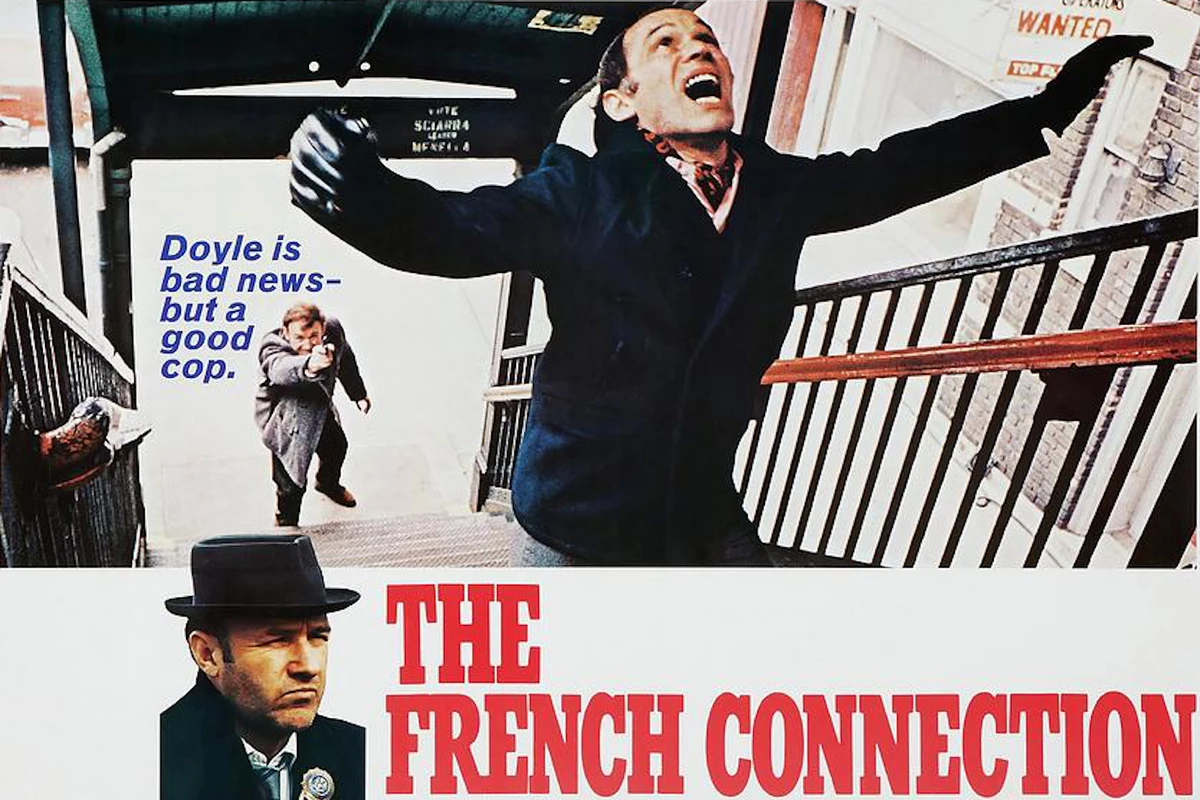
The French Connection, a seminal film in the history of American cinema, grasps the viewer with its gripping narrative, outstanding performances, and meticulous direction. Directed by William Friedkin and released in 1971, this crime thriller not only captivated audiences with its intense portrayal of drug trafficking and police procedural but also redefined the genres of crime and detective films. The movie is based on the 1969 non-fiction book of the same name by Robin Moore, which chronicles the true story of the seizure of a massive heroin shipment in New York City.
At the heart of the film are its two protagonists, Jimmy “Popeye” Doyle and Buddy “Cloudy” Russo, portrayed by Gene Hackman and Roy Scheider, respectively. Doyle and Russo are narcotics detectives from the New York Police Department who become embroiled in a complex investigation involving a significant shipment of heroin from France. Their characters embody the essence of determined law enforcement, with a blend of relentless pursuit, intuitive detective work, and a deep-seated desire to see justice served.
The film’s narrative is intertwined with themes of obsession, camaraderie, and the cat-and-mouse game between law enforcement and the underworld. Popeye Doyle, in particular, is depicted as a hard-boiled, sometimes reckless, detective who becomes obsessed with solving the case, willing to push boundaries and challenge authority in his pursuit of the smugglers. This character arc is contrasted with the more laid-back and methodical approach of Cloudy Russo, highlighting the diverse strategies and personalities that can coexist within law enforcement.
One of the standout elements of “The French Connection” is its cinematography and direction. Friedkin’s use of location shooting in New York City adds a layer of realism to the film, capturing the gritty and often unforgiving nature of urban life in the early 1970s. The famous car chase scene, where Doyle commandeers a car to chase a hijacked elevated train, is a masterpiece of suspense and direction, showing Friedkin’s ability to craft sequences that are both thrilling and believable.
The film’s portrayal of drug trafficking and its impact on society was also groundbreaking for its time. It delved into the inner workings of the drug trade, depicting not just the smugglers and dealers but also the law enforcement officers tasked with stopping them. The movie humanized both sides of the equation, presenting characters with depth and motivation rather than simple archetypes.
“The French Connection” received widespread critical acclaim upon its release and garnered several Oscar nominations, ultimately winning five Academy Awards, including Best Picture, Best Director for William Friedkin, Best Actor for Gene Hackman, Best Film Editing, and Best Adapted Screenplay for Ernest Tidyman. This recognition not only underscored the film’s quality but also its influence on the film industry, paving the way for more realistic and complex portrayals of law enforcement and crime in subsequent movies and television series.
In conclusion, “The French Connection” stands as a landmark in American cinema, offering a blend of gripping storytelling, memorable characters, and meticulous filmmaking. Its influence can still be seen in many modern crime dramas, and its exploration of themes such as obsession, justice, and the complexities of drug enforcement continues to resonate with audiences today.
Behind the Scenes: The Making of “The French Connection”
The production of “The French Connection” was marked by a rigorous approach to realism and authenticity. Friedkin and his cast, including Hackman and Scheider, immersed themselves in the world of narcotics enforcement, conducting extensive research and spending time with real detectives to understand the intricacies of their work. This commitment to authenticity is evident in the film’s depiction of police procedures, drug trafficking operations, and the everyday lives of law enforcement officers.
Impact and Legacy
The influence of “The French Connection” extends beyond its immediate success in the early 1970s. It paved the way for future crime dramas, influencing films like “Serpico,” “The Godfather,” and “Goodfellas,” among many others. The film’s realistic portrayal of law enforcement and its challenges, its detailed exploration of the drug trade, and its use of location shooting to add realism all contributed to a shift in how crime stories were told on the screen.
What awards did "The French Connection" win?
+"The French Connection" won five Academy Awards, including Best Picture, Best Director for William Friedkin, Best Actor for Gene Hackman, Best Film Editing, and Best Adapted Screenplay for Ernest Tidyman.
What was the basis for the film "The French Connection"?
+The film is based on the 1969 non-fiction book "The French Connection: A True Account of Cops, Narcotics, and International Conspiracy" by Robin Moore, which tells the true story of the seizure of a large heroin shipment in New York City.
Who played the main characters in "The French Connection"?
+The main characters, Jimmy "Popeye" Doyle and Buddy "Cloudy" Russo, were portrayed by Gene Hackman and Roy Scheider, respectively.
The enduring appeal of “The French Connection” lies in its masterful storytelling, coupled with its insightful exploration of the human condition amidst the backdrop of crime and law enforcement. As a film, it stands as a testament to the power of cinema to captivate, inform, and reflect on the complexities of our world.