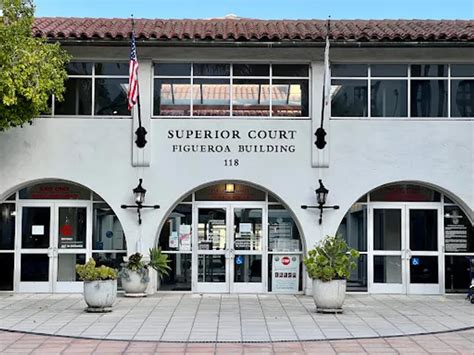
Filing a case in the Santa Barbara County Superior Court involves several steps, which can vary depending on the type of case you are filing. The court has two main locations: one in Santa Barbara and another in Santa Maria. It’s essential to ensure you are filing in the correct location, as this is determined by the nature of your case and the location of the parties involved.
Step 1: Determine the Correct Court Location
Before you start the filing process, you need to determine which courthouse is the appropriate venue for your case. The Santa Barbara County Superior Court has locations in Santa Barbara and Santa Maria. Generally, cases are filed based on the geographical location related to the case. For example, cases involving parties or incidents in the northern part of the county (including Santa Maria, Lompoc, and Guadalupe) are usually filed in the Santa Maria courthouse, while cases involving the southern part (including Santa Barbara, Goleta, and Carpinteria) are filed in the Santa Barbara courthouse.
Step 2: Prepare Your Documents
To file a case, you need to prepare the necessary legal documents. These can include a complaint, petition, or other specific forms required for your type of case. The Santa Barbara County Superior Court website provides access to court forms, but it’s often helpful to consult with an attorney to ensure you have all the necessary documents and that they are correctly filled out. Some commonly used forms can be found on the California Judicial Council’s website, but local forms may also be required.
Step 3: Fill Out Your Forms
Make sure to fill out your forms completely and accurately. Incomplete or incorrectly filled-out forms can lead to delays or even rejection of your filing. If you’re unsure about any part of the process, consider consulting with a legal professional or seeking assistance from the court’s self-help center.
Step 4: Determine Your Filing Fee
Most court filings require a fee, which can vary based on the type of case. You can find the current fee schedule on the Santa Barbara County Superior Court’s website. If you cannot afford the filing fee, you may be eligible for a fee waiver. You will need to fill out a fee waiver form (FW-001) and provide financial information to support your request.
Step 5: File Your Documents
You can file your documents in person at the courthouse during business hours or by mail. If filing by mail, ensure you send the original documents (not copies) to the correct courthouse address. Include a self-addressed, stamped envelope so the court can return a filed-stamped copy to you.
- Santa Barbara Courthouse: 1100 Anacapa Street, Santa Barbara, CA 93101
- Santa Maria Courthouse: 312-C East Cook Street, Santa Maria, CA 93454
Step 6: Serve the Other Party
After filing your case, you will need to serve the other party (or parties) with a copy of the filed documents. This can be done by a process server, a sheriff, or another adult who is not a party to the case. The server will need to fill out a proof of service form, which you will then file with the court.
Step 7: Wait for a Response and Proceed with Your Case
After serving the other party, wait for their response. The time they have to respond can vary depending on the type of case. Once they respond, or if they fail to respond, you can proceed with your case according to the court’s schedule and procedures.
Additional Tips:
- Use the Court’s Self-Help Center: The court offers resources for individuals representing themselves, including a self-help center that can provide guidance on the filing process.
- Consult an Attorney: While not required, consulting with an attorney can be very beneficial, especially for complex cases.
- Stay Organized: Keep copies of all your documents and deadlines related to your case.
Remember, the specifics of the filing process can vary significantly depending on the nature of your case. Always check the most current information on the Santa Barbara County Superior Court’s website or consult with legal professionals to ensure you follow the correct procedures for your situation.