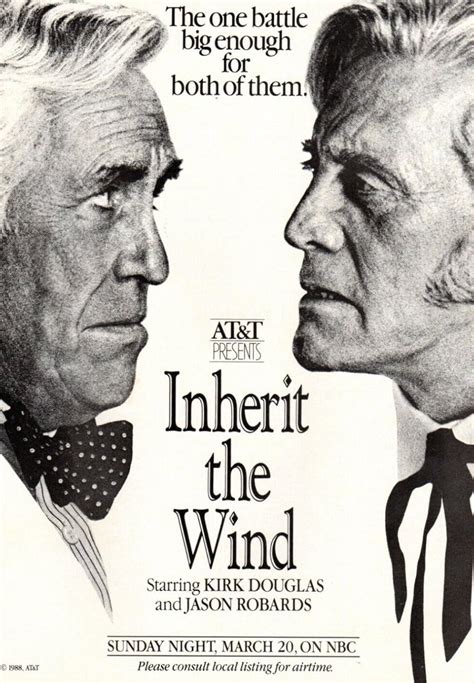
The phrase “Inherit the Wind” is a reference to the Bible, specifically Proverbs 11:29, which states, “He that troubleth his own house shall inherit the wind: and the fool shall be servant to the wise.” This phrase has been used as a title for various works, including a play and a film, both of which deal with the themes of fundamentalism, intellectual freedom, and the conflict between traditional values and progressive ideas.
One of the most famous adaptations of the phrase is the 1955 play “Inherit the Wind” by Jerome Lawrence and Robert Edwin Lee. The play is a fictionalized account of the 1925 Scopes Monkey Trial, in which a high school teacher, John Scopes, was prosecuted for teaching evolution in a Tennessee public school. The trial was a major controversy at the time, pitting fundamentalist Christians against supporters of intellectual freedom and scientific inquiry.
The play “Inherit the Wind” uses the trial as a backdrop to explore the tensions between traditional values and modern ideas. The protagonist, Bertram Cates, is a fictionalized version of John Scopes, who is put on trial for teaching evolution to his students. The prosecution is led by a charismatic and fundamentalist politician, Matthew Harrison Brady, who sees the teaching of evolution as a threat to traditional values and the authority of the Bible.
As the trial progresses, the play raises important questions about the role of religion in public life, the limits of intellectual freedom, and the tension between faith and reason. Through the characters of Cates and Brady, the play explores the complexities of these issues and the difficulties of reconciling traditional values with modern ideas.
The play “Inherit the Wind” has been widely acclaimed for its thought-provoking and nuanced portrayal of these issues. It has been performed numerous times on stage and screen, and its themes and characters continue to resonate with audiences today. The play’s exploration of the conflict between fundamentalism and intellectual freedom remains particularly relevant in contemporary society, where debates over science, religion, and education continue to be contentious.
In addition to its thought-provoking themes, the play “Inherit the Wind” is also notable for its well-developed characters and engaging storyline. The character of Matthew Harrison Brady, in particular, is a complex and nuanced figure, whose charisma and conviction are balanced by his rigid fundamentalism and intolerance of opposing views. The character of Bertram Cates, on the other hand, is a more sympathetic figure, whose commitment to intellectual freedom and scientific inquiry is motivated by a desire to understand the world and to teach his students about the latest scientific discoveries.
Through the characters of Brady and Cates, the play “Inherit the Wind” raises important questions about the role of education in society and the importance of intellectual freedom. The play suggests that education should be a process of critical inquiry and open-minded exploration, rather than a means of indoctrinating students with dogmatic beliefs. It also highlights the importance of protecting intellectual freedom, not just for the sake of individual liberty, but also for the advancement of knowledge and the betterment of society as a whole.
In conclusion, the phrase “Inherit the Wind” is a powerful and thought-provoking reference to the conflict between traditional values and modern ideas. The play “Inherit the Wind” is a masterpiece of American theater, which explores this conflict through a fictionalized account of the Scopes Monkey Trial. Through its well-developed characters and engaging storyline, the play raises important questions about the role of religion in public life, the limits of intellectual freedom, and the tension between faith and reason. As a work of literature, “Inherit the Wind” continues to resonate with audiences today, offering a nuanced and thought-provoking exploration of some of the most pressing issues of our time.
What is the historical context of the Scopes Monkey Trial?
+The Scopes Monkey Trial took place in 1925, during a time of great social and cultural change in the United States. The trial was a symbol of the conflict between traditional values and modern ideas, and it highlighted the tensions between fundamentalist Christians and supporters of intellectual freedom and scientific inquiry.
What are the main themes of the play "Inherit the Wind"?
+The main themes of the play "Inherit the Wind" include the conflict between traditional values and modern ideas, the importance of intellectual freedom, and the tension between faith and reason. The play also explores the role of education in society and the importance of protecting intellectual freedom.
What is the significance of the character of Matthew Harrison Brady in the play?
+The character of Matthew Harrison Brady is a complex and nuanced figure, whose charisma and conviction are balanced by his rigid fundamentalism and intolerance of opposing views. Brady represents the forces of traditionalism and fundamentalism, and his character serves as a foil to the more progressive and open-minded character of Bertram Cates.
In the context of contemporary society, the themes and characters of “Inherit the Wind” remain highly relevant. The play’s exploration of the conflict between fundamentalism and intellectual freedom continues to resonate with audiences today, as debates over science, religion, and education remain contentious. The play’s emphasis on the importance of critical inquiry and open-minded exploration is also particularly relevant in an era of fake news and disinformation, where the ability to evaluate evidence and think critically is more important than ever.
Furthermore, the play “Inherit the Wind” highlights the importance of protecting intellectual freedom, not just for the sake of individual liberty, but also for the advancement of knowledge and the betterment of society as a whole. In an era where science and reason are often under attack, the play’s message about the importance of intellectual freedom and the need to protect it is more urgent than ever.
In conclusion, the play “Inherit the Wind” is a powerful and thought-provoking work of literature that continues to resonate with audiences today. Its exploration of the conflict between traditional values and modern ideas, its emphasis on the importance of intellectual freedom, and its nuanced portrayal of complex characters all contribute to its enduring relevance and importance. As a work of theater, “Inherit the Wind” remains a masterpiece of American drama, offering a compelling and thought-provoking exploration of some of the most pressing issues of our time.
The play "Inherit the Wind" is a testament to the power of theater to explore complex social and cultural issues. Through its well-developed characters and engaging storyline, the play raises important questions about the role of education in society, the importance of intellectual freedom, and the tension between faith and reason. As a work of literature, "Inherit the Wind" continues to resonate with audiences today, offering a nuanced and thought-provoking exploration of some of the most pressing issues of our time.
In terms of its historical context, the play “Inherit the Wind” is a product of the 1950s, a time of great social and cultural change in the United States. The play reflects the anxieties and uncertainties of this era, as well as the emerging concerns about the role of science and reason in American society. At the same time, the play’s themes and characters are timeless, and its exploration of the conflict between traditional values and modern ideas continues to resonate with audiences today.
Understanding the Play "Inherit the Wind"
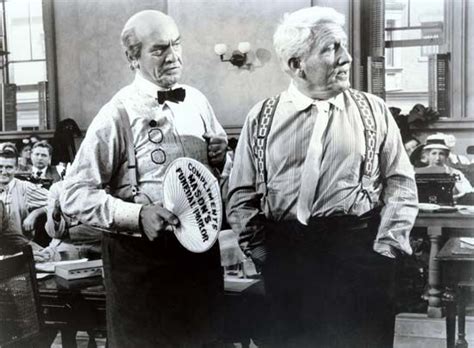
- Read the play and become familiar with its characters and storyline.
- Research the historical context of the Scopes Monkey Trial and the era in which the play was written.
- Analyze the themes and characters of the play, and consider their relevance to contemporary society.
- Reflect on the importance of intellectual freedom and the need to protect it, particularly in an era of fake news and disinformation.
- Consider the ways in which the play "Inherit the Wind" can be used to promote critical thinking and open-minded exploration, particularly in educational settings.
Overall, the play “Inherit the Wind” is a powerful and thought-provoking work of literature that continues to resonate with audiences today. Its exploration of the conflict between traditional values and modern ideas, its emphasis on the importance of intellectual freedom, and its nuanced portrayal of complex characters all contribute to its enduring relevance and importance. As a work of theater, “Inherit the Wind” remains a masterpiece of American drama, offering a compelling and thought-provoking exploration of some of the most pressing issues of our time.