Lego Batmanprintable Coloring Pages Overview
You've found yourself searching for a lol mastery chart to help you quickly grasp the game's mechanics and strategies. This simple yet effective tool, often in the form of a visual guide, offers a snapshot of the game's mastery system. It's a handy reference for players, providing an overview of the mastery tree, runes, and the path to progression.
Understanding the LOL Mastery Chart
The lol mastery chart is a visual representation of a player's progress and skill development in the game League of Legends. It provides an overview of a player's mastery points, ranks, and their journey through the game's mastery system. This chart is a valuable tool for players to track their growth and understand their standing among other players.
Key Details and Categories
The chart typically displays mastery points, which are earned through playing and achieving certain milestones. These points are represented on a scale, often with different colors or levels to indicate progress. The categories or ranks on the chart are usually divided into tiers, with each tier representing a higher level of mastery. These tiers may have names or numerical values associated with them, indicating the player's overall skill level.
Reading Mastery Levels and Progression
To read the lol mastery chart, start by identifying your current mastery rank or tier. This is often displayed prominently on the chart. Next, look at the mastery points associated with your rank. These points indicate the progress you've made and the skills you've acquired. The chart may also provide insights into the next steps for progression. It might suggest specific champions or roles to focus on to advance to the next tier.
Here's a step-by-step guide:
- Locate your current rank or tier.
- Note the mastery points and any associated achievements.
- Identify the requirements or suggestions for advancing to the next tier.
- Plan your gameplay to fulfill these requirements, whether it's mastering a new champion or improving your strategy.
Common Mastery Paths and Variations
The lol mastery chart can vary based on several factors. Firstly, different regions or servers may have slightly different mastery systems and charts. Additionally, the game itself evolves, introducing new champions and updates, which can impact the mastery path. Players' preferences and playstyles also contribute to variations. Some players might focus on a specific role or champion, resulting in unique mastery paths.
- Regional differences
- Game updates and new champions
- Player preferences and playstyles
Remember, the lol mastery chart is a guide, and while it provides a structured overview, it's important to adapt and tailor your gameplay to your strengths and interests. It's a tool to help you understand your progress and set goals, but the beauty of League of Legends lies in its diverse strategies and the freedom to explore different paths.
The LOL Mastery Chart is a handy tool, offering a clear and concise reference point for your LOL journey. By understanding the key elements, you can navigate and apply this chart with ease.
Remember, when utilizing any reference guide, it's essential to consider your unique context and requirements. Exact values and standards may vary, so a quick double-check ensures you're on the right path. Feel free to bookmark this page for future LOL adventures; it's a simple yet effective resource to have at your fingertips!
Related: Graco Tip Chart: A Quick Reference Guide
Many folks assume that the Graco tip chart is a complex, intimidating tool, but it's actually a simple and handy reference guide. This chart is your friend, offering a quick and easy way to choose the right spray tip for your project. It's not as scary as it might seem; Graco's tip chart is designed to be user-friendly and can make your painting or spraying tasks a breeze.
Understanding the Graco Tip Chart: Your Guide
The Graco tip chart is a handy reference tool designed to help you choose the right spray tip for your specific painting or coating project. This chart provides valuable insights into the relationship between tip size, fluid pressure, and paint flow rates, ensuring you achieve the desired finish and efficiency.
Comparing Tip Sizes and Fluid Pressures
The Graco tip chart offers a visual representation of how different tip sizes and fluid pressures interact. It typically presents a grid or table format, with tip sizes along one axis and fluid pressures on the other. By reading across the chart, you can quickly identify the recommended tip size for a given fluid pressure.
For example, if you're working with a fluid pressure of 2000 psi, the chart will guide you towards the appropriate tip size, ensuring optimal paint flow and atomization. It's important to note that the chart provides a general guide, and specific project requirements may vary.
Selecting the Right Tip: A Step-by-Step Guide
To make the most of the Graco tip chart, follow these simple steps:
Identify your fluid pressure: Determine the pressure at which you'll be spraying. This information is crucial for accurate tip selection.
Locate the fluid pressure on the chart: Find the corresponding row or column on the Graco tip chart that matches your fluid pressure.
Choose the recommended tip size: Read across the chart to identify the tip size recommended for your fluid pressure. This tip size will ensure efficient paint flow and atomization.
Consider viscosity: The Graco tip chart primarily focuses on fluid pressure and tip size. However, it's essential to consider the viscosity of your paint or coating. Thicker fluids may require a larger tip size to achieve the desired flow.
Adjust pressure and tip size as needed: If you encounter issues like excessive overspray or poor atomization, adjust your fluid pressure or tip size accordingly. The chart provides a starting point, but real-world conditions may require slight adjustments.
Common Misreadings and How to Avoid Them
While the Graco tip chart is straightforward, there are a few potential pitfalls to watch out for:
Mixing Standards: Graco charts often use different standards, such as US or metric units. Ensure you're referring to the correct chart for your region or project requirements.
Viscosity Considerations: While the chart focuses on fluid pressure and tip size, viscosity plays a crucial role. Thicker fluids may require adjustments to the recommended tip size.
Paint Flow Rates: The chart provides general guidelines, but actual paint flow rates can vary based on factors like gun distance, angle, and technique.
Key Factors Affecting Accuracy and Real-World Performance
When using the Graco tip chart, keep these factors in mind:
Fluid pressure: The chart relies on accurate fluid pressure readings. Ensure your pressure gauge is calibrated and functioning correctly.
Spray pressure settings: Adjusting spray pressure can impact the performance of your spray gun and the recommended tip size.
Tip wear: Over time, spray tips can wear down, affecting their performance. Regularly inspect and replace worn tips for optimal results.
Paint flow rates: While the chart provides a starting point, actual paint flow rates can vary based on gun distance, angle, and technique.
Adapting the Chart for Specific Needs
The Graco tip chart serves as a valuable guide, but it's not a one-size-fits-all solution. Here's how you can adapt it for specific projects:
Custom projects: If you're working on a unique project with specific requirements, consult with a Graco expert or your local paint supplier. They can provide tailored advice and recommend the best tip size for your needs.
Graco tip sizes: Graco offers a range of tip sizes to accommodate different projects. Familiarize yourself with the available options and their intended uses.
Fluid viscosity chart: For projects involving high-viscosity fluids, consider referring to a fluid viscosity chart. This chart provides additional guidance on tip size selection based on fluid thickness.
Hey there, we hope you found this Graco tip chart guide helpful! Remember, while we've covered the basics, the exact details might shift a bit based on your unique circumstances. No two situations are exactly the same, so it's always good to double-check and adapt as needed.
Feel free to explore our other guides too; we've got a bunch of practical resources to make your life easier. Happy reading, and here's to making your projects a breeze!
Related: How to use the Vans size chart?
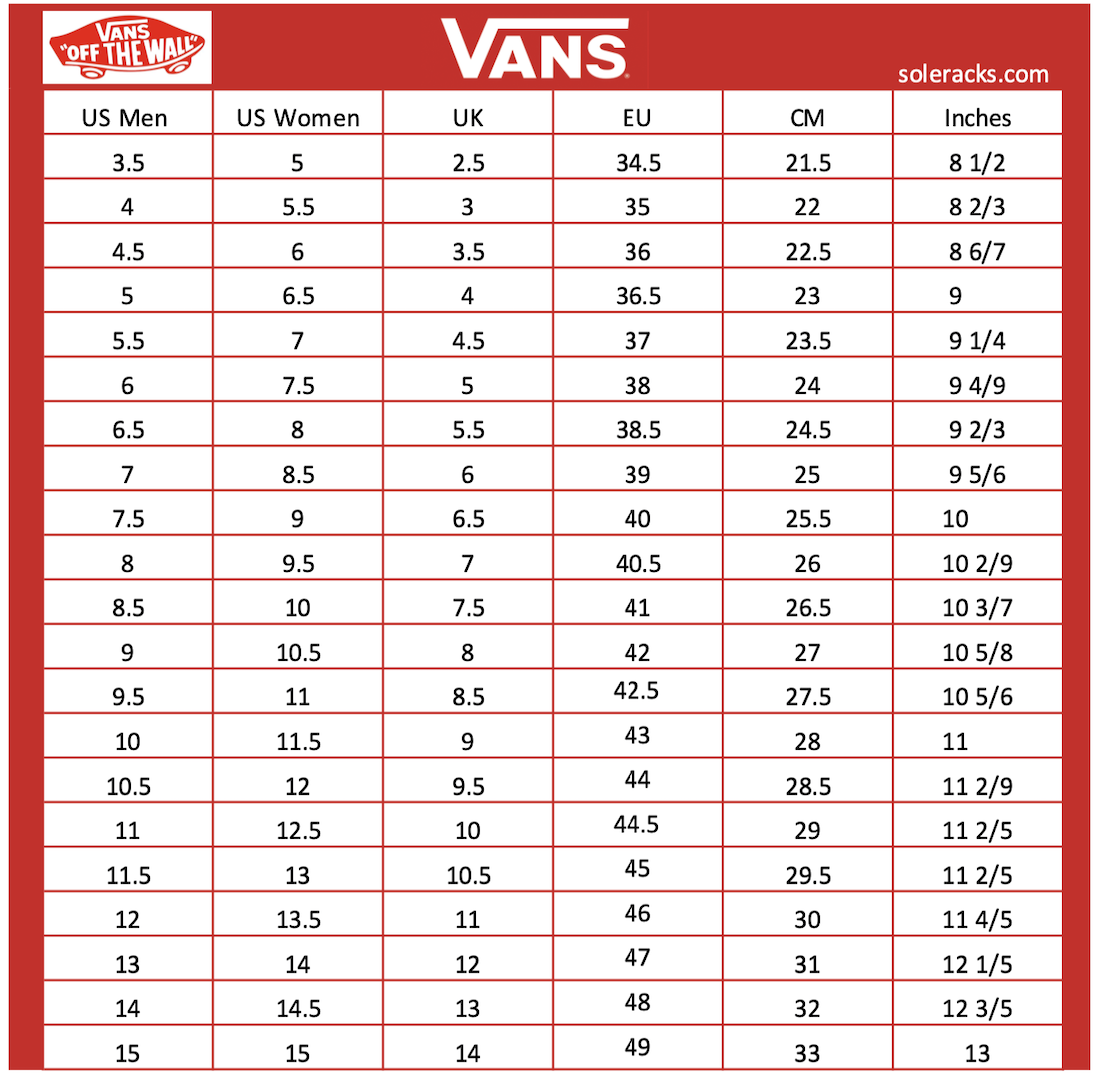
You're on a mission to find the perfect fit for your new Vans, and the Vans size chart is your trusty guide. It's a simple yet effective tool, offering a quick and reliable way to ensure you get the right size. This chart, a handy reference, provides an easy-to-read overview of men's and women's sizes, with length and width measurements to help you match your feet to the ideal pair. While the values may vary slightly depending on the style and region, the Vans size chart is a great starting point for an accurate fit.
Understanding Vans Size Chart
The Vans size chart is your go-to guide for finding the perfect fit for your favorite Vans sneakers. It's a handy tool that simplifies the sizing process, ensuring you get the right size for a comfortable and stylish stride.
Key Details and Categories
This chart provides a comprehensive breakdown of Vans shoe sizes, covering both men's and women's styles. The sizes are typically presented in US standard measurements, with length and width dimensions for each size. You'll find a clear table or diagram, making it easy to locate your ideal size.
Step-by-Step Guide to Reading the Chart
Here's a simple guide on how to navigate the Vans size chart:
- Identify your gender: The chart often separates men's and women's sizes, so start by locating the relevant section.
- Find your US size: Look for the column or row labeled with your US shoe size.
- Check the length and width: The chart will provide measurements for both length and width, ensuring a precise fit.
- Convert if needed: If you're more familiar with international sizes, use the conversion chart provided to find your equivalent US size.
- Choose your style: Different Vans styles might have slight variations, so ensure you're referring to the correct style guide.
Variations and Differences
It's important to note that shoe sizing can vary slightly between brands and even within the same brand for different styles. Vans, like many other shoe manufacturers, may have slight variations in their sizing charts to accommodate different foot shapes and preferences. These variations ensure a comfortable fit for a wide range of wearers.
Common Mistakes and How to Avoid Them
One common mistake is assuming that your Vans size will be the same as your regular shoe size. Always refer to the Vans shoe size chart specifically, as it may differ from other brands you wear. Another pitfall is neglecting to measure your foot properly. Ensure you follow the provided guidelines for accurate measurements.
Tips for Accurate Sizing
To ensure an accurate fit, consider these practical tips:
- Measure your foot regularly, especially if you're between sizes or notice any changes.
- Try on multiple sizes if possible, especially if you're new to Vans or have unique foot characteristics.
- Pay attention to the width measurements; a wide foot might require a different size than what you usually wear.
- Consider the style of Vans you prefer; some styles might fit slightly differently due to their design.
Double-Checking and Handling Exceptions
While the Vans size chart is a reliable guide, it's always a good idea to double-check the specific style and model you're interested in. Some Vans styles might have unique features or fit preferences, so referring to the detailed sizing guide for that particular style is recommended. Additionally, if you have unique foot characteristics, such as a wide or narrow foot, you may need to adjust your size accordingly. Always trust your comfort and fit preferences.
Well, there you have it! A comprehensive guide to understanding the Vans size chart. It's always best to be prepared and know your size, especially when it comes to finding the perfect fit.
Remember, while this guide provides a solid foundation, it's always wise to check the specific size chart for the style you're interested in. Vans, like many brands, may have slight variations, so double-checking ensures you get the right size for your feet. Happy shopping, and don't forget to explore our other helpful guides to enhance your shoe-buying experience!