









Planner Template For Freeform Overview
I was thinking about starting a names for concrete business the other day, you know, something to do with construction and building. It got me wondering about the right name, something that would stand out and be memorable. So, I did some research and here's what I found...
Choosing a Name for Your Concrete Business
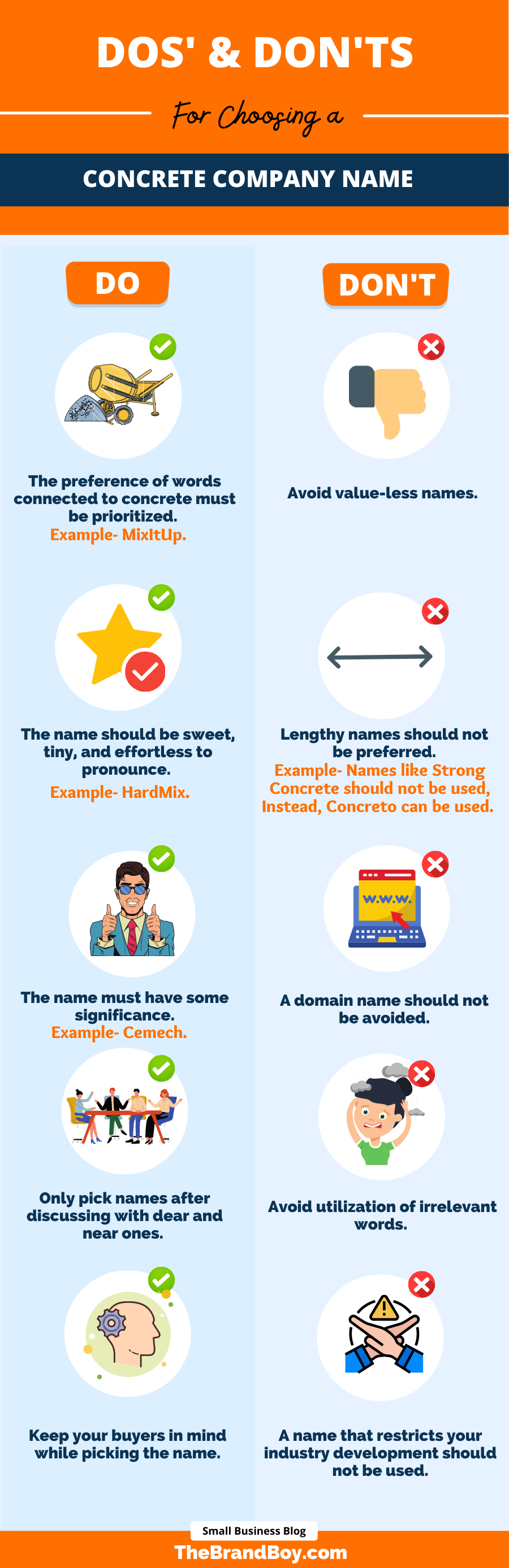
When it comes to naming your concrete business, you want something that reflects the strength and durability of the industry. A name that is catchy and easy to remember will help your business stick in people's minds. Consider words like "solid", "foundation", or "build" to convey a sense of stability and reliability.
What Makes a Good Name?
A good name for a concrete business should be unique and not too generic. Avoid common terms like "construction" or "builders" as these can be used by many different companies. Instead, focus on creating a name that is specific to your business and the services you offer. You could also consider using a play on words or a clever combination of words to make your business name memorable.
Example Names
Here are a few ideas to get you started:
- Solid Foundations
- Rock-Solid Builders
- Concrete Creations
- Build-It-Right
- Stronghold Construction
- Everlast Builders
Remember, these are just a few suggestions, and you can always get creative and come up with your own unique name.
Registering Your Business Name
Once you've settled on a name, you'll need to check its availability and register it. This process varies depending on your location, so it's best to contact your local business registration office or check their website for guidance. You'll also want to secure a domain name for your website and any social media handles to ensure your online presence is consistent.
Hiring a Contractor
If you're hiring a contractor for your project, whether it's a home renovation or a new build, it's important to do your research. Check their qualifications, experience, and references. Ask for a detailed quote, including a breakdown of costs, and compare it with other quotes to ensure you're getting a fair price. Don't be afraid to ask questions and seek clarity on any aspects of the quote you don't understand.
The Cost of Renovations
Renovation costs can vary greatly depending on the scope of the project, the materials used, and the location. It's always a good idea to get multiple quotes from different contractors to compare prices and ensure you're getting a competitive rate. Remember, the cheapest quote might not always be the best option, so consider the quality of the work and the reputation of the contractor too.
Industry Tools and Resources
There are various tools and resources available to help with construction and remodeling projects. RSMeans, for example, is a popular cost database used by professionals to estimate project costs. It provides accurate data on materials, labor, and other construction-related expenses. These tools can be beneficial for both contractors and homeowners to ensure projects stay on budget.
Construction Jobs and Salaries
The construction industry offers a range of job roles, from general contractors and estimators to specialized tradespeople. Salaries can vary depending on experience, qualifications, and the specific role. If you're looking for construction jobs, online job boards and local employment agencies are great places to start your search.
So, there you have it! A few insights into the world of names for concrete business. It's an exciting industry to be a part of, and with the right name and approach, you can build a successful business. Good luck!
Related: How to use a weight chart for yarn?
Many crafters, especially beginners, often overlook the importance of understanding weight chart yarn and how it can impact their projects. While it may seem like a simple reference, it's a crucial tool to ensure your knitting or crocheting turns out just right.
The weight chart provides a clear indication of yarn thickness, and while the values might vary slightly, it offers a consistent guide to help you choose the right yarn for your pattern. Think of it as a roadmap, guiding you to the perfect yarn weight for your next creation, be it a cozy scarf or a delicate lace shawl.
What is a Weight Chart for Yarn?
A weight chart for yarn is a valuable tool that helps knitters, crocheters, and other yarn crafters understand the thickness or "weight" of different yarn types. It's like a map that guides you through the world of yarn, ensuring you choose the right thickness for your project.
Key Details and Categories
The weight chart typically consists of categories or ranges that describe the thickness of the yarn. These categories are often represented by numbers or symbols, and they provide a standardized way to compare and choose yarns. For example, you might see categories like "Lace," "Fingering," "Sport," "Worsted," and "Bulky." Each category has a specific range of thicknesses, and the chart helps you visualize and understand these differences.
How to Read and Apply the Weight Chart
Reading a weight chart is straightforward. First, identify the category or range that best describes the thickness of your yarn. You can do this by referring to the label on the yarn ball or skein, which often includes the weight category. If you're not sure, you can also measure the thickness of the yarn with a gauge tool or by comparing it to known thicknesses. Once you've identified the category, you can use the chart to understand the yarn's characteristics and choose the appropriate needle or hook size for your project. For instance, if you're working with a worsted-weight yarn, you'll typically use a 4.5-5.5 mm needle or a 5.0-5.5 mm hook.
Variations and Differences
It's important to note that weight charts can vary depending on the standard being used. The most common standards are the Craft Yarn Council (CYC) Standard Yarn Weight System, which is widely used in the US, and the International Standard (metric system). These systems may have slightly different categories and ranges, so it's crucial to know which standard your chart is based on. Additionally, some yarn manufacturers may use their own proprietary systems, so always double-check the specific weight category and its range if you're unsure.
Common Mistakes and How to Avoid Them
One common mistake is assuming that all yarns within a category are exactly the same thickness. While the categories provide a useful guide, there can be variations within each range. Always check the specific gauge or thickness of your yarn, especially if you're substituting one brand or type for another. Another mistake is ignoring the recommended needle or hook size. Using the wrong size can result in a project that's too loose or too tight, affecting the overall look and feel of your work.
Practical Tips for Accurate Results
When choosing yarn, always refer to the weight chart and the specific weight category of your yarn. If you're working from a pattern, ensure the recommended yarn weight matches the weight of the yarn you've chosen. If you're substituting yarn, compare the thickness and weight category of your new yarn to the original yarn specified in the pattern. This ensures your project will turn out as intended. Additionally, always check the gauge or tension of your work early on in the project to ensure you're achieving the desired results. If your gauge is off, adjust your needle or hook size accordingly.
Hey there, I hope this guide has given you a clear understanding of weight chart yarn and its practical uses. Remember, while the basics remain the same, the exact details can differ slightly based on your specific needs and the standards you're working with.
Feel free to explore our other guides; we've got a range of topics covered to help you navigate the world of yarn and crafts with ease. Happy crafting!
Related: How to apply the excel multiply formula for totals?
The excel multiply formula is the basic way to multiply numbers in Excel. This post shows how to use it for single cells, ranges, and simple constants.
You can apply it to multiply a column by a constant or combine it with IF for conditional calculations. If your workbook uses different versions, the syntax stays the same, though some newer functions may be available. Try the shortcut Ctrl+Shift+U to see the formula in action.
Multiply Cells, Ranges, and Constants with the excel multiply formula (asterisk operator usage)
The excel multiply formula lets you multiply a single cell, a range, or a constant using the asterisk () operator. It works the same in all Excel versions and updates instantly after pressing Enter.
To multiply a column, type the formula in the top cell and drag the fill handle down. For large ranges, a dynamic array formula can avoid manual dragging.
Combine the formula with IF for conditional multiplication, e.g., =IF(A2>10, A22, A21). In older Excel, press Ctrl+Shift+U to view the formula in the formula bar.
Requirements Before Using the excel multiply formula (apply to column)
Before you start, ensure your Excel version supports the features you need. Excel for Microsoft 365 and Excel 2019 include the full set of array functions.
All cells should contain numeric values; text will cause a #VALUE! error. If a cell might be blank, wrap the multiplication in IF to provide a default value.
Basic multiplication needs no special subscription. For newer functions like MUL, a Microsoft 365 subscription is required; check workbook trust settings if security prompts appear.
Step-by-Step Guide to Multiply a Column by a Constant
Follow these steps to multiply a column by a constant using the basic formula. The method works across Excel for Windows, Mac, and the web with minor UI differences.
- Select the column you want to multiply by clicking the column header.
- In the first cell of the column, type the constant followed by an asterisk and then the first cell reference, such as =5A2.
- Press Enter to calculate the result, then click the fill handle and drag down to copy the formula.
- For a dynamic array, use =MUL(A2:A100, 3) in Microsoft 365 or enter the array formula with Ctrl+Shift+U in older Excel.
You can also combine the excel multiply formula with IF for conditional results, e.g., =IF(A2>10, A22, A21). Ensure each part returns a number to avoid #VALUE! errors.
In older Excel, press Ctrl+Shift+U after typing the array formula to enclose it in braces. This tells Excel to treat the formula as an array operation.
Common Reasons the excel multiply formula Returns #VALUE! (zero value handling)
The #VALUE! error often appears when Excel cannot perform the multiplication because of incompatible data types. Checking the cells involved is the first step to resolve the issue. A quick way to test is to use ISNUMBER on each operand; if it returns FALSE, the cell likely contains text.
Another common cause is referencing a blank cell without a default value. Blank cells are treated as zero, which can be acceptable, but sometimes you want a specific result instead. Wrapping the multiplication in IF with a condition such as =IF(A2="",0,A2B2) avoids unexpected zeros.
- A cell contains text instead of a number.
- The formula references a blank cell, resulting in zero.
- An array formula was entered without using Ctrl+Shift+U in older Excel.
- Circular reference prevents calculation.
- Using a range that includes a header label that is text.
If the error persists after checking the cells, try saving the workbook and reopening Excel to clear any cached formula issues.
To fix the issue, convert text to numbers using Data > Text to Columns or by adding 0 to the cell, and ensure array formulas are entered with the proper shortcut. After correction, re-enter the formula and verify the result updates correctly.
Use a Dynamic Array Formula to Multiply Entire Ranges (dynamic array formula)
When you need to multiply a whole range without dragging, a dynamic array formula provides a cleaner solution. In Microsoft 365, you can use =MUL(A2:A100, 3) to multiply each element of the range by 3 and spill the results automatically. This approach eliminates the need to copy the formula manually and reduces the chance of misalignment.
If you prefer a formula that automatically expands, consider using the newer excel multiply formula with array handling, such as =MUL(A2:A100, 3). Make sure your Excel version supports the MUL function; otherwise, use the traditional =A2:A1003 array formula entered with Ctrl+Shift+U. Both methods produce the same result but differ in syntax and availability.
Another quick method is to use Paste Special to multiply a selection of cells by a constant without writing a formula. Copy the constant to the clipboard, select the range, right-click and choose Paste Special > Multiply, then OK. This technique is useful for one‑off calculations and avoids formula errors entirely.
Menus can look a bit different depending on your Excel version, but the core steps stay the same. If you’d like more Office tips, feel free to explore the other how‑to articles.
Next time you need to multiply a column, bookmark this page so you can get back to it quickly.