








Polar Bear Coloring Page Overview
A beard length chart is a handy tool for anyone wanting to navigate the world of facial hair with precision. This guide will provide an overview of these charts, explaining their purpose and how they can assist in achieving the desired beard style.
They offer a visual representation, often with measurements, to help individuals understand and communicate their preferred beard length. Whether you're aiming for a specific beard growth stage or seeking a particular style, these charts provide a reliable reference, ensuring you get the look you want.
Understanding Beard Length Charts
A beard length chart is a valuable tool for those looking to achieve and maintain their desired facial hair style. It provides a visual guide to help you understand and measure the length of your beard, offering a practical reference for trimming and styling.
Key Details and Categories
The chart typically displays different beard lengths, often categorized into stages or styles. These categories may include terms like "stubble," "medium," and "full beard," each representing a specific range of lengths. The units used are usually inches or centimeters, depending on the standard followed. It's essential to know your preferred unit of measurement to accurately interpret the chart.
Reading and Applying the Beard Length Chart
To use the beard length chart, follow these steps:
- Identify your current beard growth stage. Examine your facial hair and determine if it falls into the stubble, short, medium, or long category.
- Measure your beard length. Use a ruler or measuring tape to get an accurate reading. Ensure you measure from the same point on your face each time for consistency.
- Compare your measurement to the chart. Find the category that matches your beard length and refer to the corresponding style or stage.
- Trim and style accordingly. Use the chart as a guide to achieve the desired length and shape. Remember, it's a reference, so adjust as needed to suit your face shape and personal preference.
Variations and Differences
It's important to note that beard length charts may vary depending on the standard or source. Common styles and categories may differ slightly, and the exact measurements can vary between charts. Additionally, individual factors like face shape, hair texture, and personal preference can influence how you interpret and apply the chart. Here are some key factors to consider:
- Beard growth stages: Everyone's facial hair grows at a different rate, so your experience may vary from the chart's timeline.
- Facial hair length guide: Some charts provide more detailed guides, offering precise measurements for various lengths.
- Standard beard lengths: These can differ between regions and cultures, so be mindful of the standard being referenced.
- Beard style chart: This can offer a more comprehensive view of different styles and their associated lengths.
- Beard growth timeline: Remember that growth rates can vary, so use the timeline as a general guide.
When using a beard length chart, always refer to the specific standard or source to ensure accuracy. While charts provide a helpful framework, they may not cover every unique situation. Trust your judgment and adjust as needed to achieve your desired look.
While the chart provides a handy reference, it's important to remember that these measurements are not set in stone. Exact details may vary slightly depending on the context and the individual's unique facial features.
Feel free to bookmark this page for future use. We have many other practical guides and charts to explore, so be sure to check them out for more helpful tips and tricks!
Related: Names For Concrete Business Essential Tips
I was thinking about starting a names for concrete business the other day, you know, something to do with construction and building. It got me wondering about the right name, something that would stand out and be memorable. So, I did some research and here's what I found...
Choosing a Name for Your Concrete Business
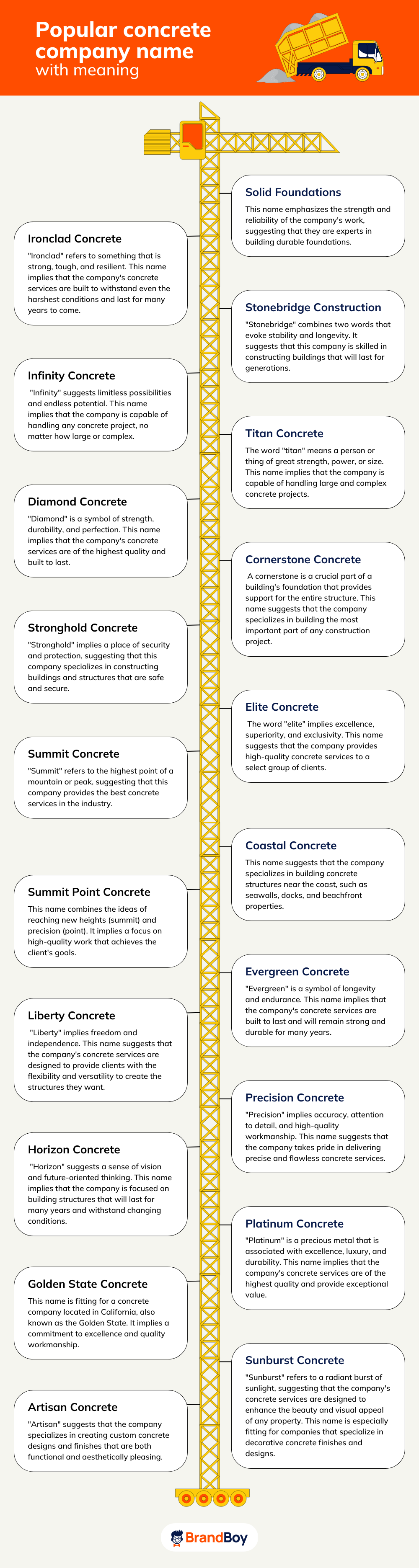
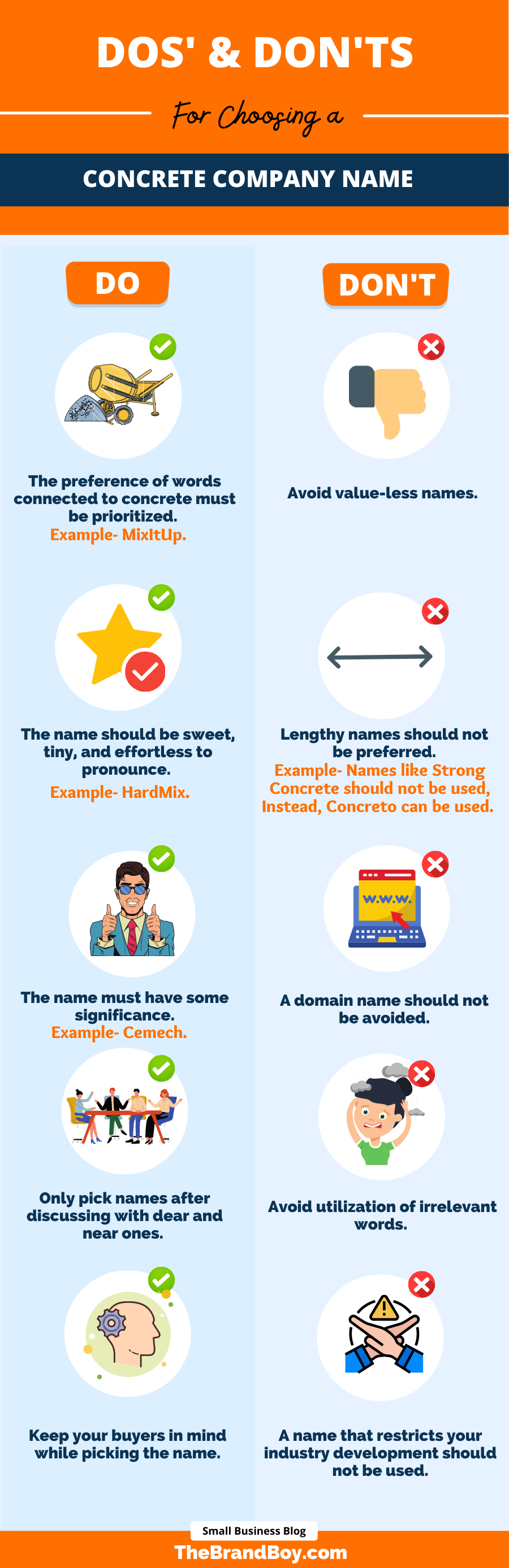
When it comes to naming your concrete business, you want something that reflects the strength and durability of the industry. A name that is catchy and easy to remember will help your business stick in people's minds. Consider words like "solid", "foundation", or "build" to convey a sense of stability and reliability.
What Makes a Good Name?
A good name for a concrete business should be unique and not too generic. Avoid common terms like "construction" or "builders" as these can be used by many different companies. Instead, focus on creating a name that is specific to your business and the services you offer. You could also consider using a play on words or a clever combination of words to make your business name memorable.
Example Names
Here are a few ideas to get you started:
- Solid Foundations
- Rock-Solid Builders
- Concrete Creations
- Build-It-Right
- Stronghold Construction
- Everlast Builders
Remember, these are just a few suggestions, and you can always get creative and come up with your own unique name.
Registering Your Business Name
Once you've settled on a name, you'll need to check its availability and register it. This process varies depending on your location, so it's best to contact your local business registration office or check their website for guidance. You'll also want to secure a domain name for your website and any social media handles to ensure your online presence is consistent.
Hiring a Contractor
If you're hiring a contractor for your project, whether it's a home renovation or a new build, it's important to do your research. Check their qualifications, experience, and references. Ask for a detailed quote, including a breakdown of costs, and compare it with other quotes to ensure you're getting a fair price. Don't be afraid to ask questions and seek clarity on any aspects of the quote you don't understand.
The Cost of Renovations
Renovation costs can vary greatly depending on the scope of the project, the materials used, and the location. It's always a good idea to get multiple quotes from different contractors to compare prices and ensure you're getting a competitive rate. Remember, the cheapest quote might not always be the best option, so consider the quality of the work and the reputation of the contractor too.
Industry Tools and Resources
There are various tools and resources available to help with construction and remodeling projects. RSMeans, for example, is a popular cost database used by professionals to estimate project costs. It provides accurate data on materials, labor, and other construction-related expenses. These tools can be beneficial for both contractors and homeowners to ensure projects stay on budget.
Construction Jobs and Salaries
The construction industry offers a range of job roles, from general contractors and estimators to specialized tradespeople. Salaries can vary depending on experience, qualifications, and the specific role. If you're looking for construction jobs, online job boards and local employment agencies are great places to start your search.
So, there you have it! A few insights into the world of names for concrete business. It's an exciting industry to be a part of, and with the right name and approach, you can build a successful business. Good luck!
Related: Understanding the 1-100 Number Chart
A 1-100 number chart is a simple yet powerful tool, often overlooked, that can be incredibly useful for quick references and understanding number patterns. This guide will give you a straightforward lowdown on how to read and utilize this chart effectively. From number lines to counting charts, we'll cover the basics to ensure you grasp the concept and its applications.
The Quick Guide to 1-100 Number Charts
The 1-100 number chart is a simple yet powerful tool for understanding and working with numbers. It's a visual representation of the numbers 1 to 100, often displayed as a grid or a line, and it's a great way to grasp number patterns and relationships. This chart is a fundamental resource for math enthusiasts, educators, and anyone wanting to improve their numerical literacy.
Comparing Number Chart Formats
There are a few variations in how the number line is presented. Some charts use a simple grid layout, with numbers arranged in rows and columns, making it easy to identify patterns and relationships. Others opt for a linear format, where numbers are placed along a line, often with additional features like color-coding to highlight odd and even numbers. The choice of format depends on personal preference and the specific use case.
Using the 1-100 Number Chart: A Step-by-Step Guide
Using the 1-100 number chart is straightforward and can be a fun way to explore numbers. Here's a simple guide:
- Start by familiarizing yourself with the chart. Notice the pattern of numbers and how they are arranged.
- Identify the ordinal numbers and their positions. This helps in understanding the sequence and order of numbers.
- Practice counting by tens. You'll notice a clear pattern, as each number ending with a zero is a multiple of ten.
- Look for odd and even numbers. Many charts highlight these, making it easy to distinguish between them.
- Use the chart for basic arithmetic. You can quickly add or subtract small numbers by counting the spaces between numbers on the chart.
- Explore number sequences and patterns. The chart makes it evident how numbers progress and relate to each other.
Common Misreadings and How to Avoid Them
While the 1-100 number chart is straightforward, a few common mistakes can be made. Here are some tips to avoid them:
- Misreading number sequences: Always double-check the sequence, especially when counting by tens or identifying odd and even numbers.
- Confusing ordinal and cardinal numbers: Remember, the chart represents ordinal numbers, so the position of a number matters.
- Assuming standard formats: Be aware that charts can vary, especially in different regions or for specific purposes. Always check the labels and categories to ensure accuracy.
- Overlooking details: Take your time and focus on the chart's layout and features. Don't rush, as this can lead to errors.
By following these simple steps and being mindful of potential pitfalls, you can accurately and confidently use the 1-100 number chart as a valuable tool for understanding and working with numbers.
So, there you have it! A quick guide to navigating the world of number charts, specifically the 1-100 chart. We've covered the basics, compared a few options, and provided a simple process to create your own.
Remember, while these charts are a handy reference, it's always wise to check your specific needs. Exact values and formats might vary, so ensure you double-check the standards or sources relevant to your context. Feel free to explore our other guides for more practical tips and tricks!