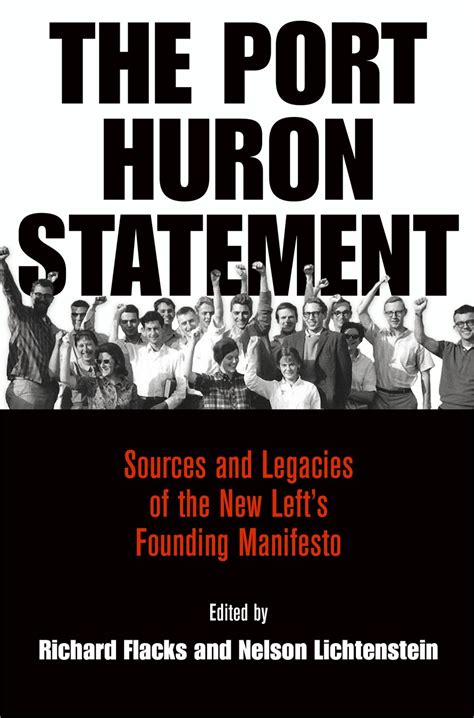
The Port Huron Manifesto, drafted in 1962 by Tom Hayden and other members of the Students for a Democratic Society (SDS), stands as a seminal document in the history of social change and activism in the United States. This manifesto was more than just a call to action; it was a thoughtful critique of American society at the time, addressing issues such as racism, militarism, and the alienation of individuals within a consumerist culture. It sought to inspire and guide a movement towards participatory democracy and social justice, principles that remain vital today.
At its core, the Port Huron Manifesto was a reaction to the societal ills of its time, with a primary focus on the need for genuine participatory democracy. It challenged the dominant Cold War ethos, critiquing both the authoritarian nature of communist regimes and the conformist, consumerist culture of the United States. The document emphasized the importance of individual freedom and the potential for human beings to influence the direction of society through collective action.
Problem-Solution Framework: Understanding the Catalysts for Change
The manifesto identified several key problems within American society that necessitated change. These included the pervasive influence of the military-industrial complex, racial inequality, and the disempowerment of individuals in a bureaucratic and capitalist system. To address these issues, the SDS proposed solutions based on the principles of participatory democracy, which emphasized community-level decision-making and the empowerment of all individuals to contribute to the political process.
One of the critical aspects of the manifesto was its insistence on the need for a new left, distinct from both the old left and liberalism, which would prioritize grassroots organizing and democratic participation over bureaucratic and centralized control. This vision for social change was grounded in the belief that people, when given the opportunity and resources, could work together to build more equitable and just communities.
Historical Evolution: The Legacy of the Port Huron Manifesto
In the years following its publication, the Port Huron Manifesto inspired a generation of activists. It played a significant role in shaping the American New Left, influencing movements against the Vietnam War, for civil rights, and for student rights. The manifesto’s call for participatory democracy resonated with young people who felt disillusioned with mainstream politics and sought more direct and meaningful ways to participate in societal change.
The impact of the Port Huron Manifesto can also be seen in its influence on community organizing and social movement theory. Its emphasis on empowering local communities and challenging established power structures has been particularly influential, inspiring a range of social movements from anti-globalization efforts to contemporary movements for racial justice and environmental sustainability.
Comparative Analysis: Social Change Then and Now
Comparing the social change movements inspired by the Port Huron Manifesto to those of today reveals both continuities and differences. The persistent issues of racial inequality, economic injustice, and the struggle for genuine democratic participation underscore the ongoing relevance of the manifesto’s critique. However, contemporary social movements, such as Black Lives Matter, the climate movement, and feminist movements, operate in a globalized world with different technological, economic, and cultural landscapes.
The advent of digital technologies has significantly altered the nature of activism, offering new tools for mobilization, communication, and organizing. Yet, despite these changes, the fundamental principles of the Port Huron Manifesto—participatory democracy, collective action, and the pursuit of social justice—remain core to movements for social change.
Expert Insight: Reflections on the Enduring Relevance
Decision Framework: Paths to Effective Social Change
For those inspired by the principles of the Port Huron Manifesto and seeking to contribute to social change, several paths can be considered:
- Community Engagement: Engaging with local communities and organizations to understand specific needs and contribute to grassroots initiatives.
- Education and Awareness: Participating in and supporting educational efforts that raise awareness about social injustices and the importance of participatory democracy.
- Policy Advocacy: Working to influence policy at local, national, and international levels to address systemic inequalities and promote social justice.
- Coalition Building: Collaborating with diverse groups and movements to build broader coalitions that can more effectively challenge entrenched power structures.
Step-by-Step Guide to Participatory Democracy
FAQ Section
What was the main focus of the Port Huron Manifesto?
+The main focus of the Port Huron Manifesto was to critique the American society of its time, particularly focusing on issues like racism, militarism, and the alienation of individuals, and to propose solutions based on the principles of participatory democracy.
How did the Port Huron Manifesto influence social movements?
+The manifesto played a significant role in shaping the American New Left, influencing movements against the Vietnam War, for civil rights, and for student rights, and continues to inspire community organizing and social justice movements today.
What are the core principles of participatory democracy as outlined in the manifesto?
+The core principles include the empowerment of individuals and communities to make decisions that affect their lives, challenging bureaucratic and capitalist systems, and promoting collective action and social justice.
In conclusion, the Port Huron Manifesto stands as a foundational document for movements seeking social change and participatory democracy. Its call for collective action, critique of systemic inequalities, and vision for a more just and equitable society continue to inspire and guide activists today. As the world grapples with new challenges and persistent inequalities, the manifesto’s principles offer a powerful framework for understanding the complexities of social change and for building a more democratic and just world.