




Receipt Template Editable Free Overview
You've stumbled upon the blank 100 chart, a versatile tool often sought for its practical applications. This simple yet powerful chart serves as a reference guide, offering a structured layout that can be tailored to various needs. Whether you're seeking a quick numerical reference or aiming to teach counting and number recognition, the blank 100 chart provides a flexible foundation.
Understanding the Blank 100 Chart
The blank 100 chart is a versatile and simple tool, often used as an educational resource, particularly in mathematics. It provides a visual representation of numbers from 1 to 100, arranged in a grid format, with each number occupying its own square. This chart is a fundamental teaching aid, helping students grasp counting, number patterns, and basic mathematical operations.
Comparing Chart Formats and Standards
While the basic structure remains consistent, there are variations in the hundred chart depending on the educational context and region. Some charts feature a simple grid with numbers, while others may include additional elements like color-coding or mathematical symbols. For instance, a chart designed for younger learners might use colors to highlight number patterns or prime numbers. The number chart's format can also vary based on the educational standard being followed, such as the US Common Core or international curricula.
Using the Blank 100 Chart: A Step-by-Step Guide
- Obtain a blank grid suitable for your purpose. Ensure it has a clear and consistent layout, with each number easily identifiable.
- Familiarize yourself with the chart's structure. Typically, numbers increase from left to right and top to bottom.
- Use the chart for counting and number recognition. Point to each number as you count, helping students associate the written digit with its value.
- Teach number patterns and sequences. The hundred square format makes it easy to identify patterns, such as even and odd numbers, or counting by twos, fives, or tens.
- Introduce basic mathematical operations. The chart can visually represent addition and subtraction, helping students understand number lines and the concept of 'jumping' numbers.
- Encourage creative uses. The chart can be a starting point for various mathematical explorations, such as identifying prime numbers, creating number stories, or even simple data analysis.
Common Misconceptions and How to Avoid Them
- Blank 100 chart values are not absolute. While the chart provides a structured framework, it's important to remember that numbers can be represented in various ways, and different educational standards may have slight variations. Always double-check specific requirements or tolerances for your context.
- Avoid over-reliance on the chart. While it's a valuable tool, it should complement other teaching methods and not become the sole focus of mathematical learning. Encourage students to explore numbers and patterns beyond the chart's boundaries.
- Be aware of potential distractions. Some charts may include colorful designs or patterns, which can be engaging but might also distract certain learners. Choose a chart with a design that suits your students' needs and learning styles.
Remember, the blank 100 chart is a flexible resource, adaptable to various teaching approaches and student needs.
Remember, when working with any chart or guide, it's essential to tailor it to your unique needs. Double-check that the information and values you're using align with your specific context and requirements.
Feel free to explore our other resources and guides; we've got plenty of practical tips and tools to help you stay organized and efficient. Happy charting!
Related: Junior Estimator Salary Essential Guide
"Wow, that construction site looks busy! I wonder how they plan and cost all these projects. It must be a lot of work, and someone has to do it. I'm curious about junior estimator salaries and what that job entails."
Estimating: The Foundation of Construction
As a building project begins, someone has to estimate the costs. That's where junior estimators come in. They play a crucial role in the early stages, helping to shape the financial plan. It's a detailed process, and their work affects the entire project. So, what does a junior estimator do, and what can you expect from this role?
Estimators gather data, analyze costs, and create detailed reports. They consider materials, labor, and any specific requirements. It's a precise job, and estimators must be accurate to avoid costly mistakes. They work with contractors, architects, and clients to ensure everyone is on the same page. The role is an important one, and it's a great starting point for a career in construction.
A Day in the Life of a Junior Estimator
A typical day might involve researching and comparing prices for materials. Estimators need to find the best deals without compromising quality. They also calculate labor costs, considering the scope of the project and the required skills. It's a balancing act, ensuring the estimate is competitive while also being realistic. Junior estimators often work with more experienced colleagues, learning the trade and developing their skills.
Finding a Junior Estimator Role
If you're interested in this field, you'll likely find opportunities with construction companies, remodeling firms, and even larger building organizations. It's a role often filled by recent graduates or those with some relevant experience. When looking for jobs, check online job boards and company websites. You might also find openings through industry connections or by approaching companies directly.
What to Expect from the Salary
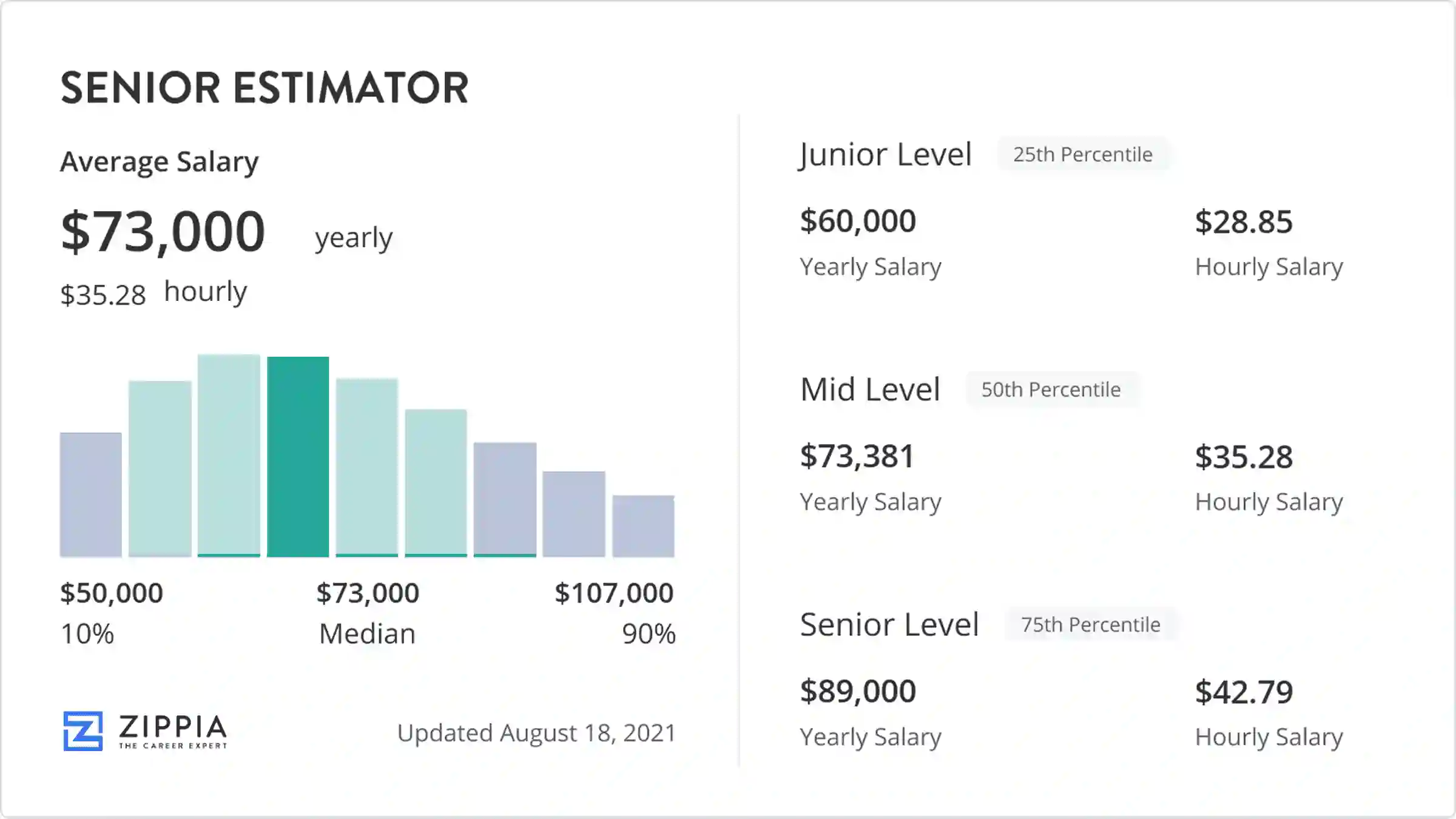
Junior estimator salaries can vary depending on the company, location, and your experience. It's a role that often comes with a set salary, rather than an hourly rate. As you gain experience, your salary is likely to increase. It's a great starting point, offering a stable income and the chance to develop valuable skills.
Building a Career in Estimating
Estimating is a specialized field, and with experience, you can progress to more senior roles. These roles often involve managing a team and taking on larger, more complex projects. You might also specialize in a particular area, such as commercial or residential construction. The skills you develop as an estimator are highly valued and can open doors to other roles in the industry.
Wrapping Up
So, there you have it! A glimpse into the world of junior estimators and their important role in construction. It's a fascinating field, and one that offers a great career path. If you're considering a role in estimating, I'd encourage you to research further and explore the opportunities. It's a rewarding career with plenty of room to grow and develop.
Related: How to Read and Use the ds2 iframe Chart
You're probably here because you need a quick fix, a reliable source to refer to, or a simple guide to understanding the ds2 iframe chart. It's a handy tool, a chart or table, that provides you with those essential dimensions and specifications. The ds2 iframe chart is your go-to reference, offering a clear and concise overview of the standard sizes and measurements you need. Whether you're looking for precise ds2 iframe dimensions or a quick check on common ds2 sizes, this chart has got you covered.
The DS2 Iframe Chart: A Guide to Standard Sizes
The DS2 iframe chart is a handy reference tool for anyone working with DS2 equipment. It provides a clear overview of the standard dimensions and sizes of DS2 iframes, which are essential for various applications. This chart is a quick and practical way to ensure you're using the right sizes and avoiding potential issues.
Key Details and Categories
The DS2 iframe chart typically displays two main categories: the iframe dimensions and the corresponding DS2 model or type. The dimensions are given in inches or centimeters, depending on the standard being used. You'll find the width, height, and sometimes the depth of the iframe, ensuring you get a precise fit for your setup. The DS2 model column helps identify the specific equipment or application the iframe is designed for.
Reading and Applying the DS2 Iframe Chart
Using the DS2 iframe chart is straightforward. First, identify the DS2 equipment you're working with and find the corresponding model or type on the chart. Then, locate the dimensions for that model. These dimensions represent the standard size of the iframe needed for that specific equipment. Ensure you note down the width, height, and depth (if provided) to ensure a perfect fit. It's as simple as that!
Common Variations and Practical Tips
While the DS2 iframe chart provides standard dimensions, there can be variations based on specific use cases or manufacturer preferences. Here are some key factors to consider:
Model Variations: Different DS2 models might require slightly adjusted iframe sizes. Always double-check the exact specifications for your specific equipment.
Regional Standards: Iframe dimensions can vary based on regional standards. Ensure you're using the correct chart for your region or convert the measurements if needed.
Manufacturer Preferences: Some manufacturers might have unique requirements. Always refer to their guidelines or consult their specific DS2 size guide.
Tolerance Levels: Keep in mind that there might be slight variations or tolerances allowed within the standard dimensions. These are usually minimal but can impact fit, especially for precise applications.
Remember, the DS2 iframe chart is a valuable tool, but it's always good to cross-reference with other resources or guidelines to ensure accuracy, especially for critical applications.
Hey there! I hope this ds2 iframe chart guide has been helpful and easy to follow. Remember, while the core principles remain the same, the exact values and details might shift slightly depending on your specific context or the standard you're working with.
So, the next time you need a quick refresh on this topic, feel free to bookmark this page for easy access. I've got a few more practical guides up my sleeve, covering various topics, so stay tuned and happy learning!