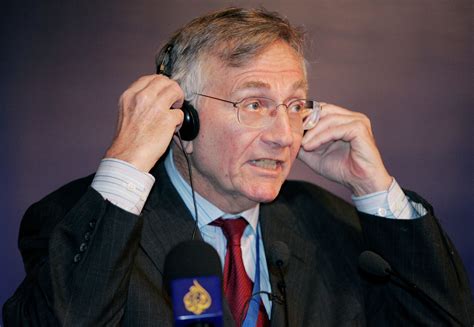
Seymour Hersh is a renowned American investigative journalist and author, best known for his exposés on government wrongdoing and abuses of power. With a career spanning over six decades, Hersh has earned a reputation as one of the most fearless and respected journalists of his generation.
Born on April 8, 1937, in Chicago, Illinois, Hersh grew up in a Jewish family and developed an interest in journalism at an early age. He began his career as a police reporter for the Chicago City News Bureau, where he honed his skills and developed a keen eye for detail. In the 1960s, Hersh moved to Washington, D.C., where he began covering national politics and foreign policy for various publications, including the Associated Press and the New York Times.
Hersh’s breakthrough story came in 1969, when he exposed the My Lai Massacre, a horrific incident in which American soldiers killed hundreds of unarmed Vietnamese civilians during the Vietnam War. His reporting on the massacre, which was initially met with skepticism and hostility by the government and some in the media, earned him the Pulitzer Prize for International Reporting in 1970.
Throughout his career, Hersh has continued to push the boundaries of investigative journalism, often taking on powerful institutions and individuals. He has written extensively on topics such as the CIA’s covert operations, the Israeli-Palestinian conflict, and the Bush administration’s handling of the Iraq War. His reporting has been credited with uncovering some of the most significant government scandals and abuses of power in modern history, including the Abu Ghraib prison abuse scandal and the NSA’s domestic surveillance program.
Hersh’s work has not been without controversy, however. He has faced criticism and even lawsuits from government officials and other powerful figures who have sought to discredit his reporting and silence him. Despite these challenges, Hersh has remained steadfast in his commitment to investigative journalism and his determination to hold those in power accountable.
In addition to his reporting, Hersh has written several books on politics and foreign policy, including “Chemical and Biological Warfare: The Hidden Arsenal” (1968), “My Lai 4: A Report on the Massacre and Its Aftermath” (1970), and “Chain of Command: The Road from 9⁄11 to Abu Ghraib” (2004). His most recent book, “The Killing of Osama bin Laden” (2016), offers a provocative and deeply researched account of the events surrounding the death of the al-Qaeda leader.
Throughout his career, Hersh has received numerous awards and honors for his journalism, including the Polk Award, the National Magazine Award, and the George Orwell Award. He has also been recognized for his contributions to the field of journalism, including being named one of the “100 Most Influential People in the World” by Time magazine in 2005.
Despite his many accolades, Hersh remains humble and dedicated to his craft. He continues to work as a freelance journalist, contributing to publications such as the New Yorker and the London Review of Books. His commitment to investigative journalism and his willingness to challenge those in power have made him a hero to many in the journalism community and a thorn in the side of those who seek to abuse their power.
Some of the key takeaways from Hersh’s career include:
- The importance of investigative journalism in holding those in power accountable
- The need for journalists to be willing to challenge official narratives and to question authority
- The value of meticulous research and careful sourcing in building a strong journalistic case
- The role of journalism in promoting transparency and accountability in government and other institutions
In conclusion, Seymour Hersh is a pioneering journalist who has dedicated his career to exposing the truth and holding those in power accountable. His bravery, tenacity, and commitment to investigative journalism have inspired generations of journalists and have helped to shape the course of modern history.
For those interested in learning more about Hersh’s work, some recommended readings include:
- “My Lai 4: A Report on the Massacre and Its Aftermath” (1970)
- “The Price of Power: Kissinger in the Nixon White House” (1983)
- “Chain of Command: The Road from 9⁄11 to Abu Ghraib” (2004)
- “The Killing of Osama bin Laden” (2016)
Ultimately, Hersh’s career serves as a testament to the power of investigative journalism to shape public discourse and to promote accountability. As a journalist, he has dedicated his life to seeking the truth and to telling the stories that need to be told, often at great personal risk. His legacy will continue to inspire journalists and readers alike for generations to come.
What is Seymour Hersh’s most notable achievement as a journalist?
+Seymour Hersh’s most notable achievement as a journalist is his exposé of the My Lai Massacre, which earned him the Pulitzer Prize for International Reporting in 1970.
What is the significance of Seymour Hersh’s reporting style?
+Seymour Hersh’s reporting style is significant because of his relentless pursuit of truth and his willingness to challenge official narratives. His approach has inspired generations of journalists and has helped to shape the course of modern history.
What are some of the key takeaways from Seymour Hersh’s career?
+Some of the key takeaways from Seymour Hersh’s career include the importance of investigative journalism in holding those in power accountable, the need for journalists to be willing to challenge official narratives, and the value of meticulous research and careful sourcing in building a strong journalistic case.