


Simple Handyman Invoice Template Doc Overview
A solar return chart is a valuable tool, a snapshot of your astrological year, offering insights and a unique perspective. This guide will navigate you through the basics, ensuring you grasp the fundamentals of reading and interpreting these charts.
The solar return chart, or solar revolution chart, provides a detailed map, varying slightly depending on your region and the astrological tradition you follow. It's an essential resource for chart reading and solar return analysis, offering a fresh perspective on your year ahead.
Understanding the Solar Return Chart: An Overview
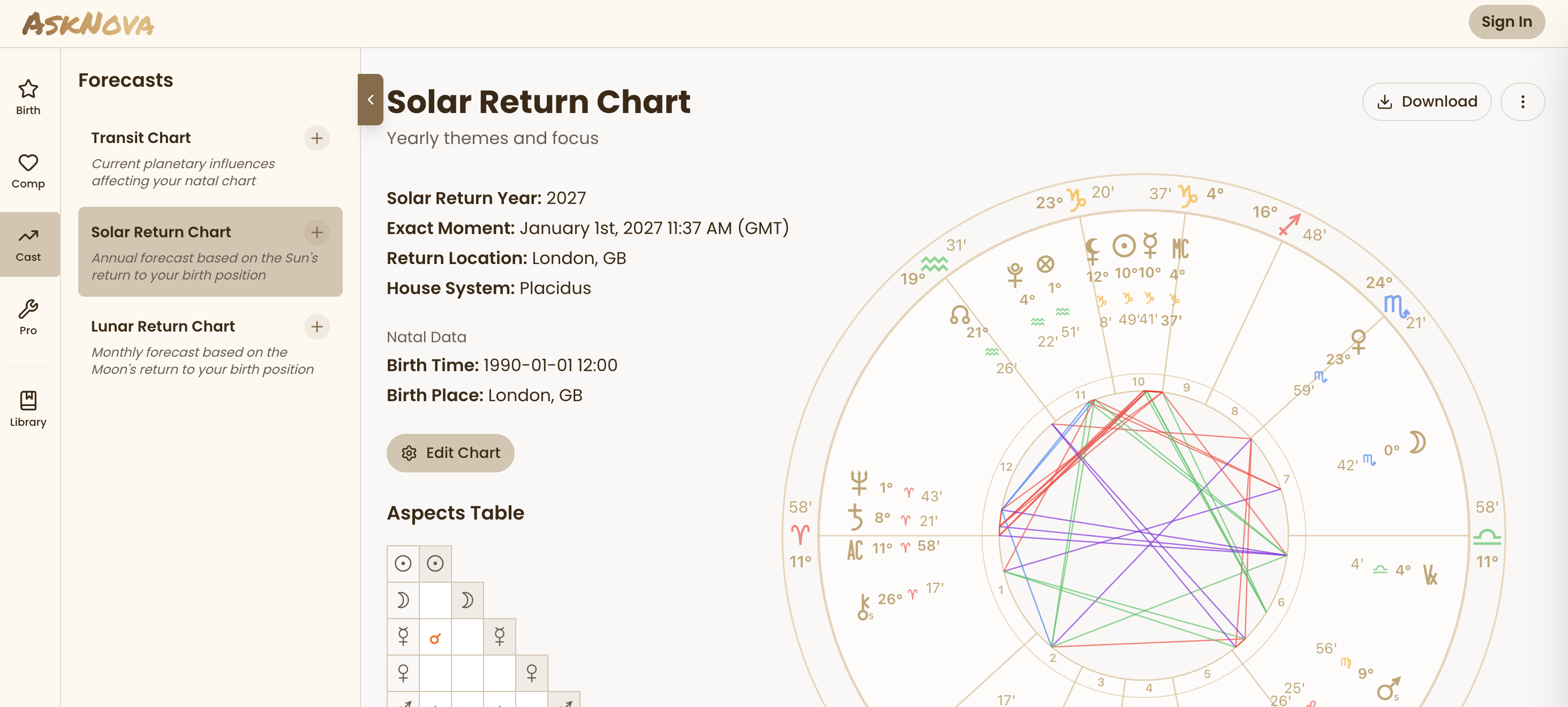
The solar return chart is a powerful tool used in astrology to provide insights into a person's upcoming year. It offers a snapshot of the celestial positions at the precise moment of your birth, calculated for the date and location of your solar return anniversary. This chart is like a personalized map, guiding you through the potential themes and challenges of the year ahead.
Comparing Solar Return Chart Formats and Standards
There are two primary methods for calculating a solar return chart: the sidereal solar return and the tropical solar return. The sidereal method uses the actual position of the Sun among the stars, while the tropical method aligns with the seasonal changes. Both methods have their adherents, and the choice often depends on personal preference and the astrological tradition followed.
Step-by-Step Guide to Reading Your Solar Return Chart
To interpret your solar return chart, follow these steps:
Identify the house placements: Each house represents a specific area of life, such as career, relationships, or personal growth. The planets' positions within these houses indicate the focus and potential challenges or opportunities in each life area.
Analyze planet transits: Note the positions of the planets in your solar return chart compared to your natal chart. These transits highlight areas of life where you may experience significant growth, challenges, or transformations.
Interpret the aspects: Aspects are the angular relationships between planets. They reveal the dynamic interactions and energies at play. For example, a harmonious aspect like a trine suggests ease and flow, while a challenging aspect like a square indicates potential obstacles and the need for adaptation.
Consider the chart's overall energy: Look at the overall balance of elements (fire, earth, air, water) and modalities (cardinal, fixed, mutable) in your solar return chart. This gives an overview of the predominant energies and themes for the year.
Common Misinterpretations and How to Avoid Them
A common mistake is to focus solely on the negative aspects or transits in a solar return chart. While challenges are part of the journey, it's important to remember that these aspects also offer opportunities for growth and transformation. Balance your interpretation by considering the positive aspects and the potential for personal development.
Factors Affecting the Accuracy of Solar Return Analysis
The accuracy of your solar return chart interpretation depends on several factors:
Location: The chart is calculated for a specific geographic location, so if you travel frequently, your solar return may vary depending on where you spend your birthday.
Time zone: The precise time of your birth is crucial. Even a small variation in the time zone can impact the chart's interpretation.
Personal evolution: As you grow and change, your chart may reflect these shifts. Your interpretation should consider your current life circumstances and personal growth.
Adapting the Solar Return Chart for Specific Needs
The solar return chart can be tailored to specific areas of interest. For example, you can create a focused chart for your career by emphasizing the houses and planets associated with work and professional life. This allows for a more detailed analysis of the opportunities and challenges in that specific realm. Similarly, you can create charts for relationships, health, or creative pursuits, providing a deeper understanding of the year's potential in those areas.
Hey there, fellow explorers! We've covered a lot of ground in this guide, and I hope it's given you a clear path to navigate the world of solar return charts. Remember, the specifics might differ slightly, as each chart has its unique nuances.
Feel free to explore more of our guides; we've got a range of topics to help you on your path to mastering these practical tools. Happy reading and learning!
Related: Ear Piercings Chart: A Simple Guide
An ear piercings chart is a handy tool, a quick-glance guide to ear anatomy and piercing options. It's a simple yet effective visual aid, offering a clear layout of various piercing placements and styles.
This chart serves as a versatile resource, beneficial for both piercers and those considering a new piercing. It provides an at-a-glance reference, detailing the different ear areas and the unique piercings possible, from classic lobes to more intricate cartilage piercings. With this guide, you can explore and plan your ear journey, ensuring a well-informed decision and a unique, personalized look.
Choosing the Right Ear Piercing Guide Layout
Selecting the ideal ear piercing chart depends on your goal and the age group you're catering to. For instance, if you're creating a detailed reference for older teens or adults, opt for comprehensive layouts with precise measurements and a variety of piercing types. These often include detailed diagrams and notes on aftercare, making them perfect for independent use. On the other hand, simpler designs with basic shapes and fewer details work best for younger kids who might need a more visual, less text-heavy guide.
Adjusting Your Print Settings
If your chart appears too small, light, or off-center, a few quick tweaks can fix it. First, ensure your printer's ink cartridges are full and functioning properly. If the issue persists, check your page setup and layout settings. Sometimes, a simple adjustment to the scale or orientation can make a big difference. For instance, if you're using a tablet PDF app like GoodNotes, you can easily adjust the zoom and position before printing.
Practical Tips for Using Your Ear Piercing Chart
When it comes to using your printable piercing chart, there are a few strategies to make the most of it. If you're working with kids, consider printing on thicker cardstock for durability. This prevents tearing and allows for multiple uses with different clients or over time. For quick, disposable practice, regular copy paper is fine, especially if you're using digital tools to fill it out.
Some of the simpler layouts here work well for this, as they don't require a lot of detailed writing or drawing. You can also laminate your chart for repeated use, especially if you're a professional piercer or educator. This preserves the paper and ink, ensuring your chart stays in good condition.
In the classroom or at home, consider displaying your chart on a clipboard for easy reference. Leave enough space on the left or inner margin for hole punching, so you can easily hang it up without cutting off the border. This simple reuse strategy keeps your resources organized and accessible.
Related: Decoding Theme Anchor Charts: A Simple Guide
You've stumbled upon the theme anchor chart, a handy tool that's a real lifesaver for quick reference and understanding. It's like having a secret weapon, a simple yet powerful visual guide that keeps you on track.
This chart is your go-to for theme-related queries, offering a clear and concise way to navigate and apply themes. While some details may vary depending on context, the theme anchor chart provides a solid foundation, ensuring you're equipped with the right knowledge.
What is a Theme Anchor Chart?
A theme anchor chart is a visual tool designed to help identify and understand the underlying themes in a text or story. It provides a structured framework to analyze and interpret narratives, making it a valuable resource for readers, writers, and educators alike. These charts are particularly useful for literary analysis, helping to uncover the deeper meanings and messages within a piece of writing.
Comparing Theme Anchor Chart Formats
There are various formats and styles of theme anchor charts, but they generally share common elements. The charts often feature a central theme or topic, with supporting details and examples branching out. These details can include character motivations, setting influences, symbolic elements, and recurring motifs. The structure allows users to visually connect these elements to the main theme, aiding in a comprehensive understanding of the text's message.
Step-by-Step Guide to Using a Theme Anchor Chart
Using a theme anchor chart is a straightforward process:
Identify the Main Theme: Start by determining the primary theme or idea that the text revolves around. This could be a moral lesson, a social issue, or an emotional journey, for instance.
Gather Supporting Details: Look for elements in the text that reinforce or relate to the main theme. This could include specific scenes, character actions, or even word choices that contribute to the overall message.
Plot on the Chart: Place the identified theme at the center of your chart. Then, branch out with supporting details, creating a visual representation of how these elements connect to and reinforce the theme.
Analyze and Interpret: Review your completed chart to gain a deeper understanding of the text. Consider how the various elements work together to convey the theme and the overall message the author intended.
Common Misinterpretations and How to Avoid Them
While theme anchor charts are a powerful tool, they can be misinterpreted if not used correctly. One common mistake is over-simplifying the theme. Themes are often complex and multi-faceted, so it's essential to consider various aspects and not reduce them to simplistic interpretations. Another pitfall is focusing solely on the chart and neglecting the text itself. The chart is a tool to enhance understanding, but the analysis should always be grounded in the text's content and context.
Factors Affecting Theme Anchor Chart Accuracy
The accuracy of a theme anchor chart depends on several factors. Firstly, the chart's effectiveness relies on a thorough understanding of the text. Readers must carefully analyze the narrative, considering its nuances and subtleties. Additionally, the chart's structure and design can impact its usefulness. A well-designed chart should be clear, organized, and flexible enough to accommodate various themes and texts.
Adapting Theme Anchor Charts for Specific Needs
Theme anchor charts are versatile and can be adapted for different purposes. For instance, educators can create customized charts to align with specific learning objectives or curriculums. Writers can use them as a tool to develop and refine their themes, ensuring a coherent and impactful narrative. Moreover, charts can be tailored to different genres, with variations for poetry, fiction, non-fiction, or even visual narratives like films or graphic novels.
Maintaining Reliability for Future Use
To ensure the reliability of theme anchor charts for future use, it's essential to maintain a consistent approach. This includes using a standardized format, ensuring clarity in labeling and categorization, and regularly updating charts to reflect new insights or interpretations. Additionally, encouraging open dialogue and feedback can help refine and improve the chart's effectiveness over time. By treating the chart as a living document, it can evolve to meet the changing needs and understandings of its users.
Well, there you have it! A comprehensive guide to theme anchor charts and their practical use. You should now feel equipped to create your own chart, tailor it to your needs, and avoid any potential pitfalls.
Remember, while this guide offers a solid framework, your specific context matters. Double-check your requirements and adapt the chart to suit your unique situation.
If you're keen to explore more practical tips and guides, feel free to browse our other resources. We've got a range of topics covered, so you're sure to find something useful. Happy learning!