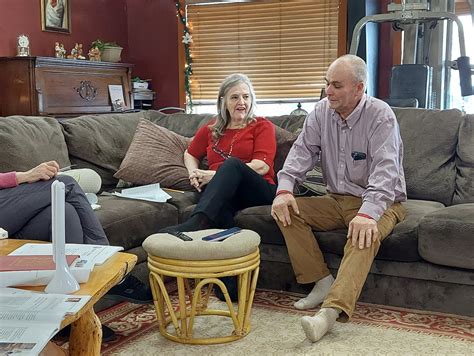
The complexities of family dynamics, particularly when it comes to the relationship between a parent and child, can be a fascinating and sometimes tumultuous topic. Tara Westover, the acclaimed author of “Educated: A Memoir,” has brought to light her own unique and challenging experiences growing up in a strict, survivalist Mormon family. At the heart of her story is her complicated relationship with her father, Gene Westover.
Gene Westover, Tara’s father, was a man of strong convictions, deeply rooted in his interpretation of the Mormon faith and a fervent belief in self-sufficiency and preparedness for the end of the world. He ran a junkyard in rural Idaho, where the family lived, and was known for his charisma and ability to craft compelling narratives about the world and its impending doom. However, his beliefs and methods of raising his children were far from conventional, often blurring the lines between protection and control, and between education and ignorance.
One of the most striking aspects of Tara’s upbringing under her father’s guidance was the absence of formal education. Gene Westover did not believe in the public education system, viewing it as a tool of government control designed to suppress individual freedom and autonomy. As a result, Tara and her siblings were homeschooled, though the quality and consistency of their education varied greatly. Tara’s early life was marked by hard labor in the junkyard, assisting her mother with herbalism and midwifery, and a lack of exposure to the outside world beyond their rural community.
Tara’s relationship with her father was complex and multifaceted. On one hand, Gene Westover instilled in his children a strong sense of self-reliance and the importance of living off the land. He taught them survival skills, how to be resourceful, and the value of hard work. However, his strict adherence to his beliefs and his sometimes volatile temperament created a home environment that was both physically and emotionally challenging. Tara recounts instances of physical danger, particularly from her brother Shawn, which were often downplayed or justified by her parents in the name of family loyalty and preparation for a hostile world.
Despite the challenges and what many would consider a deprived childhood, Tara Westover’s story is one of remarkable resilience and the pursuit of knowledge. Her desire for education and understanding of the world beyond her family’s property drove her to teach herself enough to take the ACT and eventually gain admission to Brigham Young University. This marked the beginning of her journey away from her isolated upbringing and into a broader world of ideas, histories, and cultures.
Tara’s decision to pursue higher education and her eventual attendance at Cambridge University for graduate studies symbolize her breaking away from the constraints of her childhood. However, this journey was not without its costs, including a profound rift with her family, particularly her father. Tara’s newfound understanding of the world and her adoption of more liberal and educated viewpoints put her at odds with Gene Westover’s strict beliefs, leading to a painful estrangement.
In reflecting on Tara Westover’s story, it’s evident that the relationship between a parent and child can be both a source of strength and a fountain of conflict. Gene Westover’s influence on Tara’s life has been profound, shaping her in ways that are still unfolding. While his methods and beliefs may be controversial and even harmful to some, they also instilled in Tara a sense of resilience and a deep-seated desire for knowledge and understanding. Tara Westover’s memoir stands as a testament to the human spirit’s capacity for growth, transformation, and the pursuit of one’s own path, regardless of the challenges and conflicts that may arise along the way.
In considering the broader implications of Tara’s story, several questions emerge about the nature of upbringing, education, and personal freedom:
How does a strict, survivalist upbringing influence a child's worldview and educational aspirations?
+A strict, survivalist upbringing, like Tara Westover's, can significantly limit a child's exposure to different worldviews and educational opportunities, potentially hindering their ability to fully engage with and understand the broader world.
What role does resilience play in overcoming adverse childhood experiences and achieving personal and educational goals?
+Resilience is a crucial factor in overcoming adverse childhood experiences. It enables individuals to adapt, cope, and strive for better conditions, as seen in Tara Westover's pursuit of education despite the odds against her.
How can familial conflicts and estrangements impact an individual's personal growth and educational journey?
+Familial conflicts and estrangements can have a profound impact on an individual's personal growth and educational journey. They can lead to emotional challenges, but also serve as catalysts for seeking new experiences, knowledge, and perspectives, as Tara Westover's story illustrates.
The story of Tara Westover and her father serves as a poignant reminder of the complexities of family relationships and the enduring impact of parental influence on children’s lives. It highlights the importance of education, resilience, and personal autonomy in shaping one’s future, regardless of the challenges posed by one’s upbringing. As we reflect on this narrative, we are compelled to consider the broader implications for how we Approach education, family dynamics, and personal freedom, recognizing that each individual’s path to knowledge and fulfillment is uniquely their own.