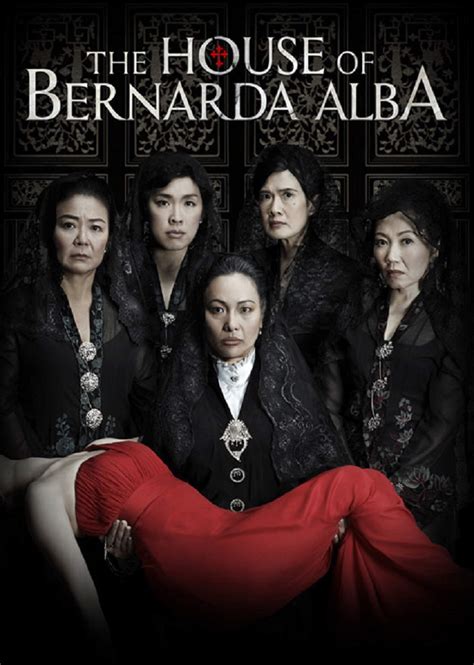
In the scorching heat of a Spanish summer, the suffocating grip of societal norms threatens to consume the lives of five sisters, confining them to a world of unrelenting oppression. This is the realm of “The House of Bernarda Alba,” a masterpiece penned by Federico García Lorca, one of Spain’s most revered playwrights. The play is a poignant exploration of the complexities of Spanish culture, weaving a rich tapestry of tradition, family, and the unyielding pursuit of individuality.
At the heart of the narrative lies Bernarda Alba, a matriarchal figure of unyielding resolve, who seeks to maintain the honor of her family through the strict adherence to societal norms. Her household, a labyrinth of secrets and unspoken desires, is a microcosm of the patriarchal society that dominated Spain during the early 20th century. The five sisters, each a distinct entity with their own aspirations and frustrations, are trapped within this gilded cage, their lives dictated by the whims of their mother and the oppressive weight of tradition.
As the play unfolds, the intricate dynamics between the sisters are revealed, their interactions a delicate ballet of power struggles, alliances, and unspoken resentments. The eldest, Angustias, is a symbol of conformity, her life predetermined by the societal expectations placed upon her. In contrast, Adela, the youngest, is a beacon of rebellion, her unyielding spirit and desire for autonomy threatening to disrupt the delicate balance of the household.
The character of La Poncia, the family’s loyal servant, serves as a voice of reason and a window into the inner workings of the household. Her presence underscores the class divisions that permeate Spanish society, highlighting the stark contrasts between the haves and the have-nots. Through La Poncia’s narrative, Lorca sheds light on the complexities of female relationships, the bonds of loyalty and trust that exist between women, and the ways in which they navigate the treacherous waters of a patriarchal society.
One of the most striking aspects of “The House of Bernarda Alba” is its use of symbolism, which adds depth and complexity to the narrative. The house itself is a symbol of the suffocating nature of societal norms, a physical manifestation of the constraints placed upon the sisters. The peasants who work the land, the dogs that roam the courtyard, and the wind that howls through the streets all serve as metaphors for the primal desires and unbridled passions that lie beneath the surface of the sisters’ seemingly tranquil lives.
The play is also notable for its exploration of themes that were, and continue to be, relevant to Spanish culture. The concept of “honor” is a pervasive thread throughout the narrative, highlighting the ways in which societal expectations can stifle individuality and creativity. The tension between tradition and modernity is another dominant theme, as the sisters struggle to reconcile their desires with the constraints of their societal roles.
In addition to its thought-provoking themes and complex characters, “The House of Bernarda Alba” is also a masterpiece of linguistic craftsmanship. Lorca’s use of language is akin to a rich tapestry, woven from the intricate threads of Andalusian dialect, poetic imagery, and symbolic metaphor. The play’s dialogue is a symphony of sounds, a cadence of rhythms that echoes the passion and intensity of Spanish culture.
As we delve deeper into the world of “The House of Bernarda Alba,” it becomes clear that the play is not merely a critique of Spanish society, but a nuanced exploration of the human condition. The struggles of the sisters, their desires and frustrations, are universal, transcending the boundaries of culture and time. The play is a powerful reminder that, despite the constraints of societal norms, the human spirit remains unbreakable, a flame of resistance that flickers in the darkness, waiting to be fanned into a blaze of rebellion.
In conclusion, “The House of Bernarda Alba” is a masterpiece of Spanish literature, a play that continues to captivate audiences with its thought-provoking themes, complex characters, and poetic language. As we reflect on the play’s exploration of Spanish culture, we are reminded of the importance of individuality, creativity, and the unyielding pursuit of autonomy. The play is a testament to the power of art to challenge societal norms, to inspire change, and to celebrate the beauty and diversity of human experience.
One of the most significant aspects of "The House of Bernarda Alba" is its ability to balance the universal with the specific. While the play is deeply rooted in Spanish culture, its themes and characters are relatable to audiences from diverse backgrounds. This balance is a hallmark of great literature, allowing the play to transcend time and culture, speaking to fundamental human experiences that unite us all.
As we consider the play’s impact on Spanish culture, it is essential to examine the historical context in which it was written. The early 20th century was a time of great upheaval in Spain, with the country struggling to come to terms with its own identity and place in the world. “The House of Bernarda Alba” is a product of this era, reflecting the tensions and contradictions that defined Spanish society during this period.
The play’s exploration of tradition and modernity is particularly noteworthy in this regard. The struggle between these two forces is a dominant theme in Spanish culture, with the country’s rich history and cultural heritage often at odds with the demands of modernity. Lorca’s play captures this tension perfectly, highlighting the ways in which tradition can stifle individuality and creativity, while also acknowledging the importance of preserving cultural heritage.
In addition to its historical context, “The House of Bernarda Alba” is also notable for its use of symbolism and metaphor. The play is a rich tapestry of symbols, with each character and setting serving as a metaphor for broader themes and ideas. The house itself is a symbol of the suffocating nature of societal norms, while the sisters represent the constraints and limitations placed upon women in Spanish society.
As we analyze the play’s use of symbolism, it becomes clear that Lorca was a master of subtlety and nuance. The play’s symbols are never overt or heavy-handed, instead emerging organically from the narrative. This approach allows the audience to interpret the play in their own way, drawing their own conclusions about the themes and characters.
What is the historical context of "The House of Bernarda Alba"?
+"The House of Bernarda Alba" was written in the early 20th century, a time of great upheaval in Spain. The play reflects the tensions and contradictions of this era, exploring themes such as tradition and modernity, individuality and societal norms.
What is the significance of the house in "The House of Bernarda Alba"?
+The house is a symbol of the suffocating nature of societal norms, a physical manifestation of the constraints placed upon the sisters. It represents the ways in which tradition and societal expectations can stifle individuality and creativity.
How does "The House of Bernarda Alba" explore the theme of individuality?
+The play explores the theme of individuality through the characters of the five sisters, each of whom represents a different aspect of female experience in Spanish society. The play highlights the ways in which societal norms and expectations can constrain individuality, while also celebrating the power of human spirit to resist and challenge these constraints.
In conclusion, “The House of Bernarda Alba” is a masterpiece of Spanish literature, a play that continues to captivate audiences with its thought-provoking themes, complex characters, and poetic language. As we reflect on the play’s exploration of Spanish culture, we are reminded of the importance of individuality, creativity, and the unyielding pursuit of autonomy. The play is a testament to the power of art to challenge societal norms, to inspire change, and to celebrate the beauty and diversity of human experience.
The play's exploration of Spanish culture is a nuanced and multifaceted one, reflecting the complexities and contradictions of the country's history and identity. Through its use of symbolism, metaphor, and poetic language, "The House of Bernarda Alba" provides a powerful commentary on the human condition, one that continues to resonate with audiences today.
As we consider the play’s legacy and impact, it is essential to examine the ways in which it has influenced Spanish literature and culture. “The House of Bernarda Alba” has been widely performed and studied, its themes and characters continuing to inspire new generations of artists, writers, and audiences. The play’s exploration of individuality, creativity, and the human spirit has made it a timeless classic, one that continues to captivate and inspire audiences around the world.
In the end, “The House of Bernarda Alba” is a play that reminds us of the power of art to challenge societal norms, to inspire change, and to celebrate the beauty and diversity of human experience. Through its nuanced exploration of Spanish culture, its complex characters, and its poetic language, the play provides a powerful commentary on the human condition, one that continues to resonate with audiences today.