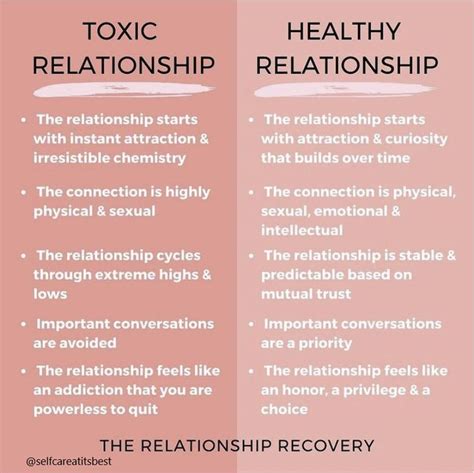
Recognizing the signs of a toxic relationship can be a daunting task, especially when emotions are involved. The boundaries between love, care, and control can become blurred, leaving individuals questioning their own judgment and sanity. However, understanding the dynamics of toxic relationships is crucial for breaking free and finding healthier alternatives.
At the core of every toxic relationship lies an imbalance of power, with one partner exerting control over the other. This control can manifest in various forms, including emotional manipulation, financial dependence, and even physical violence. The effects of such relationships can be devastating, leading to anxiety, depression, and a profound sense of self-doubt. It’s essential to acknowledge that these relationships are not the fault of the victim; rather, they are a result of the perpetrator’s actions.
Understanding the Psychology of Toxic Relationships
Toxic relationships often follow a predictable pattern. The initial stages are characterized by intense romance and affection, which can make the relationship feel overwhelmingly positive. However, as time progresses, the controlling behavior becomes more apparent. This can range from constant monitoring of the partner’s activities to outright gaslighting, where the perpetrator distorts reality to make the victim question their own perceptions.
The psychology behind these actions is rooted in the perpetrator’s need for control and dominance. This need can stem from deep-seated insecurities, past traumas, or a genuine lack of empathy. The victim, on the other hand, may stay in the relationship due to fear, love, or a belief that they can change the perpetrator. This belief is often reinforced by the perpetrator’s occasional displays of affection or repentance, which can create a cycle of hope and disappointment.
Breaking Free: Recognizing the Signs
Breaking free from a toxic relationship requires a clear recognition of its signs. These can include:
- Emotional Manipulation: Being made to feel guilty, ashamed, or responsible for the partner’s emotions.
- Isolation: Being cut off from friends, family, and other sources of support.
- Control: Having one’s actions, decisions, and even thoughts controlled by the partner.
- Gaslighting: Being made to doubt one’s own sanity or memory.
- Verbal Abuse: Being subjected to constant criticism, belittling, or name-calling.
- Physical Violence: Any form of physical harm or threat of harm.
Finding Healthy Alternatives
Once the decision to leave a toxic relationship is made, it’s crucial to find healthy alternatives. This involves not just leaving the relationship but also rebuilding one’s life and sense of self. Here are some steps towards finding healthier relationships:
- Seek Support: Reach out to trusted friends, family, or professional counselors. Sharing your experience with others can provide validation and help you understand that you’re not alone.
- Educate Yourself: Learn about the dynamics of toxic relationships and the signs of emotional abuse. Knowledge is power, and understanding what you’ve been through can help you avoid similar situations in the future.
- Focus on Self-Care: Engage in activities that promote physical, emotional, and mental well-being. This can include exercise, mindfulness practices, and hobbies that bring joy and fulfillment.
- Set Boundaries: Learn to say “no” and set clear boundaries with others. Healthy relationships are built on respect and mutual understanding.
- Practice Self-Compassion: Be kind to yourself and acknowledge your strength. Leaving a toxic relationship is a brave and difficult step, and it’s okay to take time to heal.
Creating a Future of Healthy Relationships
The journey towards healthy relationships begins with self-awareness and a commitment to one’s own well-being. It involves recognizing the value of mutual respect, trust, and open communication. Healthy relationships are those where both partners feel valued, supported, and free to grow.
In the process of healing and growth, it’s essential to remember that everyone deserves to be in a relationship where they feel seen, heard, and loved. Finding healthy alternatives to toxic relationships is not just about leaving behind what’s harmful but also about cultivating a deeper understanding of what it means to truly connect with another human being.
A Step-by-Step Guide to Healing
Healing from a toxic relationship is a process that requires patience, kindness, and compassion towards oneself. Here’s a step-by-step guide to facilitate this journey:
Step 1: Acknowledge Your Feelings
Recognize your emotions and give yourself permission to feel them. Whether it's sadness, anger, or relief, acknowledging your feelings is the first step towards healing.
Step 2: Seek Professional Help
Consider seeking help from a therapist or counselor who specializes in trauma and relationship issues. Professional guidance can provide a safe space to process your emotions and develop strategies for moving forward.
Step 3: Practice Self-Care
Engage in activities that promote your physical, emotional, and mental well-being. This can include anything from taking long baths, reading, or practicing yoga and meditation.
Step 4: Rebuild Your Support Network
Reach out to friends and family members you trust. Social support is crucial during the healing process, and reconnecting with loved ones can help you feel less isolated.
Step 5: Focus on Personal Growth
Invest time in learning new skills, pursuing hobbies, or setting new goals for yourself. Personal growth can help you regain a sense of purpose and identity outside of the toxic relationship.
FAQ Section
What are the first signs of a toxic relationship?
+The first signs can include intense romance followed by controlling behavior, emotional manipulation, constant criticism, or feelings of guilt and shame. Recognizing these signs early can help in taking prompt action.
How do I know if I'm ready to move on from a toxic relationship?
+You might be ready to move on when you've acknowledged the relationship's toxicity, sought support, and started focusing on your own healing and growth. Moving on doesn't mean the pain is completely gone, but it means you're ready to start a new chapter in your life.
What is the most important thing to remember when healing from a toxic relationship?
+The most important thing to remember is that healing takes time and patience. Be kind to yourself, allow yourself to feel your emotions, and focus on rebuilding your sense of self and identity. Remember, you deserve a healthy and loving relationship, and taking the time to heal is the first step towards finding that.
Conclusion
Healing from a toxic relationship is a journey, not a destination. It involves patience, self-compassion, and a commitment to one’s own well-being. By recognizing the signs of toxicity, seeking support, and focusing on personal growth, individuals can break free from the chains of unhealthy relationships and find their path towards healthier, more fulfilling connections. Remember, the journey to healing and finding healthy relationships is unique to each individual, and what matters most is taking that first step towards a life filled with love, respect, and mutual growth.