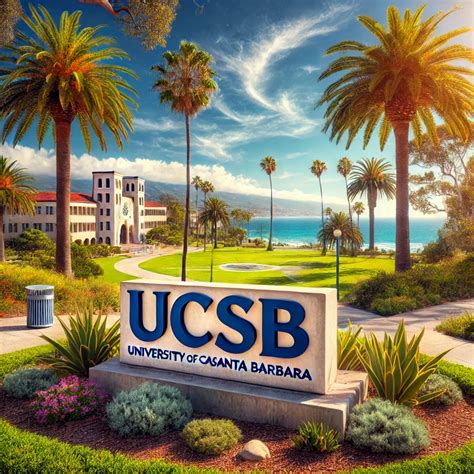
The University of California, Santa Barbara (UCSB) is renowned for its commitment to innovative research and academic excellence. As a leading institution, it offers a plethora of research opportunities across various disciplines, attracting scholars and students from around the globe. This article delves into the top research opportunities available at UCSB, highlighting the institution’s strengths and the potential for groundbreaking discoveries.
Interdisciplinary Research Initiatives
UCSB is at the forefront of interdisciplinary research, fostering collaborations that transcend traditional departmental boundaries. The institution’s research initiatives are designed to tackle complex, real-world problems that require a multifaceted approach. For instance, the Center for Spatial Studies combines geography, computer science, and statistics to analyze and understand spatial phenomena, offering insights into urban planning, environmental management, and public health. Students and faculty can engage in projects that utilize geospatial technologies to address global challenges, such as climate change and sustainable development.
Engineering and Physical Sciences
The College of Engineering at UCSB is a hub for innovative research, with departments such as Mechanical Engineering, Electrical and Computer Engineering, and Chemical Engineering leading the way. Faculty and students are involved in cutting-edge projects, including the development of microelectromechanical systems (MEMS), advanced materials, and energy harvesting technologies. The Materials Research Laboratory is another key facility, focusing on the synthesis, characterization, and application of advanced materials, with implications for fields like energy storage, aerospace, and biomedicine.
Social Sciences and Humanities
In the realm of social sciences and humanities, UCSB offers a rich environment for research, with a strong emphasis on interdisciplinary approaches. The Bren School of Environmental Science & Management stands out for its comprehensive studies on environmental issues, including policy, economics, and ecology. Researchers explore topics such as sustainability, conservation, and the socioeconomic impacts of environmental policies, providing valuable insights for policymakers and stakeholders.
Life Sciences and Biology
The life sciences are another area of excellence at UCSB, with research spanning molecular biology, ecology, evolution, and neuroscience. The Neuroscience Research Institute is a focal point for studies on the brain and nervous system, aiming to understand the underlying mechanisms of neurological diseases and develop new therapeutic strategies. Additionally, the Department of Ecology, Evolution, and Marine Biology conducts vital research on marine ecosystems, biodiversity, and the effects of climate change on marine life, informing conservation efforts and policy decisions.
Collaboration and Funding Opportunities
UCSB actively seeks and secures funding from prestigious organizations such as the National Science Foundation (NSF), the National Institutes of Health (NIH), and private foundations. This support enables researchers to pursue ambitious projects and collaborate with international partners, enhancing the university’s global impact. The Office of Research provides critical support for faculty and students, facilitating grant writing, technology transfer, and industry partnerships, and fostering a culture of innovation and entrepreneurship.
Educational and Training Programs
To prepare the next generation of researchers, UCSB offers a range of educational and training programs. From undergraduate research opportunities to graduate fellowships, students can engage in hands-on research experiences, working closely with faculty mentors. The Graduate Division provides resources and support for graduate students, including professional development workshops, research funding, and networking events, ensuring that they are well-equipped to succeed in their academic and professional careers.
Community Engagement and Outreach
UCSB is committed to community engagement and outreach, recognizing the importance of translating research into practical applications and societal benefits. The Community Relations office serves as a liaison between the university and local communities, promoting collaborations and partnerships that address regional needs and challenges. Through public lectures, workshops, and volunteer programs, researchers can share their expertise and inspire future generations of scholars and leaders.
Future Directions and Emerging Trends
As UCSB continues to evolve, it is poised to capitalize on emerging trends and technologies. The integration of artificial intelligence, data science, and cybersecurity into various research domains is expected to open new avenues for interdisciplinary collaboration and innovation. The Center for Advanced Computing is at the forefront of these developments, providing researchers with access to cutting-edge computational resources and expertise, and enabling the analysis of complex data sets, simulation of real-world systems, and development of intelligent systems.
Practical Applications and Real-World Impact
The research conducted at UCSB has numerous practical applications and real-world implications. For instance, studies on renewable energy systems are informing the development of sustainable energy policies and technologies, while research on water conservation is helping to address the global water crisis. Additionally, investigations into public health are yielding insights into the social and environmental determinants of health, guiding interventions and policy decisions that can improve health outcomes and reduce disparities.
Conclusion
The University of California, Santa Barbara, presents a dynamic and supportive environment for researchers, offering a wide array of opportunities for scholarly exploration and discovery. With its strong faculty, cutting-edge facilities, and commitment to interdisciplinary research, UCSB is an ideal institution for those seeking to advance knowledge and address the complex challenges of the 21st century. As a hub for innovation and academic excellence, UCSB continues to inspire and empower the next generation of researchers, policymakers, and leaders, driving progress and positive change in the world.
FAQ Section
What research opportunities are available for undergraduate students at UCSB?
+UCSB offers a variety of research opportunities for undergraduate students, including research assistantships, internships, and independent study projects. Students can work with faculty mentors on ongoing research projects, participate in research programs, and present their findings at conferences and symposia.
How does UCSB support interdisciplinary research collaborations?
+UCSB fosters interdisciplinary research through various initiatives, including interdisciplinary research centers, faculty-led research groups, and seed funding programs. These efforts encourage collaboration across departments and colleges, facilitating the development of innovative research projects that address complex, real-world problems.
What resources are available to help researchers secure funding for their projects?
+The Office of Research at UCSB provides comprehensive support for researchers seeking funding, including grant writing assistance, funding opportunity databases, and workshops on grant proposal development. Additionally, the university’s research development team helps facilitate partnerships with industry and government agencies, further expanding funding opportunities.
How can I get involved in community outreach and engagement activities as a researcher at UCSB?
+UCSB’s Community Relations office and various research centers offer numerous opportunities for researchers to engage with the local community, including public lectures, workshops, and volunteer programs. Researchers can also collaborate with community organizations and stakeholders to develop projects that address regional needs and challenges, ensuring that their research has a positive, real-world impact.