Erik Larson is a renowned author known for his meticulously researched and engaging narrative nonfiction books, which often explore the intersection of history, science, and human experience. With a career spanning over three decades, Larson has written several bestselling books that have captivated readers worldwide. To help you navigate his impressive bibliography, we’ve compiled a list of Erik Larson’s best books, along with a brief overview of each.
One of the key factors that sets Larson’s books apart is his ability to balance meticulous research with engaging storytelling. His writing style is characterized by a unique blend of historical accuracy, scientific insight, and narrative flair, making his books both informative and entertaining. For instance, in his book “The Devil in the White City,” Larson uses a dual narrative structure to explore the 1893 World’s Fair in Chicago and the serial killer H.H. Holmes, creating a sense of tension and suspense that keeps readers engaged.
Here are some of Erik Larson’s most notable works, including “The Devil in the White City,” “In the Garden of Beasts,” and “Dead Wake.” Each of these books offers a unique perspective on a particular historical event or period, and they have all received critical acclaim for their meticulous research and engaging storytelling.
The Devil in the White City: Murder, Magic, and Madness at the Fair That Changed America (2003) - This book is a masterpiece of narrative nonfiction that intertwines the stories of the 1893 World’s Fair in Chicago and the serial killer H.H. Holmes. Larson’s vivid descriptions and meticulous research bring to life the excitement and horror of this pivotal moment in American history. For example, he notes that the 1893 World’s Fair was a symbol of American ingenuity and progress, but it also masked the darker aspects of American society, such as poverty, inequality, and violence.
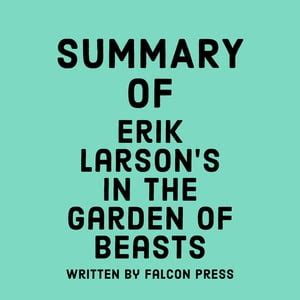
In the Garden of Beasts: Love, Terror, and an American Family in Hitler’s Berlin (2011) - This book tells the story of William E. Dodd, the American ambassador to Germany, and his daughter Martha, as they navigate the treacherous landscape of Nazi Germany in the 1930s. Larson’s book is a gripping and insightful exploration of the rise of the Third Reich and the moral complexities of diplomacy. As Larson notes, the Dodds’ experiences in Germany were shaped by their own biases and prejudices, which often led them to underestimate the Nazi threat.
Dead Wake: The Last Crossing of the Lusitania (2015) - In this book, Larson recounts the tragic sinking of the Lusitania, a British passenger ship that was torpedoed by a German U-boat in 1915. With his characteristic attention to detail, Larson reconstructs the events leading up to the disaster and explores the political and social context of the time. For instance, he highlights the role of British intelligence in monitoring German submarine activity and the failure of the British Navy to provide adequate protection for the Lusitania.
Isaac’s Storm: A Man, a Time, and the Deadliest Hurricane in History (1999) - This book tells the story of the Galveston Hurricane of 1900, which killed an estimated 6,000 to 12,000 people, making it the deadliest natural disaster in American history. Larson’s book is a gripping narrative that explores the science of hurricanes, the hubris of human forecasting, and the devastating consequences of natural disasters. As Larson notes, the Galveston Hurricane was a wake-up call for the American weather forecasting community, leading to significant improvements in hurricane prediction and warning systems.
The Splendid and the Vile: A Saga of Churchill, Family, and Defiance During the Blitz (2020) - In this book, Larson explores the leadership of Winston Churchill during the Blitz, the German bombing campaign against Britain during World War II. With his characteristic vivid storytelling, Larson brings to life the drama and trauma of this pivotal moment in history, highlighting the roles of Churchill, his family, and other key figures in shaping Britain’s response to the Nazi threat. For example, he notes that Churchill’s leadership during the Blitz was marked by a combination of courage, eloquence, and strategic thinking, which helped to rally the British people and secure Allied victory.
Throughout his books, Larson demonstrates a commitment to historical accuracy, scientific insight, and narrative flair, making his works both informative and engaging. His ability to balance these elements has earned him a reputation as one of the most respected and beloved narrative nonfiction authors of our time. Whether you’re interested in history, science, or human experience, Erik Larson’s books are sure to captivate and inspire you.
In conclusion, Erik Larson’s best books offer a unique perspective on some of the most significant events and periods in modern history. By combining meticulous research, engaging storytelling, and historical insight, Larson creates a compelling narrative that draws readers in and refuses to let go. Whether you’re a history buff, a science enthusiast, or simply a lover of great storytelling, Erik Larson’s books are sure to captivate and inspire you.
What is Erik Larson’s writing style like?
+Erik Larson’s writing style is characterized by meticulous research, engaging storytelling, and a blend of historical accuracy and scientific insight. He is known for his ability to balance these elements, creating a narrative that is both informative and entertaining.
Which of Erik Larson’s books is the most popular?
+According to various sources, including Amazon sales rankings and literary reviews, “The Devil in the White City” is Erik Larson’s most popular book. This book has received widespread critical acclaim for its unique blend of history, science, and narrative storytelling.
What inspired Erik Larson to become a writer?
+Erik Larson’s interest in writing and history was inspired by his childhood experiences and family background. He has stated that he was fascinated by the stories of his grandparents, who lived through significant historical events, and that he was encouraged by his parents to pursue his passion for writing and history.