
Bees have long been a subject of fascination for humans, with their highly organized social structures, complex communication methods, and incredible work ethic. But what do bees really know? As we delve into the world of these tiny creatures, we begin to uncover a wealth of knowledge that not only helps them survive but also teaches us valuable lessons about life.
One of the most striking aspects of bee society is their communication system. Through a complex series of dances, pheromones, and even electrical signals, bees are able to convey vital information about food sources, threats to the colony, and even the location of potential mates. This intricate language allows them to coordinate their actions with precision, ensuring the survival and prosperity of the colony. But what can we learn from this complex communication system? For one, it highlights the importance of clear and effective communication in our own lives. By studying the ways in which bees convey information, we can gain insights into how to improve our own communication skills, whether in our personal or professional lives.
But bees’ knowledge goes far beyond their communication systems. They also possess a deep understanding of the natural world, with a keen sense of spatial awareness and navigation. Through the use of mental maps and visual cues, bees are able to navigate complex environments with ease, finding their way back to the hive and locating food sources with precision. This spatial awareness is not just limited to their visual sense; bees also use their sense of smell and even the Earth’s magnetic field to navigate. What can we learn from this? For one, it highlights the importance of developing our own senses and awareness of the world around us. By paying attention to our surroundings and tapping into our own innate sense of spatial awareness, we can become more confident and self-assured in our daily lives.
The Social Structure of Bee Colonies

Bees are also renowned for their highly organized social structures, with different castes performing different roles within the colony. From the queen bee, who lays thousands of eggs every day, to the worker bees, who toil tirelessly to gather food and care for the young, each bee has a vital role to play in the survival of the colony. This division of labor is not just about efficiency; it’s also about cooperation and mutual support. By working together and relying on one another, bees are able to create a thriving community that is greater than the sum of its parts. What can we learn from this? For one, it highlights the importance of teamwork and cooperation in our own lives. By working together towards a common goal, we can achieve far more than we could alone, and create a sense of community and belonging that is essential to our well-being.
- Identify our own strengths and weaknesses, and find ways to contribute to the greater good.
- Build strong relationships with others, based on mutual respect and trust.
- Communicate clearly and effectively, to ensure that everyone is working towards the same goals.
- Celebrate our differences, and recognize the value that each individual brings to the table.
The Future of Bee Research

As we continue to study bees and their behavior, we are constantly uncovering new and exciting insights into their world. From the use of bee-inspired algorithms to solve complex problems, to the development of new materials and technologies based on the properties of honeycombs, the potential applications of bee research are vast and varied. But what does the future hold for bee research? One area of exciting development is the use of machine learning and artificial intelligence to study bee behavior. By analyzing the complex patterns and movements of bees, researchers are able to gain new insights into their social structures and communication systems, and develop more effective strategies for conserving and protecting these vital pollinators.
FAQ Section
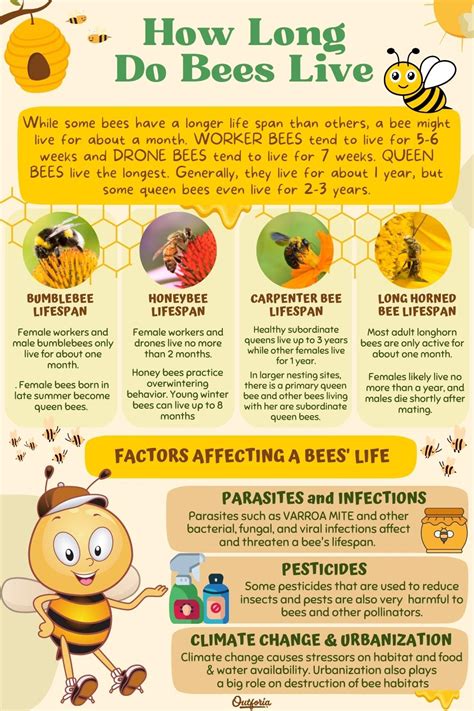
What is the average lifespan of a honey bee?
+The average lifespan of a honey bee varies depending on the time of year and the role of the bee within the colony. Worker bees typically live for 4-6 weeks during the summer, while drones may live for up to 4 months. The queen bee, on the other hand, can live for up to 5 years.
How do bees communicate with each other?
+Bees communicate with each other through a complex series of dances, pheromones, and even electrical signals. The waggle dance, for example, is used to convey information about the location of food sources, while pheromones are used to signal danger or mark the location of the hive.
What is the importance of bees in pollination?
+Bees are responsible for pollinating around 1/3 of the world's crops, including fruits, vegetables, and nuts. Without bees, many of these crops would be unable to reproduce, resulting in widespread food shortages and economic losses.
As we continue to unlock the secrets of bee behavior and society, we are constantly reminded of the importance of these incredible creatures. From their complex communication systems to their highly organized social structures, bees have much to teach us about cooperation, community, and the natural world. By studying bees and their behavior, we can gain new insights into the world around us, and develop a deeper appreciation for the vital role that these pollinators play in our ecosystem. Whether you’re a biologist, a beekeeper, or simply someone who appreciates the beauty of nature, there’s no denying the fascination and importance of these tiny, winged creatures.


