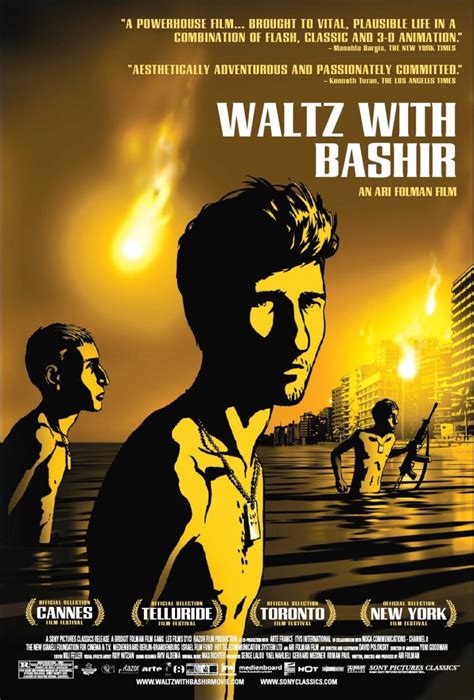
Waltz with Bashir is a cinematic masterpiece that defies traditional genre classification, blending elements of documentary, animation, and memoir to create a haunting and deeply personal exploration of war, memory, and the human condition. Directed by Ari Folman, the film is a thought-provoking and visually stunning work that delves into the director’s own experiences during the 1982 Lebanon War, and his subsequent quest to reconcile his past and uncover the truth about the Sabra and Shatila massacre.
One of the most striking aspects of Waltz with Bashir is its innovative use of animation, which brings a dreamlike quality to the film’s narrative. The animation is not merely a stylistic choice, but a deliberate attempt to convey the fragmented and often surreal nature of memory. By using a combination of traditional animation techniques and cutting-edge computer graphics, Folman creates a visually stunning and deeply immersive world that draws the viewer into the heart of the story.
At its core, Waltz with Bashir is a deeply personal and introspective film, one that probes the complexities of human memory and the ways in which our experiences shape us. Through a series of interviews with former soldiers and journalists, Folman slowly begins to reconstruct his own memories of the war, and to confront the traumas and anxieties that have haunted him for decades. The film’s use of interviews and testimony adds a layer of depth and complexity to the narrative, highlighting the ways in which individual experiences can be both deeply personal and universally relatable.
The historical context of the film is also worthy of note, as it provides a crucial backdrop for understanding the events that unfold. The 1982 Lebanon War was a pivotal moment in modern Middle Eastern history, marked by intense violence and humanitarian crisis. The Sabra and Shatila massacre, in particular, was a devastating event that resulted in the deaths of hundreds of civilians, and its legacy continues to be felt today. By exploring this period in detail, Folman sheds light on a often-overlooked chapter in history, and provides a powerful indictment of the destructive nature of war.
Throughout the film, Folman’s own voice and perspective serve as a kind of emotional anchor, grounding the narrative in his personal experiences and emotions. His voice is warm, introspective, and deeply human, and it adds a layer of intimacy and vulnerability to the film. The animation, meanwhile, serves as a kind of visual counterpoint, using bold colors and stylized imagery to convey the intensity and chaos of war. The combination of these two elements – Folman’s voice and the animation – creates a powerful and deeply affecting cinematic experience, one that is both deeply personal and universally relatable.
One of the most striking aspects of Waltz with Bashir is its use of music, which plays a crucial role in shaping the film’s mood and atmosphere. The soundtrack, which features a mix of classical and rock music, is both haunting and beautiful, and it adds a layer of depth and complexity to the narrative. The music is used sparingly, but to great effect, and it serves as a kind of emotional trigger, evoking feelings of sadness, anxiety, and nostalgia.
In terms of its themes and messages, Waltz with Bashir is a film that defies easy summary or interpretation. On one level, it is a powerful anti-war statement, one that highlights the devastating consequences of conflict and the importance of human empathy and compassion. On another level, it is a deeply personal exploration of memory and identity, one that probes the complexities of human experience and the ways in which our experiences shape us. Ultimately, the film’s themes and messages are complex and multifaceted, and they invite the viewer to engage with the narrative on a deep and personal level.
Waltz with Bashir is a film that challenges its viewers to confront the complexities of human memory and the nature of war. By using a combination of animation, interviews, and personal testimony, Folman creates a powerful and deeply affecting cinematic experience, one that is both deeply personal and universally relatable.
In conclusion, Waltz with Bashir is a cinematic masterpiece that is both a powerful work of art and a deeply personal exploration of human experience. Through its innovative use of animation, music, and personal testimony, the film creates a haunting and deeply immersive world that draws the viewer into the heart of the story. As a work of documentary filmmaking, it is a powerful indictment of the destructive nature of war, and a testament to the enduring power of human empathy and compassion.
What is the historical context of Waltz with Bashir?
+The film is set during the 1982 Lebanon War, a pivotal moment in modern Middle Eastern history marked by intense violence and humanitarian crisis. The Sabra and Shatila massacre, in particular, was a devastating event that resulted in the deaths of hundreds of civilians, and its legacy continues to be felt today.
What is the significance of the animation in Waltz with Bashir?
+The animation in Waltz with Bashir is a deliberate attempt to convey the fragmented and often surreal nature of memory. By using a combination of traditional animation techniques and cutting-edge computer graphics, Folman creates a visually stunning and deeply immersive world that draws the viewer into the heart of the story.
What are the main themes and messages of Waltz with Bashir?
+Waltz with Bashir is a film that defies easy summary or interpretation. On one level, it is a powerful anti-war statement, one that highlights the devastating consequences of conflict and the importance of human empathy and compassion. On another level, it is a deeply personal exploration of memory and identity, one that probes the complexities of human experience and the ways in which our experiences shape us.
Overall, Waltz with Bashir is a film that is both a powerful work of art and a deeply personal exploration of human experience. Through its innovative use of animation, music, and personal testimony, the film creates a haunting and deeply immersive world that draws the viewer into the heart of the story. As a work of documentary filmmaking, it is a powerful indictment of the destructive nature of war, and a testament to the enduring power of human empathy and compassion.