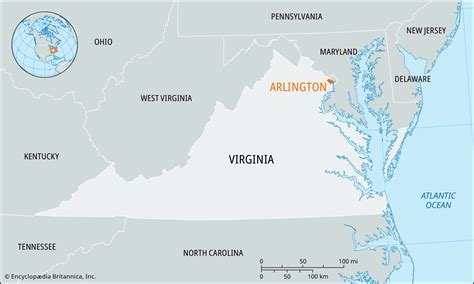
Arlington, a name that echoes with historical significance and modern vibrancy, is located in the Commonwealth of Virginia, United States. Specifically, it is situated in the northern part of the state, directly across the Potomac River from Washington, D.C. This strategic location places Arlington at the heart of the Washington-Arlington-Alexandria, DC-VA-MD Metropolitan Statistical Area, making it a pivotal component of the nation’s capital region.
Geographical Overview
Geographically, Arlington is unique due to its compact size and diverse landscape. With a total area of approximately 26 square miles, it is one of the smaller counties in the United States. Despite its size, Arlington boasts a variety of landscapes, from the rolling hills and neighborhoods of North Arlington to the urbanized areas of Crystal City and the Rosslyn-Ballston corridor, known for its high-rise buildings, shopping centers, and vibrant nightlife.
Historical Significance
Arlington’s history is intertwined with that of the nation’s capital. The county is home to Arlington National Cemetery, a military cemetery that serves as the final resting place for many American service members and their families. The cemetery is also the site of the Tomb of the Unknown Soldier, a monument dedicated to unidentified remains of American servicemen. The historical significance of Arlington extends further with landmarks like the Pentagon, the headquarters of the United States Department of Defense, located in the county.
Economic and Cultural Landscape
The economy of Arlington is heavily influenced by its proximity to Washington, D.C., with a significant portion of the workforce employed in the federal government or related industries. However, the county has also made a concerted effort to diversify its economy, with major sectors including technology, healthcare, and education. The cultural landscape of Arlington is equally vibrant, with a diverse population that reflects the global nature of the Washington, D.C. area. This diversity is celebrated through various cultural events and festivals throughout the year.
Educational and Recreational Opportunities
Arlington boasts a highly rated public school system, with Arlington Public Schools (APS) serving the educational needs of the community. For higher education, while Arlington itself may not be home to large universities, its proximity to Washington, D.C., and other parts of Northern Virginia means that residents have access to a wide range of educational institutions. Recreationally, Arlington offers numerous parks, trails, and community centers. The Washington & Old Dominion Railroad Regional Park (W&OD Trail), a 45-mile trail, runs through Arlington, providing opportunities for cycling, jogging, and walking.
Transportation
The transportation infrastructure in Arlington is well-developed, facilitating easy movement within the county and to neighboring areas. The county is served by the Washington Metro, with several lines (Orange, Silver, and Blue) passing through Arlington, providing direct access to Washington, D.C., and other parts of the metropolitan area. Additionally, Arlington has an extensive network of bus services, including the Arlington Transit (ART) system, and is strategically located near Reagan National Airport, one of the major airports serving the nation’s capital region.
In conclusion, Arlington, Virginia, offers a unique blend of history, culture, economic opportunity, and natural beauty, making it a desirable location for both residents and visitors alike. Its proximity to Washington, D.C., coupled with its own distinct character, positions Arlington as a significant and integral part of the nation’s capital region.
What is Arlington's geographical location?
+Arlington is located in the northern part of Virginia, directly across the Potomac River from Washington, D.C.
What are some of Arlington's notable landmarks?
+Arlington is home to several notable landmarks, including Arlington National Cemetery, the Tomb of the Unknown Soldier, and the Pentagon.
What is the nature of Arlington's economy?
+Arlington's economy is diversified, with significant sectors including federal government services, technology, healthcare, and education, benefiting from its proximity to Washington, D.C.
How does one travel around Arlington and to neighboring areas?
+Arlington has a well-developed transportation system, including the Washington Metro, an extensive bus network, and proximity to Reagan National Airport, facilitating easy travel within the county and to surrounding areas.
Arlington, with its rich history, vibrant culture, and strategic location, stands as a unique and integral component of the Washington, D.C. metropolitan area, offering a high quality of life and numerous opportunities for its residents and visitors.