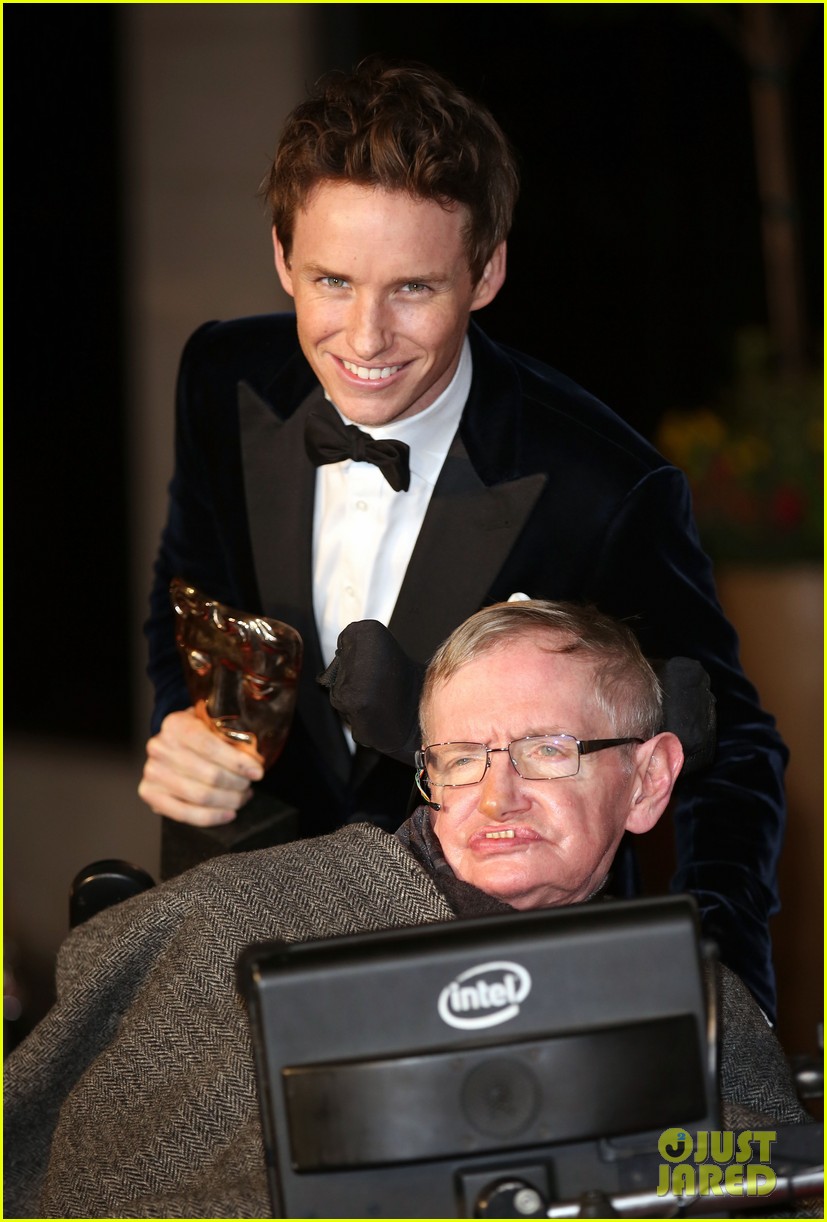
The portrayal of Stephen Hawking by Eddie Redmayne in the 2014 film “The Theory of Everything” is a masterpiece of cinematic storytelling, weaving together the complexities of Hawking’s life, his groundbreaking work in cosmology, and his courageous battle with a debilitating motor neuron disease. This film, directed by James Marsh, does not just tell the story of a brilliant physicist; it delves into the humanity of Hawking, showcasing his resilience, humor, and the profound impact of his work on our understanding of the universe.
At the heart of the film is Eddie Redmayne’s astonishing performance, which garnered him the Academy Award for Best Actor. Redmayne’s transformation into Hawking is not just physical; he embodies the spirit of the man, from the early days of his diagnosis with amyotrophic lateral sclerosis (ALS) to his later years, where despite being confined to a wheelchair and communicating through a speech-generating device, Hawking’s intellect and wit remained undiminished. Redmayne’s portrayal captures the essence of Hawking’s determination, his love for his family, and his unrelenting passion for uncovering the secrets of the cosmos.
One of the film’s strengths lies in its thoughtful exploration of Hawking’s relationship with his first wife, Jane Wilde, played by Felicity Jones. The film tenderly portrays their meeting at Cambridge, their wedding, the challenges they faced with Hawking’s diagnosis, and the extraordinary support Jane provided, enabling Hawking to pursue his career despite his physical limitations. The chemistry between Redmayne and Jones brings depth to the story, highlighting not just the intellectual achievements of Hawking but also the personal sacrifices and the strength of their love.
“The Theory of Everything” also explores the development of Hawking’s most famous work, “A Brief History of Time,” which simplified complex concepts like black holes and the origin of the universe for a broad audience. The film shows how, despite his physical deterioration, Hawking’s mind continued to soar, making groundbreaking contributions to physics and inspiring generations of scientists and thinkers worldwide.
Furthermore, the film touches on the themes of time, space, and human existence, reflecting Hawking’s own musings on these subjects. Through Hawking’s story, the film underscores the importance of human connection, love, and the pursuit of knowledge, even in the face of adversity. It’s a testament to the human spirit, exemplified by Hawking’s defiance of his prognosis and his accomplishment of so much more than what many thought possible.
The movie’s use of cinematography and music adds another layer of depth, beautifully capturing the Cambridge landscape, the intimate moments between characters, and the vastness of space, symbolizing Hawking’s soaring imagination and intellect. The score, composed by Jóhann Jóhannsson, is hauntingly beautiful, encapsulating the emotional highs and lows of the story, from the joy of youthful love to the challenges of a life lived with disability.
In the end, “The Theory of Everything” is more than a biographical drama; it’s an ode to human resilience, a celebration of the power of the human mind, and a tribute to a man whose work has left an indelible mark on our understanding of the universe. Eddie Redmayne’s portrayal of Stephen Hawking not only does justice to the man but also inspires viewers to appreciate the beauty of physics, the importance of love and support, and the limitless potential of the human spirit.
Eddie Redmayne's performance as Stephen Hawking is a compelling example of how cinema can capture the essence of a remarkable life, blending science, emotion, and the human condition into a narrative that inspires and educates.
Exploring the Physics of Black Holes
A significant part of Hawking’s work revolves around black holes, those mysterious regions of spacetime where gravity is so strong that not even light can escape. Hawking proposed that black holes emit radiation, now known as Hawking radiation, which is a result of virtual particles that are “created” in the vicinity of the event horizon. This theory revolutionized our understanding of black holes, suggesting that they are not eternal objects but instead have a lifespan, eventually evaporating over time.
The Impact of Hawking’s Work on Modern Physics
Hawking’s contributions to physics have been profound, influencing not just our understanding of black holes but also our broader comprehension of the universe. His work on the no-boundary proposal, which suggests that the universe had no boundaries in the beginning, has been particularly influential. This idea, developed with James Hartle, proposes that the universe is self-contained, with the laws of physics applying everywhere, and that the concept of boundaries or edges to the universe is not necessary.
What are the main contributions of Stephen Hawking to physics?
+Stephen Hawking's main contributions include his work on black holes, particularly the proposal that they emit radiation (Hawking radiation), and his no-boundary proposal for the origin of the universe, suggesting it had no boundaries in the beginning.
How did Stephen Hawking's diagnosis affect his work?
+Despite being diagnosed with a motor neuron disease, Hawking defied his prognosis and continued to work, producing some of his most groundbreaking research. His condition necessitated the use of a speech-generating device for communication but did not hinder his intellectual contributions to physics.
What is the significance of "A Brief History of Time"?
+"A Brief History of Time" is significant because it made complex concepts in cosmology accessible to a broad audience. The book explains the nature of space and time, black holes, and the origin and fate of the universe in a way that is understandable to non-experts, making it a landmark in science communication.
In conclusion, the story of Stephen Hawking, as masterfully portrayed by Eddie Redmayne, is a testament to human ingenuity, love, and the unquenchable thirst for knowledge. Through his work and his life, Hawking continues to inspire us, reminding us of the beauty and complexity of the universe and the incredible feats that the human spirit can achieve, even in the face of overwhelming adversity.