Estate Planning Will Template Overview
A willy size chart is a handy tool, offering a simple visual guide to understanding penis measurements. This guide aims to demystify these charts, ensuring you can navigate and utilize them effectively.
Whether you're curious about average penis length, girth measurements, or simply need a cm to inches conversion, these charts provide a quick reference. While values may vary depending on standards and regions, the willy size chart offers a reliable starting point for understanding and comparing sizes.
Understanding the Willy Size Chart
The willy size chart is a reference guide that provides a visual representation of penis dimensions, offering a standardized way to understand and compare sizes. This chart is a valuable tool for educational purposes and can be particularly useful for those seeking information on average sizes or wanting to understand the range of variations.
Comparing Standards and Categories
When referring to a willy size chart, it's important to note that different standards and measurement systems exist. The most common standards are the US and international (metric) systems, which use different units of measurement. The chart typically displays length and girth measurements, often in both centimeters and inches, to cater to various regions and preferences.
Step-by-Step Guide to Using the Chart
To utilize the willy size chart accurately, follow these steps:
Identify the standard: Determine whether you are using the US or international standard. This information is usually indicated on the chart itself or in the accompanying documentation.
Measure accurately: Take precise measurements of your penis. For length, measure from the base to the tip when erect. Girth is measured at the widest point, usually just below the head.
Convert if needed: If your measurements are in a different unit than the chart, convert them. For example, if you measured in centimeters but the chart uses inches, use the cm to inches conversion factor (1 inch = 2.54 cm) to ensure accuracy.
Compare and understand: Place your measurements on the chart and compare them to the various categories or percentiles. This will give you an idea of how your size compares to the general population.
Common Misconceptions and Pitfalls
Willy size chart is not an exact science: While the chart provides a standardized reference, it's important to remember that penis sizes can vary greatly, and individual differences are normal.
Personal experience vs. statistics: Your personal experience may not align with the chart, especially if you have a unique size or if the chart is based on a different population.
Age and growth: Penis size can change with age, especially during puberty and early adulthood. The chart may not account for these growth stages, so it's important to consider your age when interpreting the results.
Measurement techniques: Inaccurate measurements can lead to incorrect placements on the chart. Ensure you follow proper measuring techniques to get the most accurate representation.
Remember, the willy size chart is a guide, and individual variations are normal and healthy. If you have specific concerns or questions about your sexual health, it's always best to consult a healthcare professional.
So, there you have it, a handy willy size chart to guide you through the various measurements and standards. Remember, these charts provide a general overview, and exact values may differ slightly across sources.
It's always a good idea to cross-reference and ensure you're using the right measurements for your specific needs. Feel free to explore our other guides; we've got a range of interesting topics that might pique your curiosity and provide practical insights. Happy reading!
Related: How to Read a Chest Size Chart?
You're probably here because you need a quick answer, and who can blame you? A chest size chart is a handy tool, offering a simple visual guide to understanding bra sizes and fit. It's a reference that can save you time and ensure you get the right size, every time. These charts can vary slightly, but they're an essential guide for anyone wanting an accurate bra size and a comfortable fit.
Understanding the Chest Size Chart
The chest size chart is a handy tool to help you find the right fit for clothing and accessories, especially when shopping online. It provides a reference for measuring and understanding your chest size, ensuring you make informed choices. This chart is particularly useful for women's sizing, including bra size charts, but it can also guide men's clothing choices.
Comparing Measurement Standards
Measurement standards can vary depending on the region and manufacturer. For example, the US and international (metric) systems have different size categories and ranges. The chest size chart typically includes both systems, making it versatile. It's essential to check which standard is being used to ensure accuracy.
Measuring Accurately: A Step-by-Step Guide
- Prepare a flexible measuring tape. Ensure it's not too tight or loose.
- Stand in a relaxed position, with your arms slightly away from your sides.
- Measure the fullest part of your chest, usually across the nipple line.
- Wrap the tape around your body, ensuring it's level and parallel to the floor.
- Take the measurement in inches or centimeters, depending on the standard.
- Refer to the chest size chart to find your size. It will provide a range of measurements and corresponding sizes.
- If you fall between sizes, consider the fabric's stretch and your personal preference for a snug or loose fit.
Common Mistakes and How to Avoid Them
One common mistake is measuring too tightly or too loosely. This can lead to an inaccurate reading and an ill-fitting garment. Always ensure the tape is snug but not constricting. Another pitfall is assuming all brands use the same sizing. Different manufacturers may have slight variations, so it's best to refer to their specific size charts. Additionally, some charts may not cover all body types, so be mindful of any special considerations you may have.
Factors Affecting Accuracy and Real-World Use
Several factors can influence the accuracy of your chest size measurement. These include your posture during measurement, the type of clothing you're wearing, and any recent weight changes. It's essential to stand upright and maintain a consistent posture. The fabric of your clothing can also affect the measurement, so consider measuring over a thin, form-fitting garment. If you've recently gained or lost weight, your chest size may have changed, so it's beneficial to remeasure periodically.
So, now you're equipped with a handy chest size chart and the knowledge to use it effectively. Remember, these charts provide a great starting point, but it's always wise to consider your unique needs and measurements.
Don't forget to check out our other guides for more practical tips and insights. We've got a range of topics to explore, so feel free to browse and discover something new!
Related: Read the Nail Shape Chart: A Simple Guide
You've probably come across the nail shape chart and are keen to explore its practical uses. This handy reference tool is a great way to discover and understand the different nail shapes and their names. It's a simple yet effective guide, offering a visual representation of various nail shapes, which can be a real asset when you're looking for inspiration or wanting to communicate your nail preferences clearly. While the chart provides a great starting point, it's worth noting that nail shape names and trends can vary, so it's always fun to explore and find your favorite!
Understanding the Nail Shape Chart
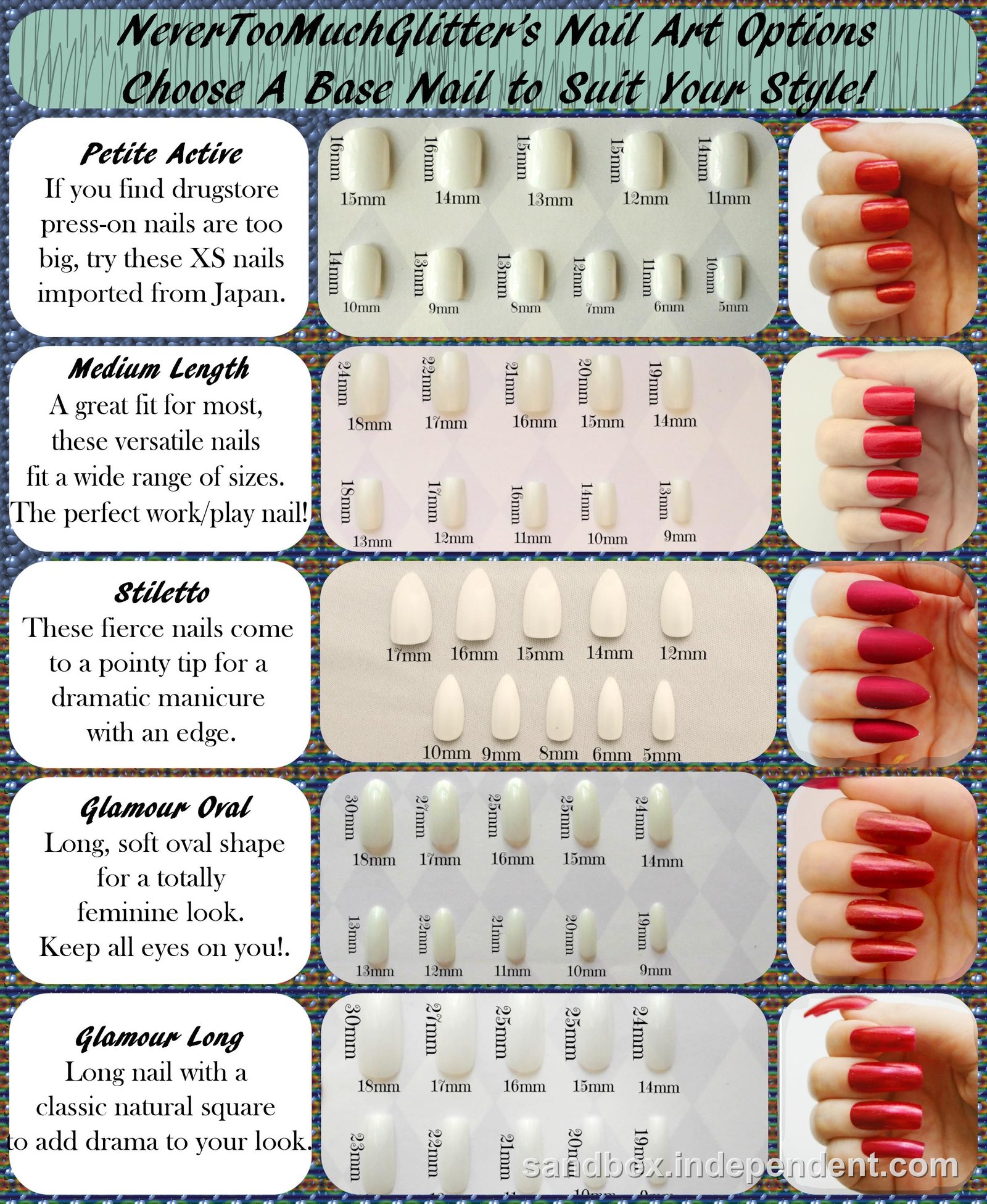
The nail shape chart is a handy reference tool for anyone interested in nail care and design. It provides a visual guide to different nail shapes and lengths, offering a simple way to communicate your desired nail look to a nail technician or to achieve consistent results at home. This chart is a great starting point for nail enthusiasts and professionals alike.
Key Details and Categories
The nail shape chart typically features a range of standard nail shapes, including classic options like square, oval, and almond, as well as more unique styles like coffin, stiletto, and mountain peak. Each shape is represented by a visual icon or illustration, making it easy to identify and choose your preferred style. Additionally, the chart often includes a measurement guide, showing common nail lengths and their corresponding sizes. These measurements are usually in millimeters or inches, depending on the standard used.
How to Read and Apply the Chart
Using the nail shape chart is straightforward. First, identify the shape you desire by matching it to the visual icons on the chart. Then, refer to the measurement guide to choose the length that suits your preferences and nail type. You can either communicate these choices to your nail technician or use the chart as a guide when shaping your nails at home. If you're unsure about the best shape for your nails, the chart can also inspire new looks and help you experiment with different styles.
Variations and Differences
It's important to note that while the nail shape chart provides a great starting point, variations can occur due to different standards and personal preferences. For instance, the exact measurements for each shape and length may vary slightly between charts, especially when comparing US and international standards. Additionally, individual nail technicians might have their own unique interpretations and techniques, leading to subtle differences in the final nail shape.
Common Mistakes and How to Avoid Them
One common mistake is relying solely on the chart without considering your nail type and personal comfort. It's essential to choose a shape and length that complements your natural nail bed and overall hand shape. Additionally, be mindful of your daily activities and lifestyle; certain shapes and lengths may be more practical or comfortable for your routine. Always consider these factors to ensure you achieve a look that suits your needs and preferences.
Tips for Accurate Results
To ensure accurate results when using the nail shape chart, it's crucial to measure your nails regularly, especially if you're growing them out or maintaining a specific length. This helps you stay consistent and achieve the desired look. Additionally, invest in good-quality nail files and buffers to shape and smooth your nails effectively. Practice makes perfect, so don't be afraid to experiment and find the techniques that work best for you. Remember, the nail shape chart is a guide, and with practice, you'll develop your own nail shaping skills.
Hey there! I hope this nail shape chart has given you a clear understanding of the different options and how to achieve your desired nail look. Remember, while the basics remain the same, the exact details might vary slightly depending on the context and your personal preference.
It's always a good idea to bookmark this page for future reference, especially when you're trying out new nail shapes or designs. You'll find it's a handy tool to have on hand!