




Human Body Coloring Sheet Overview
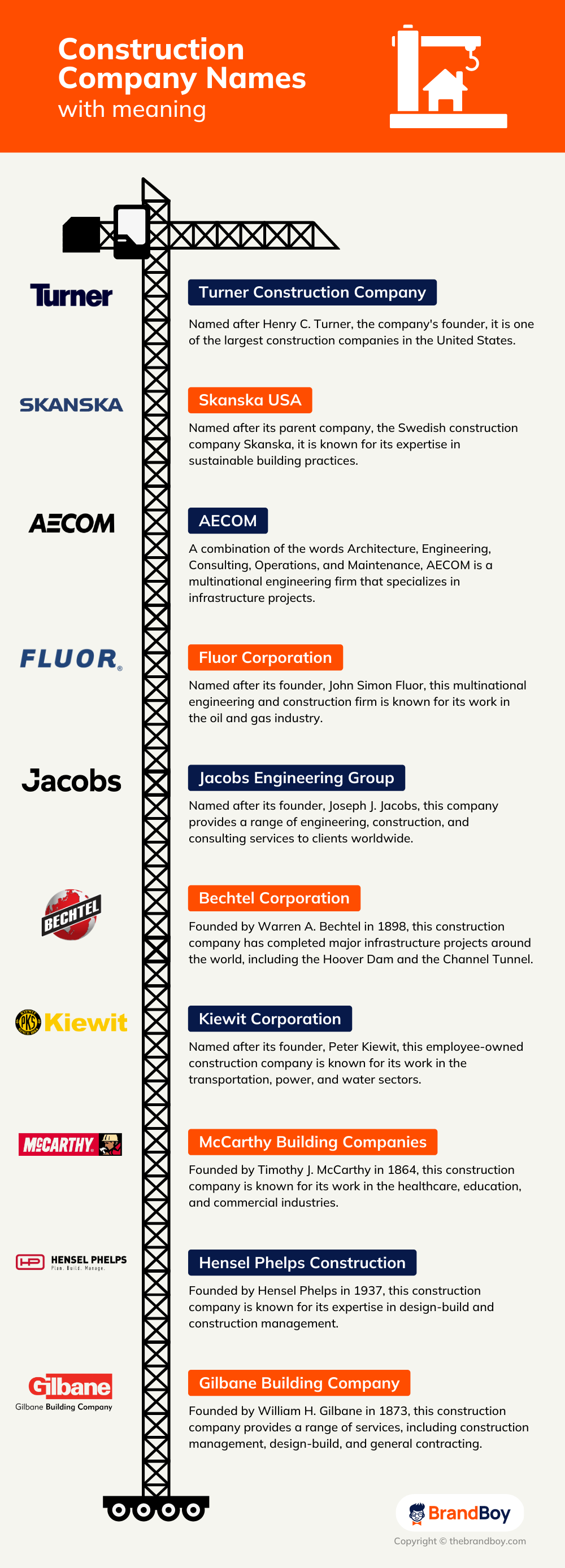
I was chatting with a friend recently, and we got onto the topic of unique construction names with meaning. It's something I've always found fascinating, how a name can capture the essence of a business and leave a lasting impression. So, I thought I'd share some thoughts and insights on this fun aspect of the construction world.
The Power of a Name
A unique and meaningful name for your construction business can set you apart from the competition. It's your first chance to make an impression and connect with potential clients. But what makes a good name? Well, it's a balance between creativity and practicality. You want something memorable, but it also needs to reflect your business's values and services.
Consider the tone and message you want to convey. Is your business focused on innovative, modern construction? Or do you specialize in traditional, heritage-style builds? The name should hint at your expertise and the unique value you bring to the table. It's a chance to showcase your personality and make a bold statement.
Naming Your Business
When brainstorming names, think about words and phrases that resonate with your brand. It could be a play on words, a nod to your location, or a reference to the services you offer. Get creative, but also ensure the name is easy to remember and pronounce. You don't want potential clients stumbling over your business name!
Here are a few original ideas to spark your imagination:
- Build-it-Bright
- Construct-a-Dream
- Hammer & Hive
- Modern Foundations
- Eco-Build Solutions
- The Bricklayer's Club
Remember, it's crucial to check the availability of your chosen name. You'll need to register it with local authorities and secure the domain name for your website. It's a good idea to consult a legal professional to ensure you're covering all the bases.
Standing Out in a Competitive Industry
The construction industry is bustling with businesses, both large and small. So, how do you make your company stand out? A unique and meaningful name is one way to differentiate yourself. It shows you've put thought into your brand and helps you build a strong identity.
Large construction firms often have well-established names that reflect their size and scope. They might incorporate their location or a reference to their long history. Smaller businesses, on the other hand, can use unique names to their advantage, showcasing their specialty and personality.
Finding the Right Contractor
When searching for a contractor, whether for a large-scale project or a home renovation, it's essential to do your research. A unique name can be a great conversation starter, but it's what's behind the name that matters most.
Ask for recommendations from friends and family, and check online reviews. Get quotes from several contractors and compare their services and prices. Don't be afraid to ask questions and ensure you understand the scope of the work and any potential additional costs. A good contractor will be transparent and happy to answer your queries.
Tools of the Trade
In the construction world, there are various tools and resources to help with estimating costs and managing projects. One such tool is RSMeans, a database that provides cost data for various construction projects. It's a valuable resource for both contractors and clients, offering insights into the potential costs of a build.
However, it's important to remember that these tools provide estimates, and the final cost can vary depending on factors like location, materials, and labor. Always get a detailed quote from your contractor and compare it with other estimates to ensure you're getting a fair price.
Final Thoughts
Choosing a unique and meaningful name for your construction business is an exciting step. It's a chance to showcase your creativity and leave a lasting impression. Remember to keep it practical and ensure your name reflects your brand's values and services. And when hiring a contractor, take the time to research and compare, ensuring you find the right fit for your project. Happy building!
Related: Understand the R22 Pressure Chart Easily
An R22 pressure chart is a handy tool for anyone working with refrigeration or air conditioning systems. It's a simple yet powerful reference guide, offering a visual representation of the relationship between pressure and temperature for R22 refrigerant. This guide will cover the basics of reading and interpreting these charts, ensuring you can quickly find the information you need and apply it accurately. With R22 being a commonly used refrigerant, understanding its pressure-temperature relationship is essential for efficient system operation and maintenance.
A Quick Overview
The r22 pressure chart is a valuable tool for anyone working with or interested in understanding the behavior of R22 refrigerant, a common substance used in air conditioning and refrigeration systems. This chart visually represents the relationship between pressure and temperature, providing a quick reference for various scenarios.
Comparing Chart Types and Standards
There are different formats of the r22 pressure-temperature chart, including the pressure-enthalpy chart and the pressure-volume chart. While they all convey similar information, the choice depends on the specific application and the data you need to analyze. For instance, the pressure-enthalpy chart is useful for understanding the energy content of the refrigerant, while the pressure-volume chart is more suited for analyzing flow rates and system efficiency. It's essential to use the right chart for your needs to ensure accurate readings and interpretations.
Step-by-Step Guide to Reading the Chart
- Identify the Type: First, determine which type of chart you're dealing with. The r22 pressure-temperature relationship can be presented in various ways, so knowing the specific chart type is crucial.
- Understand the Axes: The chart's x-axis typically represents pressure, while the y-axis shows temperature. Ensure you're familiar with the units used, which can vary depending on the standard and region.
- Locate Your Data: Find the point on the chart that corresponds to your system's pressure and temperature. This will give you an idea of the refrigerant's state and behavior.
- Interpret the Results: The chart will help you understand if the refrigerant is in a saturated or superheated state, which is vital for system efficiency and performance.
- Consider Variations: Remember that the chart provides a general guide. Real-world conditions might differ due to factors like system design, load, and environmental conditions.
Common Misreadings and Pitfalls
- R22 pressure chart readings can be misleading if you don't account for system-specific factors. Always consider the unique characteristics of your setup.
- The chart assumes ideal conditions, so actual results might vary. Stay vigilant for any anomalies or unexpected behavior.
- While the chart provides a great visual aid, it's just one tool in your toolkit. Always cross-reference with other data and consider expert advice for complex scenarios.
- Keep in mind that charts can vary slightly between manufacturers and standards. Always refer to the specific chart relevant to your system and region.
Key factors to consider:
- System design and load
- Environmental conditions (e.g., humidity, temperature)
- Potential leaks or blockages
- Age and maintenance of the system
Remember, accurate interpretation of the r22 pressure chart is essential for efficient system operation and maintenance. Stay informed, and don't hesitate to seek professional guidance when needed.
Well, there you have it! A handy guide to the R22 pressure chart, covering all the basics and more. Remember, while the core principles remain the same, the exact details might differ slightly based on your specific situation or the standards you're working with.
Feel free to explore our other guides; we've got plenty of practical resources to help you navigate various topics with ease. Happy learning, and keep those charts handy!
Related: Understand the Mult Chart 1-12: A Simple Guide
Many folks tend to overlook the simplicity of the mult chart 1-12, assuming it's just a basic multiplication table. But this chart is a powerful tool, offering a quick and easy way to grasp fundamental math concepts. It's not just about memorizing times tables; the mult chart 1-12 is a visual guide, showing the relationships between numbers and their products. While the format may vary slightly, the core principle remains the same: a reliable reference for basic math, an essential educational resource.
Mult Chart 1-12: Your Multiplication Guide
The mult chart 1-12 is a handy reference tool for anyone learning or brushing up on their multiplication skills. It's a simple grid that displays the results of multiplying numbers from 1 to 12. This chart is a great visual aid and can be a powerful learning tool, especially for visual learners.
Key Details and Categories
The mult chart is organized as a square grid, with numbers 1 to 12 along both axes. Each cell in the grid represents the product of the numbers in its row and column. For example, the cell where row 5 meets column 7 will show the result of 5 x 7. The chart typically uses a color-coded system, with different colors representing different factors or multiples. This visual cue helps users quickly identify patterns and relationships between numbers.
Reading and Applying the Chart
To use the mult chart 1-12, follow these steps:
- Identify the numbers you want to multiply. Let's say you want to find 6 x 8.
- Locate the row and column that correspond to these numbers. In this case, find row 6 and column 8.
- The cell where these rows and columns intersect will give you the answer. So, for 6 x 8, you'll find the answer in the cell where row 6 meets column 8.
- That's it! The chart provides a quick and easy way to find multiplication results.
Variations and Differences
While the basic concept of the mult chart 1-12 remains the same, there can be variations in its presentation and format. Different educational resources or learning aids may use slightly different color schemes or layouts. Additionally, some charts might extend beyond the 1-12 range, offering a more comprehensive reference. It's important to note that these charts are primarily designed for basic multiplication and may not cover more complex scenarios or advanced math topics.
Common Mistakes and How to Avoid Them
One common mistake is assuming that the chart provides exact answers for all multiplication problems. While it's a great tool for quick references, it's essential to double-check the specific multiplication rules and formulas for more complex calculations. Another pitfall is misreading the chart, especially when dealing with larger numbers. Always double-check your row and column selections to ensure accuracy. Finally, remember that the mult chart is a learning aid, not a replacement for understanding the underlying multiplication principles. Regular practice and a solid foundation in basic math are key to mastering multiplication.
Well, that's the lowdown on mult charts 1-12. You now know the basics, how to use them, and what to watch out for. It's a simple yet effective tool, and with a bit of practice, you'll be a pro in no time!
Just remember, these charts are a handy reference, but always double-check your specific needs and ensure you're using the right values and units for your context. Consider bookmarking this page for future reference - it might just save you some time and hassle down the line!