




Letters Beginning With Qi Overview
I was chatting with a friend recently, and we got onto the topic of unique construction names with meaning. It's something I've always found fascinating, how a name can capture the essence of a business and leave a lasting impression. So, I thought I'd share some thoughts and insights on this fun aspect of the construction world.
The Power of a Name
A unique and meaningful name for your construction business can set you apart from the competition. It's your first chance to make an impression and connect with potential clients. But what makes a good name? Well, it's a balance between creativity and practicality. You want something memorable, but it also needs to reflect your business's values and services.
Consider the tone and message you want to convey. Is your business focused on innovative, modern construction? Or do you specialize in traditional, heritage-style builds? The name should hint at your expertise and the unique value you bring to the table. It's a chance to showcase your personality and make a bold statement.
Naming Your Business
When brainstorming names, think about words and phrases that resonate with your brand. It could be a play on words, a nod to your location, or a reference to the services you offer. Get creative, but also ensure the name is easy to remember and pronounce. You don't want potential clients stumbling over your business name!
Here are a few original ideas to spark your imagination:
- Build-it-Bright
- Construct-a-Dream
- Hammer & Hive
- Modern Foundations
- Eco-Build Solutions
- The Bricklayer's Club
Remember, it's crucial to check the availability of your chosen name. You'll need to register it with local authorities and secure the domain name for your website. It's a good idea to consult a legal professional to ensure you're covering all the bases.
Standing Out in a Competitive Industry
The construction industry is bustling with businesses, both large and small. So, how do you make your company stand out? A unique and meaningful name is one way to differentiate yourself. It shows you've put thought into your brand and helps you build a strong identity.
Large construction firms often have well-established names that reflect their size and scope. They might incorporate their location or a reference to their long history. Smaller businesses, on the other hand, can use unique names to their advantage, showcasing their specialty and personality.
Finding the Right Contractor
When searching for a contractor, whether for a large-scale project or a home renovation, it's essential to do your research. A unique name can be a great conversation starter, but it's what's behind the name that matters most.
Ask for recommendations from friends and family, and check online reviews. Get quotes from several contractors and compare their services and prices. Don't be afraid to ask questions and ensure you understand the scope of the work and any potential additional costs. A good contractor will be transparent and happy to answer your queries.
Tools of the Trade
In the construction world, there are various tools and resources to help with estimating costs and managing projects. One such tool is RSMeans, a database that provides cost data for various construction projects. It's a valuable resource for both contractors and clients, offering insights into the potential costs of a build.
However, it's important to remember that these tools provide estimates, and the final cost can vary depending on factors like location, materials, and labor. Always get a detailed quote from your contractor and compare it with other estimates to ensure you're getting a fair price.
Final Thoughts
Choosing a unique and meaningful name for your construction business is an exciting step. It's a chance to showcase your creativity and leave a lasting impression. Remember to keep it practical and ensure your name reflects your brand's values and services. And when hiring a contractor, take the time to research and compare, ensuring you find the right fit for your project. Happy building!
Related: Decode Your Child's Behavior with an ABC Chart
Many people often assume that abc behavior charts are solely for teachers and classrooms, but they are so much more versatile and beneficial than that! While they are commonly used in educational settings, these charts are a powerful tool for anyone looking to track and improve behavior. The beauty of abc behavior charts lies in their simplicity and adaptability; they can be tailored to suit various contexts and goals.
Understanding the ABC Behavior Chart
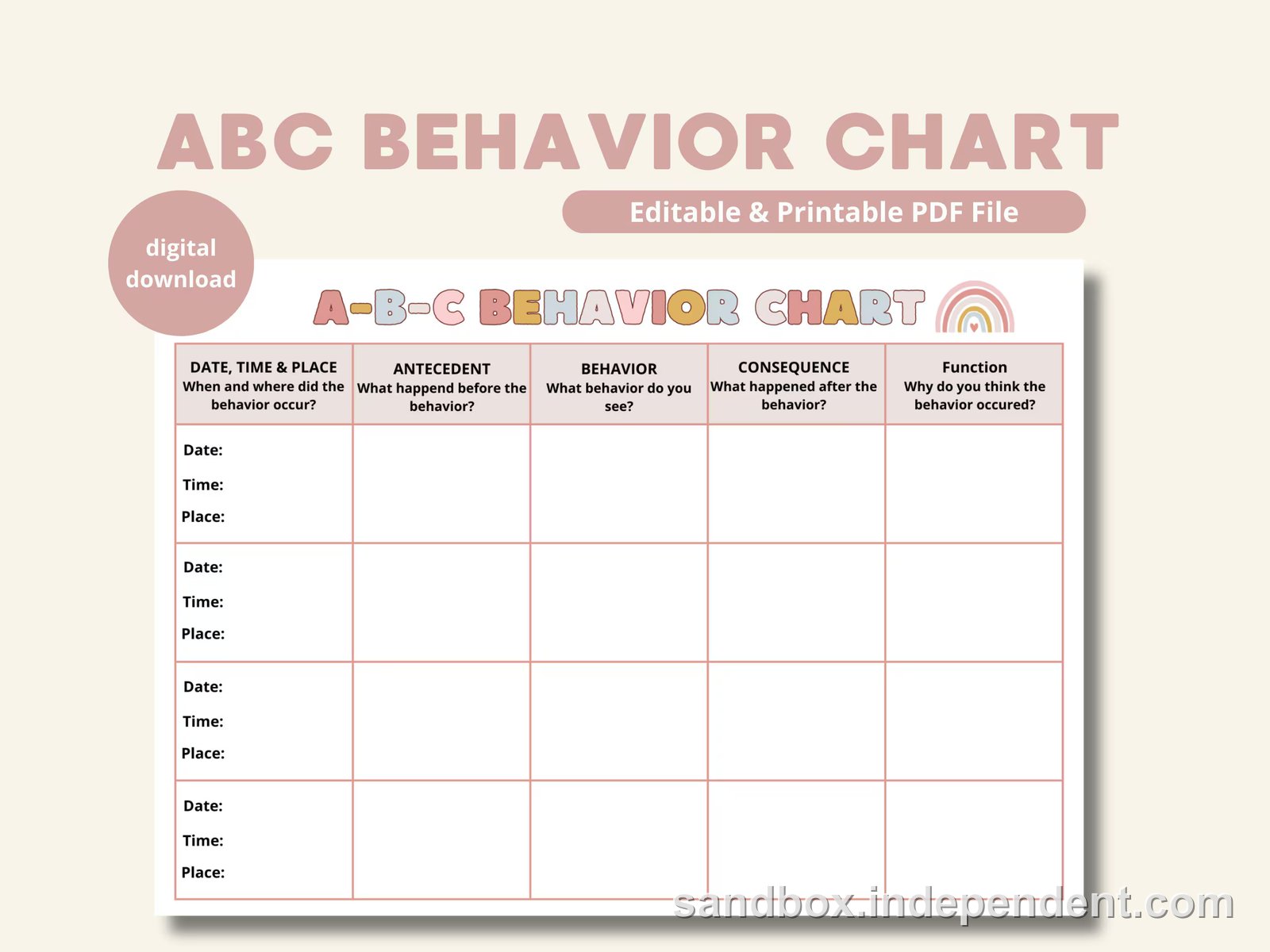
The ABC Behavior Chart is a simple yet effective tool for tracking and managing behavior. It provides a visual representation of an individual's behavior patterns, helping to identify and address any issues or positive trends. This chart is a great way to encourage desired behaviors and set clear expectations.
Key Details and Categories
The ABC Behavior Chart consists of three main columns: Antecedent, Behavior, and Consequence. Each column represents a critical aspect of behavior analysis:
- Antecedent: This column notes the triggers or events that precede a behavior. It helps identify potential causes or situations that lead to certain behaviors.
- Behavior: Here, you record the actual behavior observed. It could be positive, negative, or neutral, depending on the context.
- Consequence: The final column details the outcome or response to the behavior. It could be a reward, a consequence, or simply a neutral reaction.
Additionally, the chart often includes a date and time column to track when behaviors occur. This provides a timeline for analysis and helps identify patterns.
Tracking Behavior: A Step-by-Step Guide
Using the ABC Behavior Chart is straightforward:
- Observe and Record: Start by noting the antecedent, the event or trigger that precedes the behavior. Be specific and descriptive.
- Describe the Behavior: Next, write down the behavior itself. Be objective and focus on the action, not judgments or interpretations.
- Note the Consequence: Finally, record the consequence or response to the behavior. This could be a reward, a redirection, or a neutral response.
- Analyze and Adjust: Regularly review the chart to identify patterns. Look for trends in behaviors and their antecedents. This analysis helps you understand what triggers certain behaviors and allows you to adjust your strategies accordingly.
Variations and Customizing the Chart
While the ABC Behavior Chart provides a standard framework, it can be customized to suit different needs and contexts. Here are some factors that may vary:
- Frequency: The chart can be used daily, weekly, or even monthly, depending on the behavior being tracked and the goals.
- Focus: The chart can be tailored to specific behaviors, such as focusing on positive behaviors or addressing challenging ones.
- Rewards and Consequences: The consequences or rewards listed can be adjusted based on individual preferences and the behavior intervention plan.
- Visual Design: The chart's design can be adapted to make it more engaging. Adding colors, icons, or even a point system can make it more appealing, especially for younger individuals.
Remember, the ABC Behavior Chart is a flexible tool. It's essential to review and adapt it to ensure it remains an effective behavior management strategy. By understanding the chart's core components and customizing it to your needs, you can create a powerful behavior tracking system.
Hey there! We've covered a lot of ground with the ABC behavior chart, and I hope it's given you a solid understanding of this practical tool. Remember, while the basics remain the same, the exact details might shift a little depending on your specific context or the source you're using. It's always a good idea to adapt and make it work for your unique situation.
So, the next time you need a quick refresh on this topic, be sure to bookmark this page for easy access. There's no need to scour the internet; you've got all the key info right here! Feel free to explore our other guides too; we've got plenty more practical tips and tricks to share. Happy learning!
Related: What's the Deal with Gear Ratio Charts?
A gear ratio chart is a handy tool for anyone working with gears and transmissions. It's a simple yet effective way to visualize and understand gear ratios, which are essential for various mechanical systems.
This guide will show you how to read and interpret these charts, offering a quick reference for your gear-related needs. While the values and formats may vary depending on the context, this resource will provide a solid foundation for understanding gear ratio charts and their applications.
What is a Gear Ratio Chart?
A gear ratio chart is a powerful tool that simplifies the complex world of gear mechanics. It's a reference guide that visually represents the relationships between different gear ratios, providing a quick and easy way to understand and compare gear configurations. This chart is an essential resource for engineers, mechanics, and anyone working with gear systems, offering a clear overview of how gears interact and the resulting effects on speed and torque.
Key Details and Categories
The gear ratio chart typically displays a range of gear ratios, often from 1:1 to 10:1 or more, depending on the specific chart and its intended use. Each ratio is represented by a unique value, and these values are organized in a logical, easy-to-read format. The chart may also include additional information, such as the type of gear (e.g., spur gear, helical gear), the number of teeth on each gear, and the resulting speed and torque characteristics. It's important to note that the units used in the chart depend on the standard being followed, whether it's the metric system or another regional standard.
How to Read and Apply the Chart
Reading a gear ratio chart is straightforward:
- Identify the gear ratio you're interested in, which is usually presented as a simple fraction, e.g., 2:1.
- Locate this ratio on the chart. Each ratio will have a corresponding value or set of values.
- Interpret the values. These may represent the speed reduction ratio, the transmission ratio, or other relevant gear characteristics.
- Use this information to select the appropriate gear configuration for your application. For example, if you need to reduce speed and increase torque, you'll choose a higher gear ratio.
Understanding Variations
Gear ratio charts can vary across different standards and contexts. For instance, a chart designed for automotive applications may have different gear ratios and characteristics compared to one used in industrial machinery. Additionally, the specific gear types and their designs can also influence the ratios and performance. It's crucial to use a chart that aligns with your industry and application to ensure accurate results.
Common Mistakes and How to Avoid Them
One common mistake is assuming that a single gear ratio chart covers all gear types and applications. Always double-check the chart's intended use and ensure it aligns with your specific needs. Another pitfall is misinterpreting the values. Remember, the chart provides a quick reference, but for precise calculations and applications, you may need to use a gear ratio calculator or refer to more detailed specifications.
Practical Tips for Accurate Results
When working with a gear ratio chart, always consider the context and the specific gear system you're dealing with. Understand the limitations of the chart and be aware of any variations that may occur due to different gear designs or manufacturing processes. Additionally, if you're new to gear mechanics, it's beneficial to consult with experienced professionals or refer to comprehensive guides that explain the underlying principles of gear ratios. This ensures you make informed decisions and avoid potential issues.
Hey there! I hope this gear ratio chart has given you a clear understanding of the basics. Remember, while the fundamentals remain consistent, exact values can vary slightly depending on the context and the specific standards you're working with.
Feel free to explore our other guides for more detailed insights and practical tips. And when you need a quick refresh, just bookmark this page for easy access!